Black Friday: discounts up to 70%See the products on sale →LIMITED QUANTITIES!
•15 MIN READ

Creatine monohydrate: how to take it, how many grams and when (with and without training)

Quick answer. Creatine monohydrate is taken at 3 to 5 grams a day, dissolved in water, juice or a protein shake, every day, both on training days and on rest days. A loading phase is not required: without it, your muscl…

Creatine monohydrate: how to take it, how many grams and when (with and without training)

Quick answer. Creatine monohydrate is taken at 3 to 5 grams a day, dissolved in water, juice or a protein shake, every day, both on training days and on rest days. A loading phase is not required: without it, your muscles fill up in about 3 to 4 weeks; with it, in about one week. Whether you take it before or after training matters less than not skipping days. This is also the only health claim the EU has authorized for creatine: creatine increases physical performance in successive bursts of short-term, high intensity exercise, and the effect is obtained with a daily intake of 3 g of creatine.

Creatine is probably the most researched supplement in sports, and yet it raises the most confused questions. Here, people search for “kreatin mk,” “creatine mk” or “creatin mk,” “kreatin monohidrat mk,” “creatine monohydrate mk,” and almost always want to know the same thing: how many grams, when, and whether it needs to be “loaded.” In this guide we have gathered the answers from research, with no stories about muscles overnight. You will also read about water, kidneys, coffee, women and teenagers, and how to choose a creatine that suits you.
In short

Creatine in 5 numbers

3 to 5 ga dayfor most adults, dissolved in water, juice or a shake
3 gauthorized claim in the EUincreased physical performance in successive bursts of short-term, high intensity exercise
every dayeven without trainingconsistency matters more than whether it’s before or after training
≈ 1 weekwith loadingwithout loading, the muscles fill up in about 3 to 4 weeks
≈ 6 MKDper servingfor the 400 g and the 2× bundle, with a 3 g scoop
01Basics

What creatine is and how it works

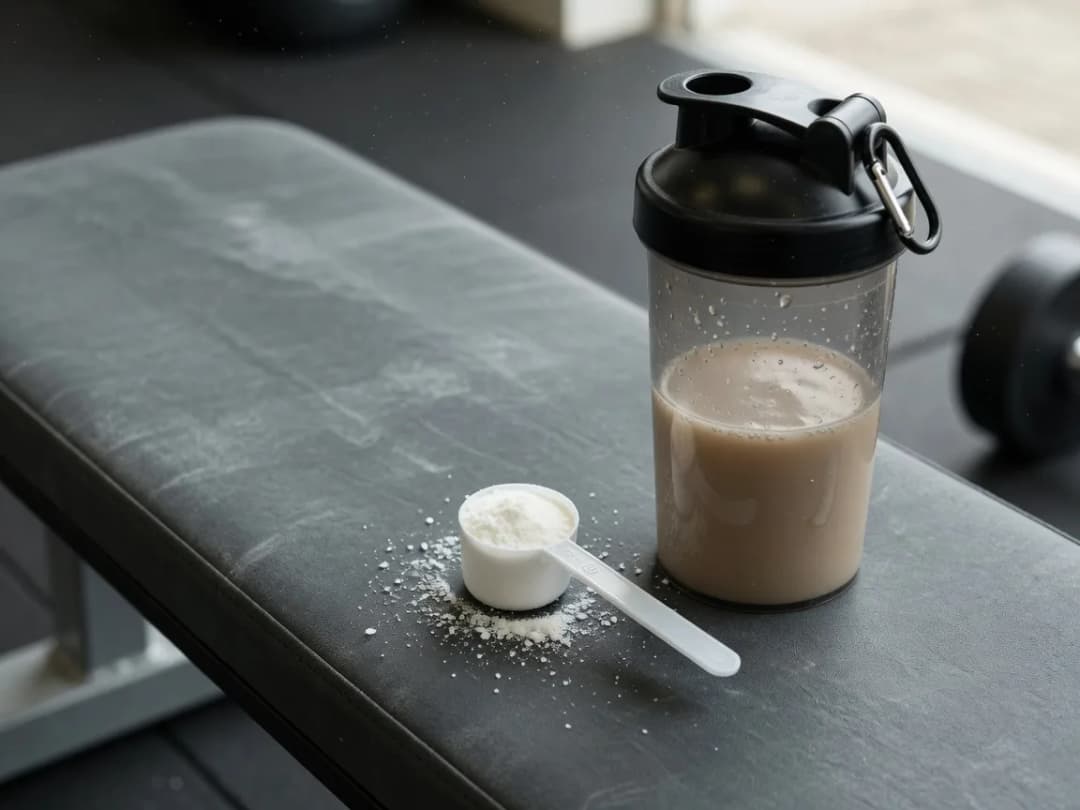
Shaker with a drink and a scoop of white powder on a gym bench

A natural substance the body makes on its own. It works in short, explosive efforts, not in a marathon.

  • From three amino acids: arginine, glycine and methionine, mainly in the liver and kidneys.
  • About 95% is in the muscles, mostly as phosphocreatine.
  • Quick energy reserve: during a heavy set, a sprint or a jump, the muscle burns through ATP, the cell’s “fuel,” within a few seconds, and phosphocreatine restores it very quickly.
  • Bigger reserve: one or two more reps or better recovery between sets.

How much creatine we get from food

The body uses about 2 grams of creatine every day
half: made by the body
half: from food

Meat and fish

The most creatine. A kilogram of raw beef contains about 4 to 5 grams.

Hence a supplement

To fill your muscles from food alone, you would need a lot of meat every day, so a supplement is practical.

Vegetarians and vegans

They usually have smaller stores, so the supplement often has a bigger effect for them.
02How to take it

How to take creatine, step by step

1

How many grams

3 to 5 g of creatine monohydrate a day, one scoop for most products. For the 200 g and 400 g, the scoop is 3 g in about 200 ml of water, once a day.
2

Before or after training

The difference is small. Take it whenever it’s easiest to remember; many people put it in their post-workout shake.
3

On days without training

The same dose, at any time of day. Creatine doesn’t work within an hour; it gradually keeps the stores full.
4

What to mix it with

Water, juice, milk or a protein shake. It doesn’t need sugar: taking it with a meal is perfectly enough.

Details

More than 5 g?

Larger athletes with a lot of muscle mass sometimes take 5 g. More than that doesn’t bring “more strength”; the excess is excreted in the urine.

Before or after: what the studies show

When 5 g was taken right before or right after training, “after” gave slightly better results, but the difference wasn’t certain.

Why no sugar

It used to be thought that sugar “carries” creatine into the muscles, but the effect requires large amounts of carbohydrates, which isn’t wise every day.
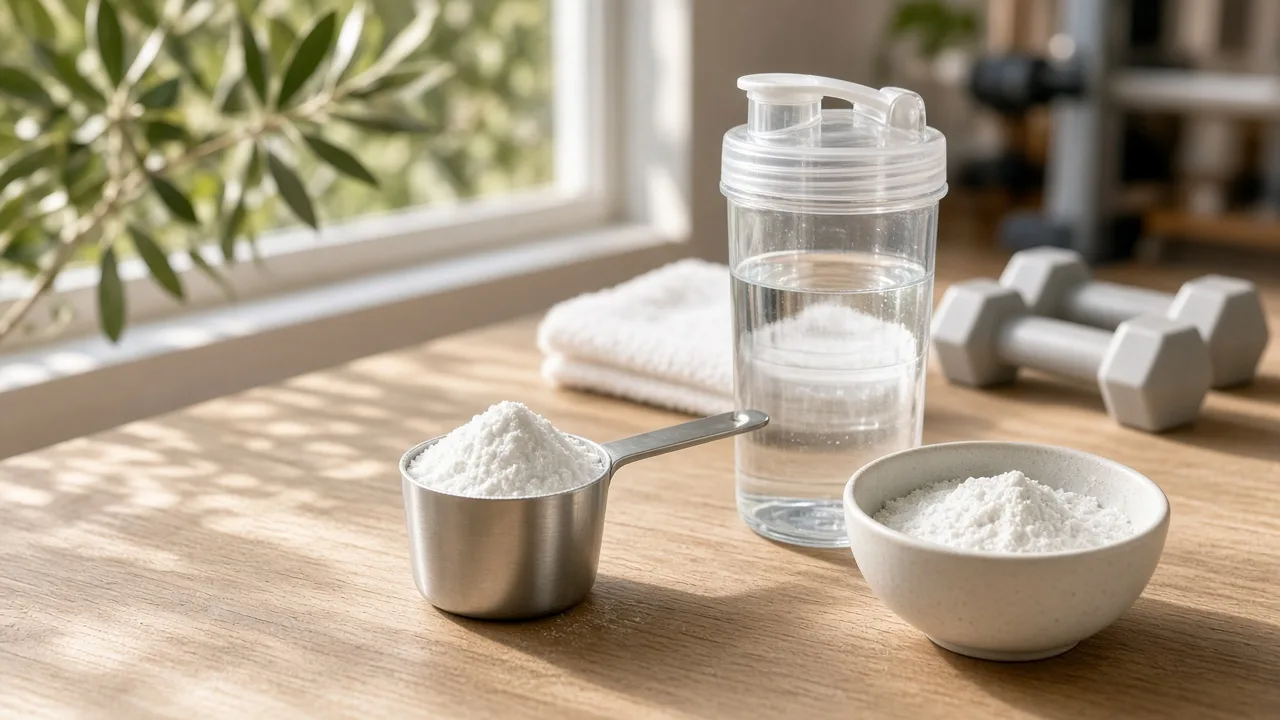
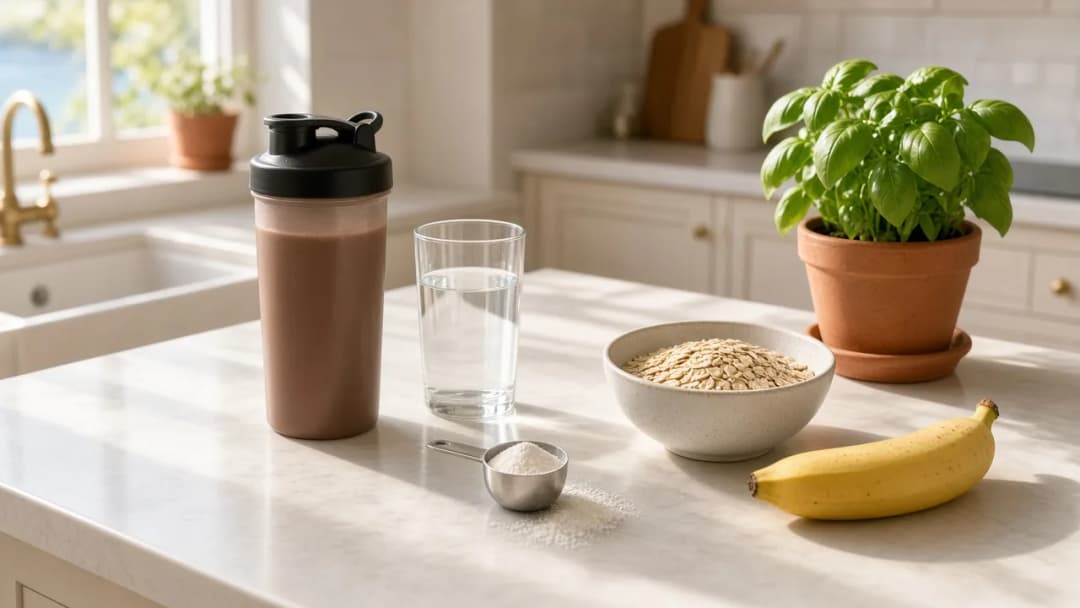
A shaker with a protein drink, a glass of water and a metal scoop of creatine powder on a kitchen table, morning light

With protein and coffee

  • Protein and creatine: the most common combination; they can even go in the same shake, no problem. More in the article Creatine vs protein.
  • Creatine and coffee: one older study showed that a lot of caffeine during loading may reduce the effect. Later research hasn’t confirmed this as clearly.
  • In practice: one or two coffees a day aren’t a problem. If you want to be sure, take creatine a few hours apart from your coffee.
  • Tip: Creatine monohydrate doesn’t fully dissolve in cold water, and some sediment may remain at the bottom. That’s normal. Stir well, drink it right away and don’t make the drink several days in advance, because creatine slowly breaks down in liquid.
03Loading phase

Loading: yes or no

Loading is faster, but not better in the long run. Studies show this too.

DoseFull musclesStomach and scaleWho it is for
With loadingAbout 20 g a day, 4 doses of 5 g, 5 to 7 days, then 3 to 5 gIn about one weekFor some, heaviness in the stomach and faster weight gain from waterIf you’re short on time before a competition
Without loading3 g a day from day oneIn about 28 daysGentler and gradualFor most people, feel free to skip loading
Until the muscle stores are full, according to studies
With loading, about 20 g a day5 to 7 days
Without loading, 3 g a day≈ 28 days
Daily dose
Loading≈ 20 g (4 × 5 g)
Daily3 to 5 g
04Expectations

How long until you see results

A young man sprints along a lakeside path in the early morning, shot from the side in motion

Creatine isn’t a pre-workout you feel after 20 minutes. Here is the realistic picture from research:

5 to 7 days
With a loading phase, the muscle stores fill up.
The first weeks
Many people gain about 1 to 2 kilograms. That’s mostly water the muscle absorbs along with the creatine.
About 4 weeks
With 3 g a day, without loading, the stores fill up.
4 to 8 weeks
Take it regularly for at least 4 to 8 weeks with regular training, then assess.
  • Research shows: the results of hundreds of studies say that, with training, the average gain in strength and in work output during short repeated efforts is greater than with placebo. If you don’t train, creatine has nothing to “boost.”
05Water

Does creatine cause water retention

Yes, but not the way many people fear.

In the muscle cell
Creatine draws water into the cells, so the muscles look slightly “fuller.”
Not under the skin
A kilo or two more on the scale isn’t fat.

What the reviews show

In the longer term, creatine doesn’t significantly change the amount of water in the body relative to muscle mass.

Cutting or a weigh-in

Skip loading and go straight to 3 g a day. That way the increase is gentler and gradual.
06Forms

Creatine monohydrate or other forms

HCl, Kre-Alkalyn, ethyl ester, malate and blends sound more modern, and they’re often more expensive too. But:

FormWhat it isEvidence
Creatine monohydrateThe form used in almost all studiesBest-known effect and safety
Micronized creatineThe same monohydrate, with finer particles for better dissolvingSame as monohydrate
Kre-AlkalynBuffered creatineNo advantage in head-to-head comparison
Creatine ethyl esterPartly breaks down into creatinine before it reaches the muscleWorse in a study
Creatine HClDissolves better in waterNot enough studies
  • That’s why sports nutrition experts recommend monohydrate. If another form suits your stomach or taste better, that’s fine, but don’t pay more just because of promises.
07Who it’s for

Creatine for women, teenagers and older adults

Safe and useful

Women

It’s not a “men’s supplement.” Women naturally have smaller stores, and reviews of studies show it is safe and useful for strength and short intense efforts.
It won’t “build” you like a bodybuilder
Only under supervision

Teenagers

According to expert recommendations, it can be considered if the teenager is already past puberty, eats well, trains seriously, understands proper use and its limitations, and is supervised by a parent and a professional.
Under 18: parent and doctor first
With weight training

Older adults

With age, muscle mass and strength decline, and studies are increasingly looking at creatine combined with weight training. If you are over 60, have a chronic disease or take medicines, see a doctor first.
  • Training and food build muscle, not 3 grams of powder. There isn’t enough data on pregnancy and breastfeeding, so take creatine only after talking to a doctor. Our creatine products are intended for adults.
08Safety

Is creatine safe

30+ yearsof researchin hundreds of studies, including long-term ones
Kidneys and liverno damage shownin healthy people at recommended doses, according to reviews of studies

Creatine and kidneys: the most common fear

Creatine→↑ creatinine in the blood→The lab result looks “worse”

Creatinine is the marker doctors use to assess kidney function, so your result may look “worse” even though your kidneys are working normally. If you’re getting a lab test, tell your doctor you take creatine.

Before you start, consult a doctor if you:

  • have kidney disease or have ever had kidney problems
  • take medicines that affect the kidneys, or have diabetes, high blood pressure or another chronic disease
  • are pregnant or breastfeeding
  • are under 18 years old

Myths and side effects

No evidence

Hair loss

One small study in rugby players showed a rise in the hormone DHT, but hair was not measured and the result has not been confirmed. There is no evidence of baldness.
Manageable

Stomach

In some people, large doses at once cause bloating or diarrhea. Solution: a smaller dose, with food, or no loading.
Not shown

Cramps and dehydration

Studies haven’t shown that creatine increases them. Still, drink enough water, especially in summer.
Not necessary

Do you need a break

It isn’t required: your body doesn’t get used to creatine, and there’s no need for “cycles.” After a break, the stores return to baseline in about 4 to 6 weeks.
09Our creatine products

Which creatine to choose

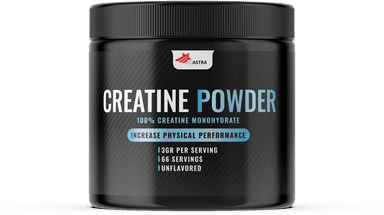
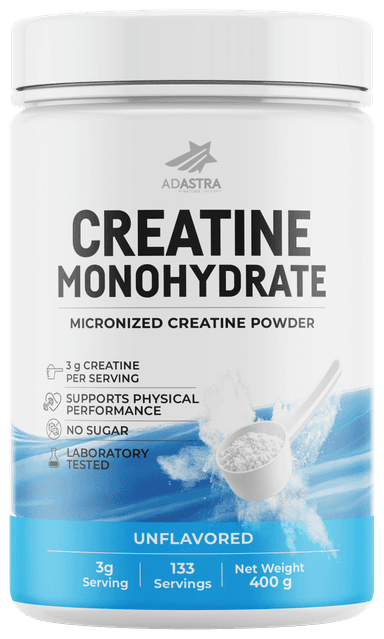
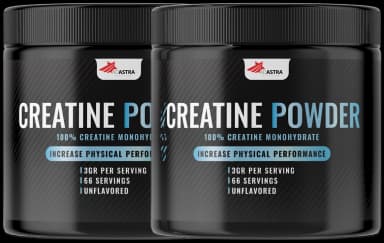
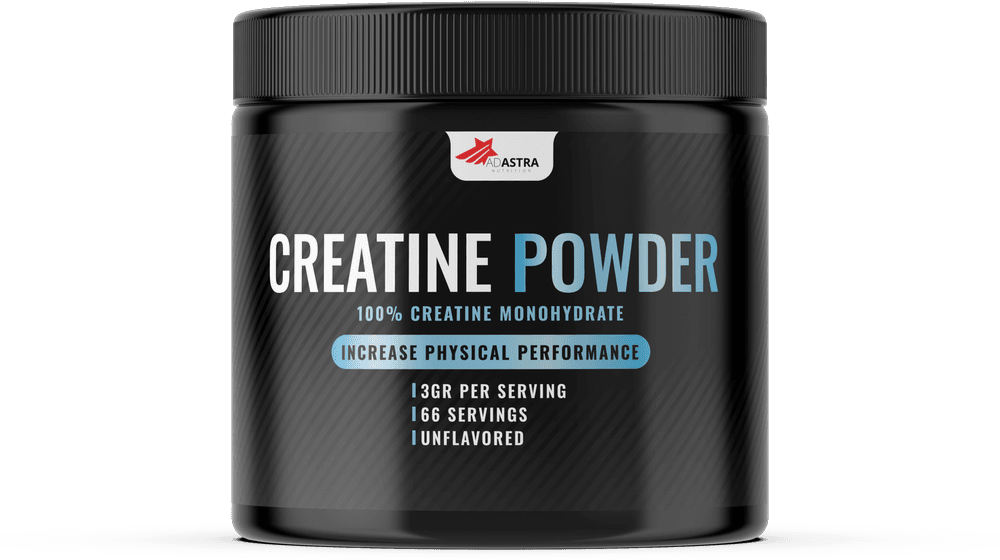
All our creatine products are creatine monohydrate, in a 3 g scoop, 1× a day, unflavored. Prices are from the website.

  • Creatine monohydrate
  • 3 g scoop
  • Free delivery over 1,800 MKD

Price per serving

denars per 3 g scoop
Creatine Monohydrate 200 g≈ 9 MKD
Creatine Monohydrate 400 g≈ 6 MKD
2× Creatine Monohydrate≈ 6 MKD

Servings per pack

Creatine Monohydrate 200 g66 servings
Creatine Monohydrate 400 g133 servings
2× Creatine Monohydrate132 servings

Quick pick by goal

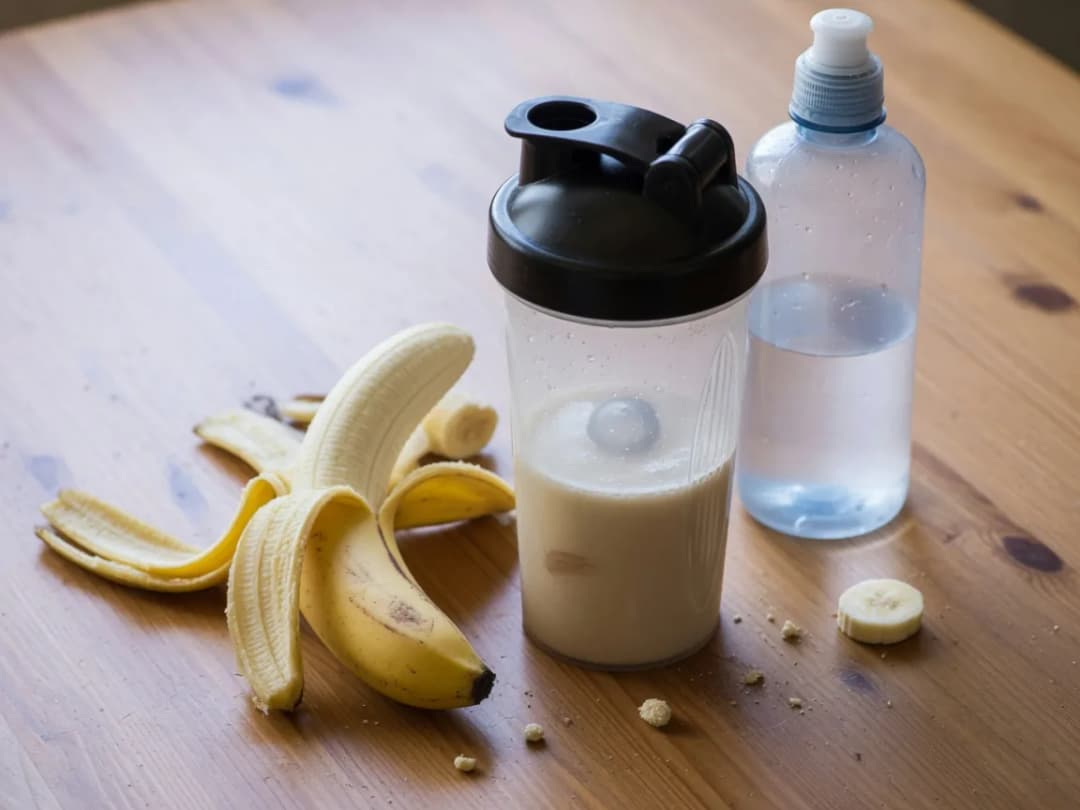
Shaker with a drink, a bottle of water and a peeled banana on a wooden table

Delivery is 150 MKD, and free over 1,800 MKD.

10Questions

Frequently asked questions about creatine

How do you take creatine?+

Dissolve one 3 g scoop in about 200 ml of water, juice or a protein shake and drink it once a day. Take it every day, including on days without training.

How many grams of creatine a day?+

For most adults, 3 to 5 g of creatine monohydrate a day. A higher dose brings no extra effect, except during a short loading phase.

Should you take creatine before or after training?+

The difference is small. One study showed slightly better results when it was taken after training, but the most important thing is to take it every day at a time you can easily remember.

Do I need a loading phase?+

It isn’t required. With loading (about 20 g a day for 5 to 7 days) your muscles fill up within a week, and with 3 g a day in about 4 weeks. In the long run, the result is the same.

Should you take creatine on days without training?+

Yes. Creatine works by keeping the stores in your muscles full, so take the same dose on rest days too.

Does creatine make you hold water and gain fat?+

Creatine draws water into the muscle cells, so the scale may show 1 to 2 kg more in the first weeks. That is water in the muscle, not fat.

Can you take creatine with protein or coffee?+

With protein, yes, that’s the most common combination. Moderate coffee is no problem. If you drink a lot of coffee, take your creatine a few hours later.

Is creatine harmful to the kidneys?+

In healthy people taking the recommended doses, no kidney damage has been shown. Creatine can raise creatinine in lab tests, so tell your doctor. If you have kidney disease, don’t start without a doctor.

Can women take creatine?+

Yes. Creatine is safe and useful for women who train too, and 3 g a day won’t “bulk you up” with muscle. If you are pregnant or breastfeeding, talk to a doctor first.

From what age can you take creatine?+

Our creatine products are for adults. For teenagers who are already past puberty and train seriously, creatine only in agreement with a parent and a doctor.

Does creatine cause hair loss?+

There is no evidence of that. One small study showed a rise in the hormone DHT, but hair was not measured and the result has not been confirmed.

How much does creatine cost in Macedonia?+

At our store, Creatine Monohydrate 200 g costs 590 MKD, 400 g costs 790 MKD, and the 2× Creatine Monohydrate bundle costs 780 MKD.

This text is for information only and is not a substitute for advice from a doctor or pharmacist. Food supplements are not medicines and are not a substitute for a varied and balanced diet and a healthy lifestyle. Do not exceed the recommended daily dose. Keep out of reach of children.

Sources 9
  1. Kreider R.B. et al., „International Society of Sports Nutrition position stand: safety and efficacy of creatine supplementation in exercise, sport, and medicine“, J Int Soc Sports Nutr, 2017;14:18
  2. Antonio J. et al., „Common questions and misconceptions about creatine supplementation: what does the scientific evidence really show?“, J Int Soc Sports Nutr, 2021;18:13
  3. Hultman E. et al., J Appl Physiol, 1996;81(1):232–237
  4. Antonio J., Ciccone V., J Int Soc Sports Nutr, 2013;10:36
  5. Vandenberghe K. et al., J Appl Physiol, 1996;80(2):452–457
  6. Jagim A.R. et al., J Int Soc Sports Nutr, 2012;9:43
  7. Spillane M. et al., J Int Soc Sports Nutr, 2009;6:6
  8. Smith-Ryan A.E. et al., Nutrients, 2021;13(3):877; van der Merwe J. et al., Clin J Sport Med, 2009;19(5):399–404
  9. Regulation (EU) No 432/2012 (authorized health claims)
RECOMMENDED FOR THIS TOPIC

Related products

We use cookies to analyze traffic and improve your experience. See our privacy policy.