Osteoporosis is a medical diagnosis: bone mass and microarchitecture weaken, and the risk of fracture rises. “The most important nutrients for preventing osteoporosis” are not a prescription that overrides bone densitometry, hormonal status or the medicines your doctor has given you. They are building material and cofactors that the body uses while you move and recover.
This article is for informational purposes and does not replace medical advice. Food supplements are not medicines. Consult a doctor before use, especially if you have a chronic illness, are pregnant or breastfeeding, or take medicines. Results vary from person to person.
Here is the list of nutrients and foods. For calcium, bone spurs and calcifications, see the separate article where calcium goes. Products: category Bones and joints.
What osteoporosis is, in short
Bone is constantly being broken down and built up. When building falls behind — age, menopause, a long-term D3 deficiency, steroids, poor absorption, little movement — density drops. Osteopenia is a warning, not “a small thing that some tea will sort out.”
The diagnosis is made clinically, most often with bone densitometry (DEXA), not with an online test. Severe pain after a fall, loss of height, a hunched back — see a doctor, don’t order a powder.
- Women after menopause are at higher risk due to falling estrogen.
- Men are not immune, especially after 65 and with low testosterone or alcohol.
- Smoking, too little protein and sitting speed up the loss.
Movement is a nutrient you can’t drink
Before the jars: loading. Bone responds to force. Walking, climbing stairs, light weights, balance — that is a signal for renewal. Swimming is good for the heart and joints, but on its own it doesn’t load the bone the way walking does.

Don’t start aggressive training after a fracture or with severe osteoporosis without a physical therapist. A fall is more dangerous than “low magnesium.”
Six nutrients that really count

1. Calcium — the bricks, not the whole house
Calcium is the main mineral in the bone matrix. You’ll find it in yogurt, cheese, cultured milk, small fish eaten with their bones, broccoli, green beans, almonds and fortified plant drinks. You don’t need raw unpasteurized milk — the risk isn’t worth it.
Lots of calcium from tablets, without D3 and K2 and without food, is not a smarter plan. The goal is a steady daily intake from your plate, and a supplement only if your doctor or the label justifies it.
2. Vitamin D3 — the gateway for calcium
Vitamin D contributes to normal absorption of calcium. In Macedonia, winter is short on sunshine; many adults have low levels. That is checked with a blood test, not by guesswork.
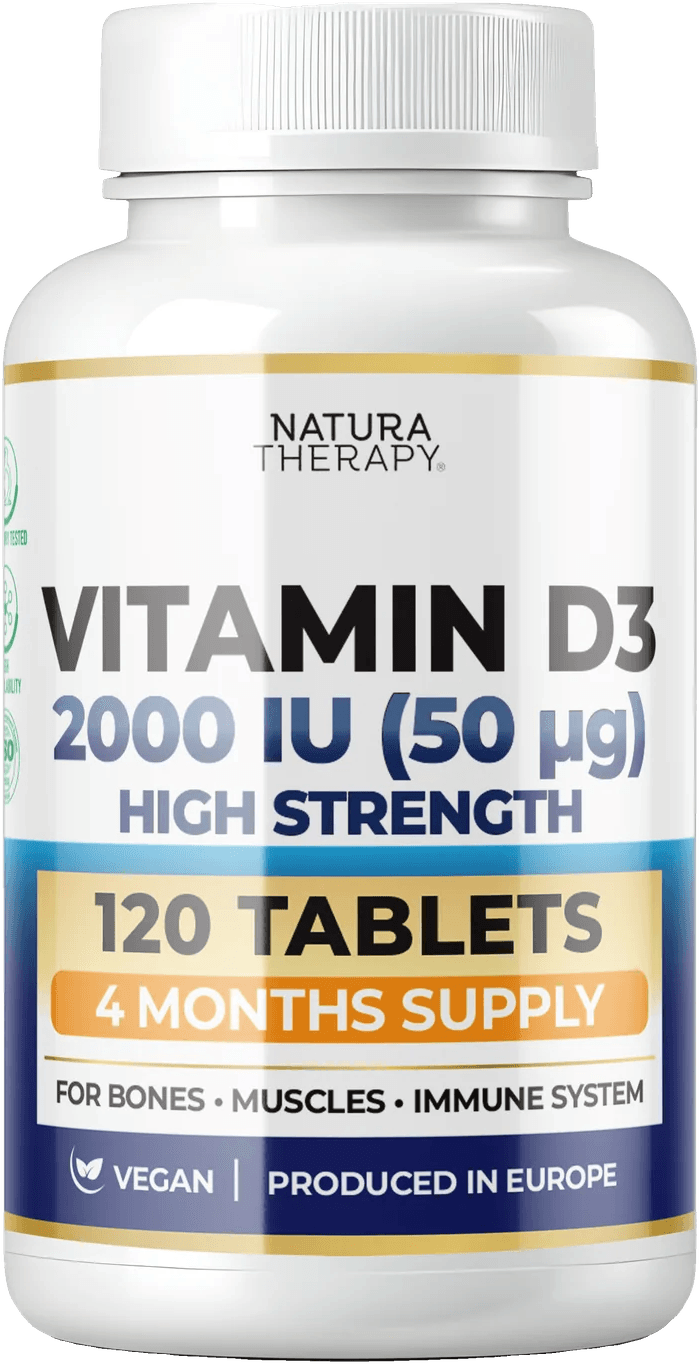
Food: oily fish, eggs, fortified products — rarely enough on their own. Supplement: stick to the dose; megadoses “just in case” are not harmless. How many IU a day and when to take it are covered in the vitamin D3 guide.
3. Vitamin K2 — direction, not an “artery cleaner”
Vitamin K contributes to the maintenance of normal bones. That is why it is often combined with D3. We don’t promise that it “dissolves bone spurs” — that is a different article with different limits.
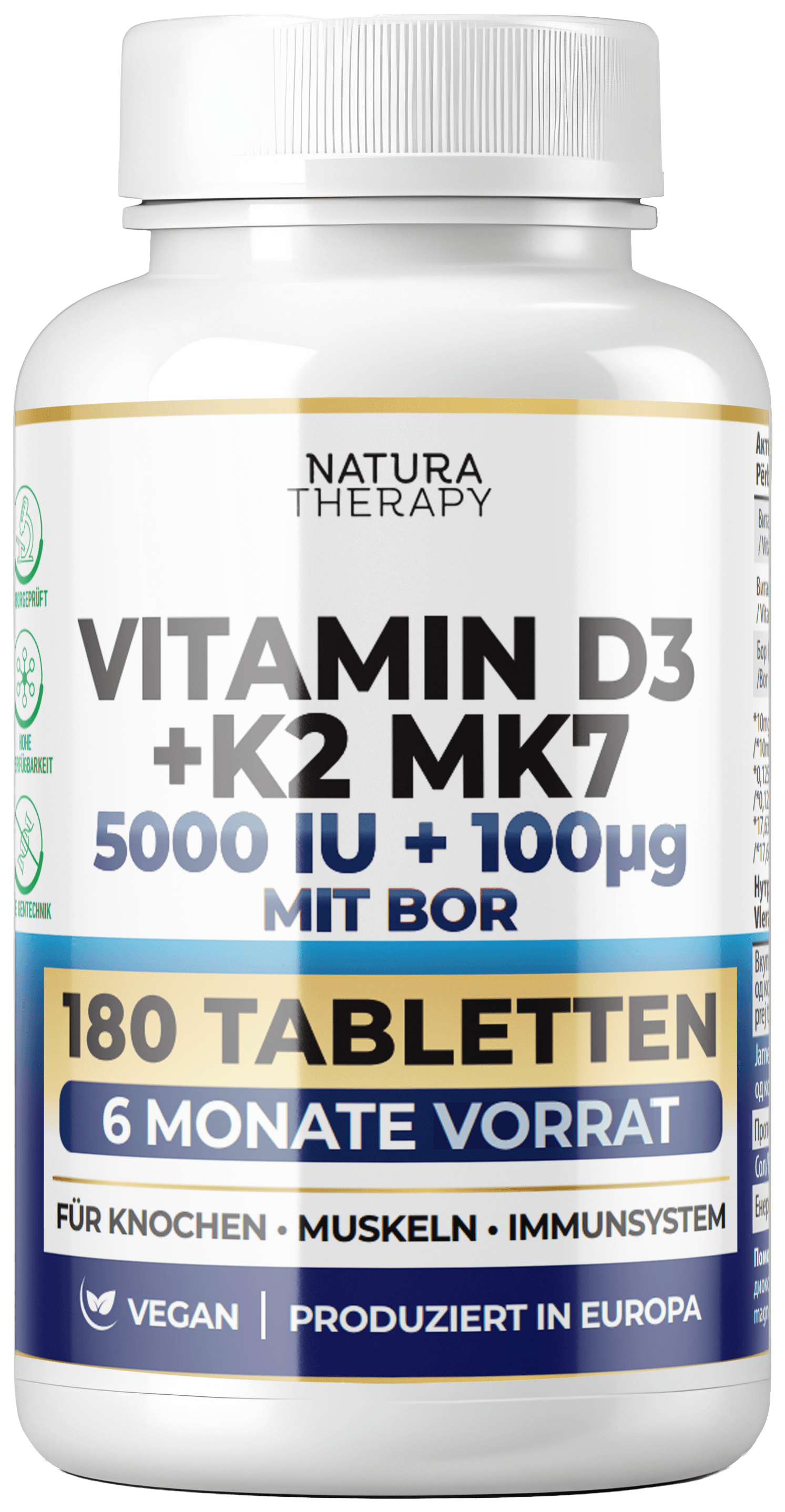
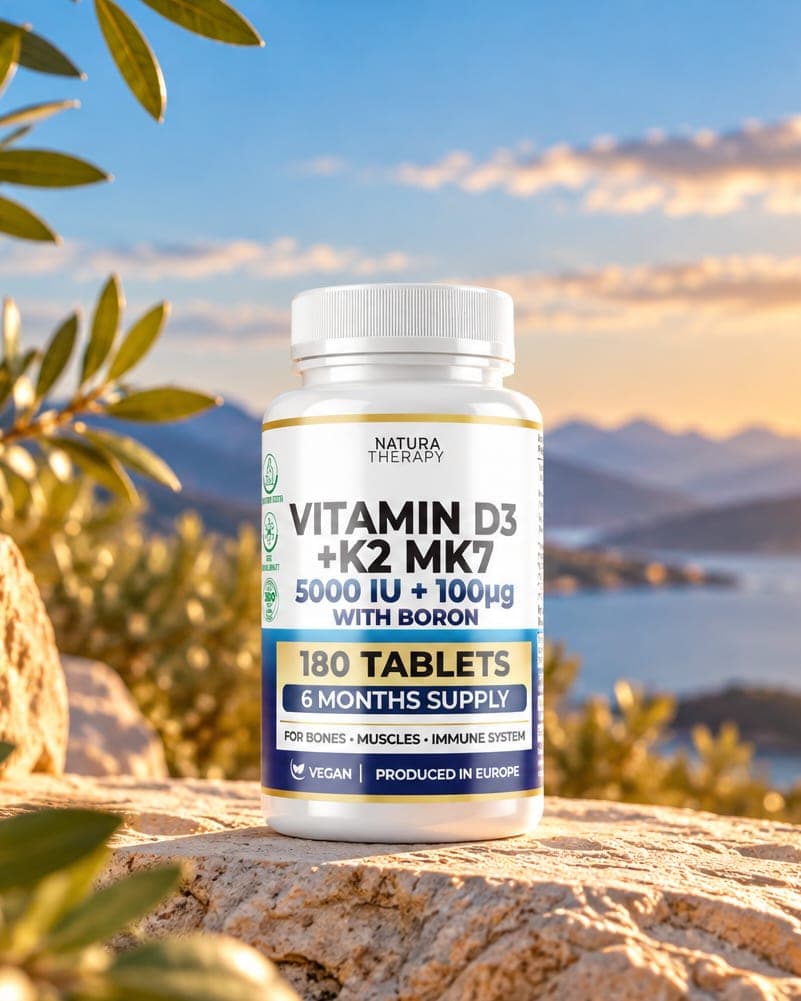
Food: fermented dairy, some hard cheeses, natto (rare here). A practical formula in the catalog: D3 + K2 + Bor (180 tablets). Why D3, K2 and boron come in one tablet and how to take it safely are covered in the guide to D3 + K2 + boron.
4. Magnesium and other minerals
Magnesium takes part in hundreds of reactions, including bone metabolism. Leafy greens, pumpkin seeds, cocoa, legumes. Boron, zinc and silicon are supporting players — useful in context, not “superheroes” that replace a DEXA scan.
5. Protein — the framework before the mineral
Bone is not just chalk. Without enough protein, the matrix is weak. Eggs, fish, legumes, yogurt, meat in moderate portions. Extreme “alkaline” diets that cut out all animal protein often cut exactly what bone needs.
6. Collagen — scaffolding, not a medicine
Collagen is part of the organic matrix. Bone broth is food; collagen peptides are a convenient hydrolysate with vitamin C. They do not treat osteoporosis. For types and joints, see the guide collagen for joints, skin and connective tissue.
How to combine them without chaos
- Plate: dairy or another calcium source + protein + vegetables every day.
- Weight-bearing movement, not just “I’ll stretch on the couch.”
- D3 according to your levels / the label; K2 as a partner, not as a standalone miracle vitamin.
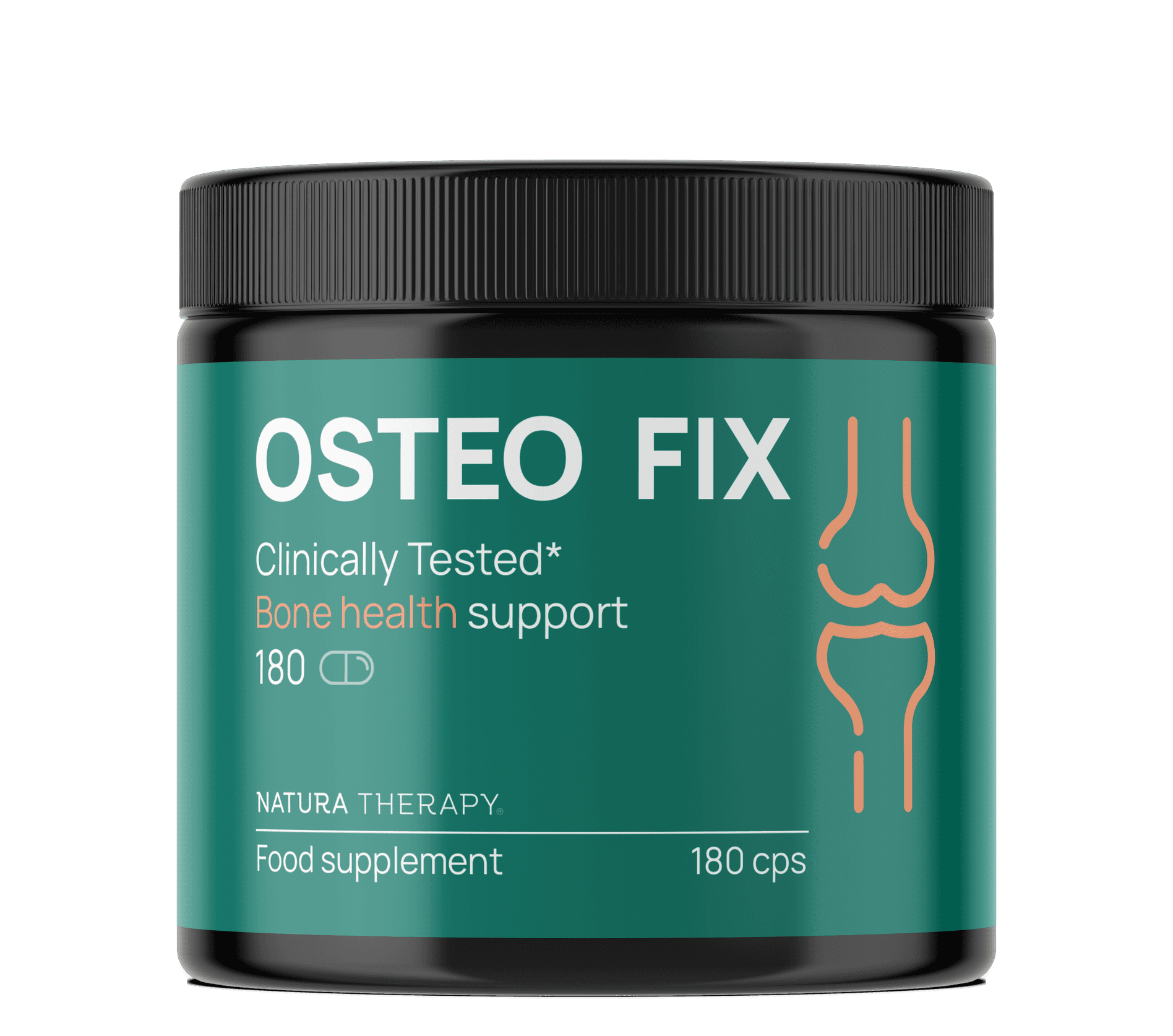
- One bone complex instead of five boxes, for example Osteo Fix — read the composition and don’t double up on calcium.
- Don’t stop a bisphosphonate or any other therapy because you read an article.
Stomach acid affects mineral absorption. Lemon or vinegar in a salad is cooking, not a medicine for osteoporosis. If you take antacids long term — talk to your doctor.
What to avoid as “prevention”
- Raw milk and extreme detoxes that leave you without calories and protein.
- Fear of all grains and dairy “because they acidify the bones” — the evidence doesn’t support the panic if you eat a varied diet.
- Only high-dose calcium without D and K.
- Ignoring falls: glasses, door thresholds, slippers, blood pressure.
Frequently asked questions
- Can I prevent osteoporosis with diet alone?
- Diet and movement reduce the risk, but they don’t guarantee anything. Age, hormones, medicines and genetics remain. Supplements are not a vaccine against fractures.
- Do I need bone densitometry if I feel fine?
- Osteoporosis is often silent until the first fracture. Ask your doctor based on your age, menopause and risk factors — don’t wait for pain.
- Calcium or D3 first?
- Calcium-rich food first, and a D3 check. Calcium alone without D3 is a weak investment. Vitamin K contributes to the maintenance of normal bones, but it is no substitute for food and movement.
- Does Osteo Fix treat osteoporosis?
- No. It is a food supplement for bone support, as stated on the label. Diagnosis and therapy remain with your doctor.
- Does collagen make bone denser?
- Collagen is part of the matrix. Peptides can be nutritional support. Don’t expect a change in your T-score from a powder alone.
- Should I stop my medicine if I start supplements?
- No. Never stop a prescribed therapy because of an article or a jar. Tell your doctor what you take.
- Which product if I want D3, K2 and boron together?
- See D3 + K2 + Bor. The dose is on the label; if you take medicines that affect vitamin K, a consultation is a must. More in the guide to D3 + K2 + boron.
This article is for informational purposes and does not replace medical advice. Food supplements are not medicines. Consult a doctor before use, especially if you have a chronic illness, are pregnant or breastfeeding, or take medicines. Results vary from person to person.