Black Friday: discounts up to 70%See the products on sale →LIMITED QUANTITIES!
•15 MIN READ

Collagen: which type to choose, how and when to take it

Which type of collagen to choose, how and when to take it, how many grams and how soon to expect results, with a comparison of all our collagen products.

Collagen: which type to choose, how and when to take it

Quick answer. Collagen is most often taken as hydrolyzed collagen (collagen peptides), once a day, in a dose of about 5 to 10 grams, dissolved in water or milk. The time of day matters less than consistency. In studies, the first changes in the skin were measured after about 8 weeks, and in the joints and bones after several months. Collagen itself has no authorized health claim in the EU, but vitamin C contributes to normal collagen formation for the normal function of skin, bones and cartilage.

Collagen is among the most sought-after supplements in Macedonia. People search for “kolagen mk,” “collagen,” “collagen powder” and, most often, ask one thing: which one should I take and how should I take it? In this guide we will go step by step, without magic promises. I will tell you what we really know, where science is still looking for answers, and how to choose a product that fits your goal.

In short

Collagen in 4 numbers

5 to 10 ga dayof hydrolyzed collagen, dissolved in water or milk
1× a dayevery daythe time of day matters less than consistency
≈ 8 weeksskinthat’s how long the studies ran until the first measured changes
a few monthsjoints and bonesgive it at least 8 to 12 weeks of regular use
01Basics

What collagen is and why the body makes it

The most abundant protein in the human body. Think of it as scaffolding.

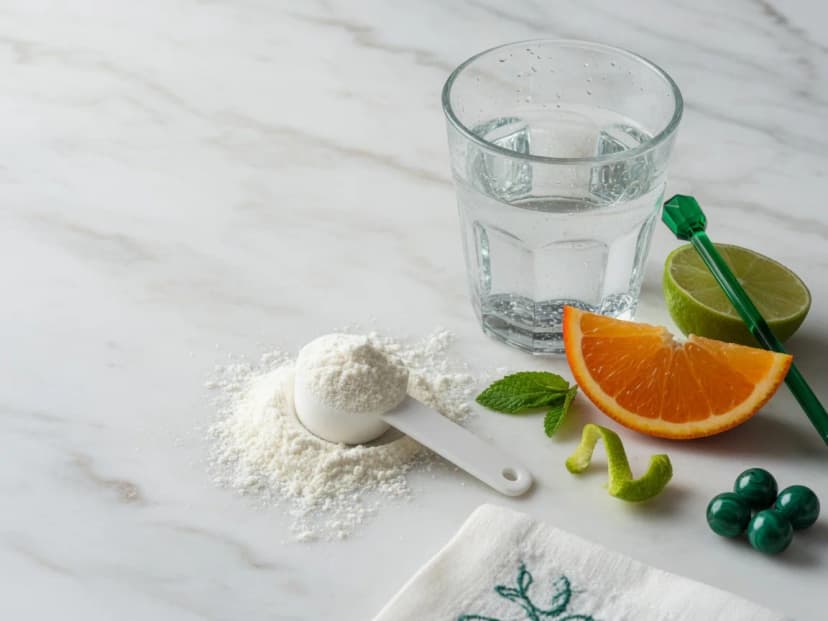
White powder in a scoop, a glass of water, half an orange and a lime on a light marble surface
  • It holds everything together: it keeps skin firm, makes tendons and ligaments resilient, and is part of cartilage and bone mass.

  • Built from amino acids: mostly glycine, proline and hydroxyproline.

  • It slows down with age: sun, smoking, too little sleep and a poor diet use it up even more. That doesn’t mean that after forty you “have no collagen,” but that taking care becomes more important.

C

Vitamin C: the only claim the EU recognizes

Without vitamin C, the body cannot build collagen properly. Collagen itself has no authorized health claim in the EU, but vitamin C contributes to normal collagen formation for the normal function of:

  • skin
  • bones
  • cartilage
  • blood vessels
  • gums
  • teeth

That’s why good collagen products often already contain vitamin C.

02Types

Types of collagen: I, II and III

There are more than twenty types of collagen in the body, but three matter for supplements:

I

Type I

Most common

The most abundant: skin, bones, tendons. Most collagen peptides on the market, including ours.

II

Type II

Joints

The main collagen in cartilage. Found in some joint formulas, often in a small dose as “undenatured” collagen.

III

Type III

Skin

Goes together with type I in the skin and blood vessels.

Don’t get too caught up in the numbers. After digestion, hydrolyzed collagen is broken down into small peptides and amino acids, and the body decides on its own where to use them.

03Choosing

Which type of collagen to choose

A cup of matcha collagen drink and a glass of fruity collagen drink on a wooden table in the morning

Hydrolyzed collagen (collagen peptides)

It also goes by the name collagen peptides. The large molecule is “cut” into short pieces, so the powder dissolves in cold water, has no gelatin taste and doesn’t thicken.

Most clinical studies were done with hydrolyzed collagen specifically.

Powder, liquid or capsules

FormDoseAdvantageCaution
PowderOne 10 g spoon, more than a bottle of liquid holdsThe biggest dose for the money; mixes into water, milk, coffee or a smoothieNeeds mixing
LiquidThe collagen dose is usually lowerPractical, no mixing; often with hyaluronic acid and vitaminsLower dose
CapsulesFor 5 to 10 g you would need many capsules a dayHandy for travelThat’s why most people end up choosing powder

Bovine or marine

Bovine (beef)

The most common and most widely available.

Marine (fish)

From fish, often more expensive; preferred by people who don’t eat beef.

Which is better?There isn’t enough evidence that one is clearly better for skin or joints. What matters more is that it suits your diet, religion or allergies.

If you are allergic to fish, marine collagen is not for you.

04How to take it

How and when to take collagen

  1. Morning or evening?

    It doesn’t matter much; there is no serious study showing a better time. What matters is that you take it every day and don’t skip.

  2. When it’s easiest

    Most people take it in the morning, since that’s easiest to remember. Matcha collagen contains caffeine, so it’s a morning drink; in the evening, choose a caffeine-free flavor.

  3. What to mix it with

    Cold water, milk, juice, coffee or a smoothie; it doesn’t have to be hot. You can have it on the same day as a protein shake.

Collagen is not a replacement for whey for muscles, because it doesn’t have a complete amino acid profile.

05Dose

How many grams of collagen a day?

In studies, most often 2.5 to 10 grams of hydrolyzed collagen a day.

A cup of coffee with a wooden spoon and powder, on a linen cloth by a window
Skin2.5 to 5 g
Joints and bones5 to 10 g
Range in studies2.5 to 10 g
0 g2.557.510 g

Always stick to the label of your product. A double dose does not mean a double effect.

Doses for our products

ProductHow to take itCollagen per dose
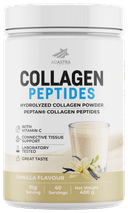
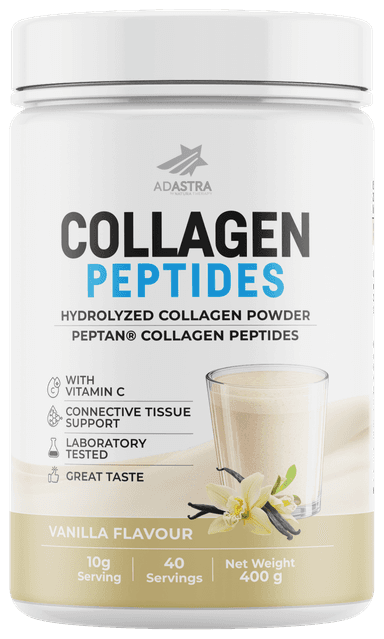
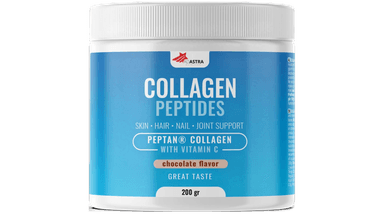
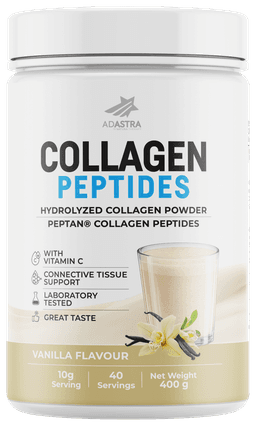
Collagen Peptides 400 gCollagen Peptides 400 g and 200 g10 g in 250 ml of water or milk, once a day.
8.93 g
Peptan® type 1 collagen peptides and 486 mg vitamin C
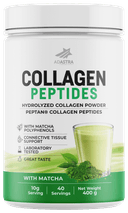
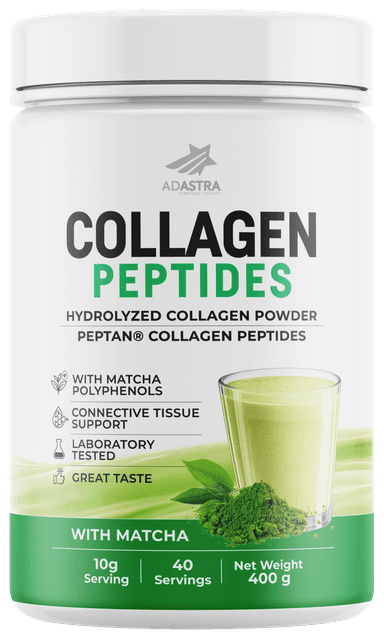
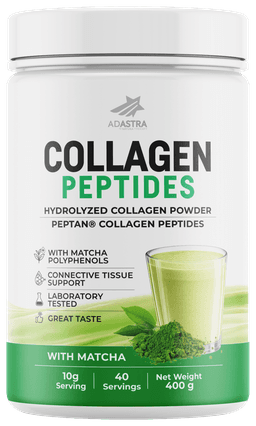
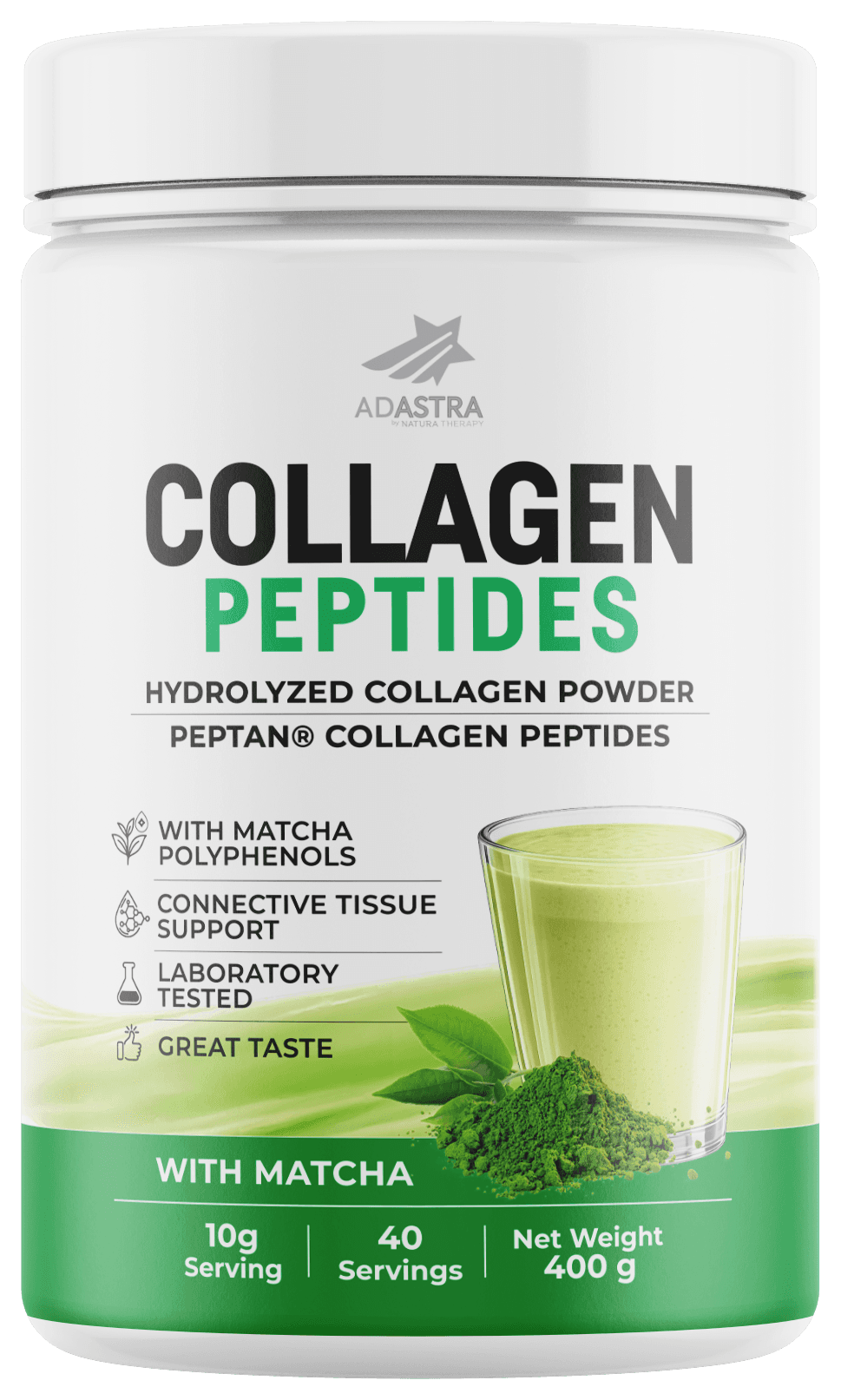
Matcha Collagen 400 gMatcha Collagen10 g in about 250 ml of water, once a day.
8 g
hydrolyzed collagen peptides and 2 g of Japanese matcha
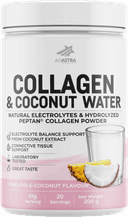
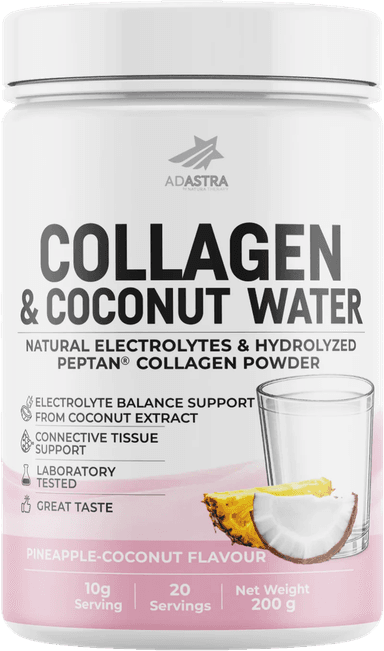
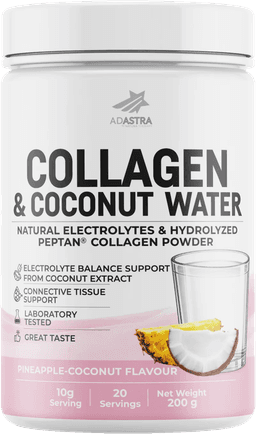
Collagen & Coconut WaterCollagen & Coconut Water10 g in a glass of water, once a day, in the morning or around training.—
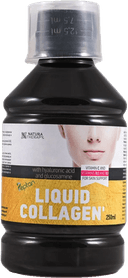
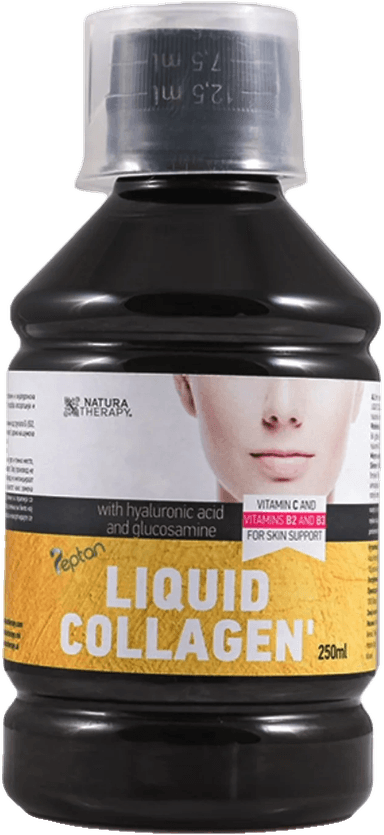
Liquid Collagen 250 mlLiquid Collagen and Beauty Collagen20 ml, once or twice a day, ideally in the morning before a meal.
5 g
In 20 ml: 5,000 mg Peptan® type 1
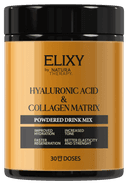
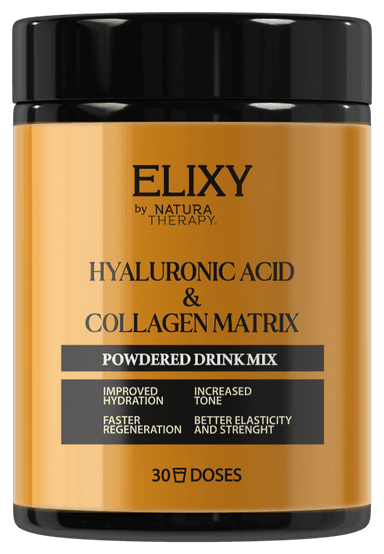
Hyaluronic Acid & Collagen MatrixHyaluronic Acid & Collagen Matrix3 g in about 200 ml of cold water, once a day.—

How much collagen is in one dose: where the label states it.

06Expectations

How long until you see results

Collagen isn’t a cream whose effect you see right away. This is the realistic timeline from the studies:

  1. ≈ 8 weeksSkin
    Measured improvement

    According to the studies, with 2.5 or 5 g of collagen peptides a day, skin elasticity after 8 weeks was significantly better than with placebo.

  2. 24 weeksJoints
    Tracked over months

    Research in athletes who drank 10 g of collagen hydrolysate a day tracked joint pain during movement for a full 24 weeks.

  3. 12 monthsBones
    Longest studies

    In postmenopausal women taking 5 g of specific collagen peptides a day, bone density was measured over a full 12 months.

The results are encouraging, but the studies used specific products and doses, and not everyone responds the same way. A good rule: take it regularly for 8 to 12 weeks before judging whether it helps you.

07By goal

Collagen for skin, joints and bones

A woman with trekking poles walks along a mountain trail above fog and wooded hills at dawn

For skin

The most researched is hydrolyzed type I collagen, often with vitamin C and hyaluronic acid. The basics: sun protection, enough sleep and water, no smoking. No supplement can make up for them.

For joints

It is most often combined with glucosamine and hyaluronic acid. Movement is just as important: strength training and walks signal the connective tissue to adapt.

With severe pain, swelling or an injury, the first step is a doctor, not an order of powder.

An older person walks along a forest trail in autumn, with easy, comfortable movement

Best collagen for bones

Many people search for “best collagen for bones.” The honest answer: hydrolyzed type I collagen, about 5 to 10 g a day, taken for months.

But for bones, the nutrients with authorized claims matter even more:

  • vitamin D
  • calcium
  • vitamin K
  • magnesium

Vitamin D and calcium are needed for the maintenance of normal bones. Collagen is a complement, not a replacement. If you have osteoporosis, your doctor decides on the therapy.

08Combinations

What to combine collagen with

Tip: The smartest combination is collagen + vitamin C. Our Collagen Peptides already have 486 mg of vitamin C in every dose, so there’s no need for an extra tablet.

  • C

    Vitamin C

    Essential for collagen formation. If your collagen doesn’t contain it, eat peppers, citrus fruits or kiwi, or take a separate vitamin C.

  • HA

    Hyaluronic acid

    Found naturally in the skin and joint fluid. Often paired with collagen in skin and joint products.

  • GlcN

    Glucosamine

    In joint formulas. If you are allergic to shellfish and crustaceans, check the source.

  • D3

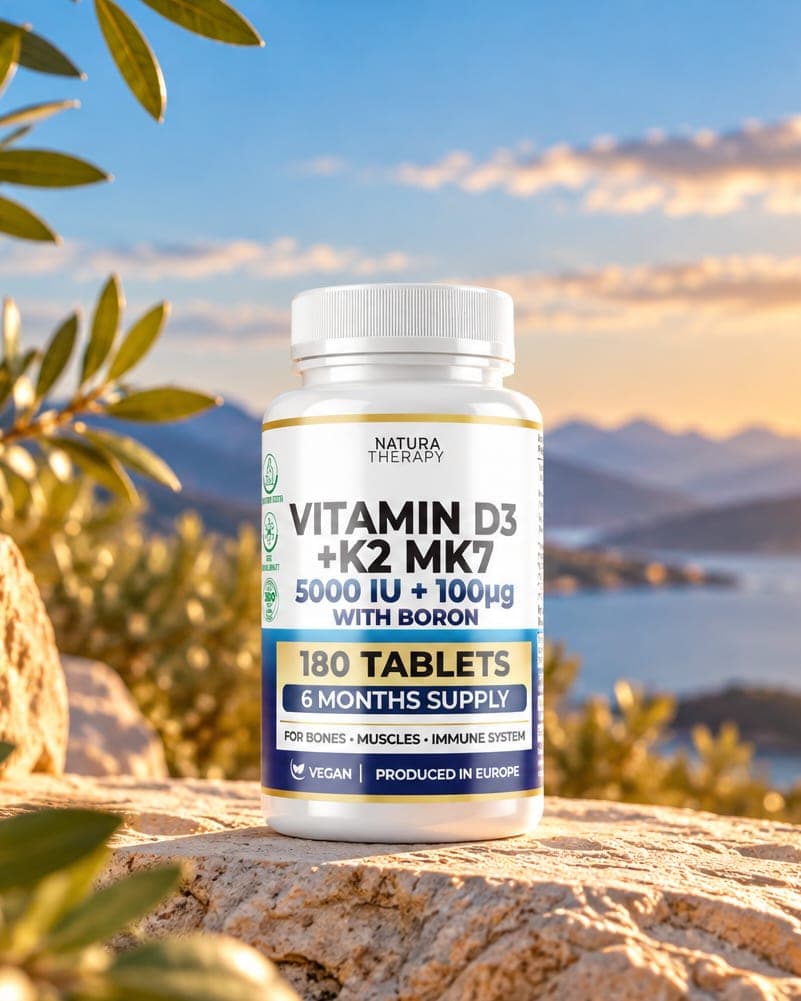
    Vitamin D3 and K2

    For those who care about their bones.

09Safety

Who should be careful

Before you start, talk to a doctor or pharmacist if:
  • you are pregnant or breastfeeding
  • you have a fish, egg or shellfish allergy (check what the collagen is made from and whether the product contains glucosamine)
  • you have kidney disease or have been advised to follow a protein-restricted diet
  • you take medicines or have a chronic condition
  • it is for children. Our Collagen Peptides are not intended for children under 15 years of age.

Usually well toleratedSometimes a feeling of heaviness in the stomach, mild bloating or an unpleasant taste. If it bothers you, try a smaller dose or take it with food.

10Our collagens

Which collagen to choose

All our collagen products in one place, with the prices from the site.

  • Peptan® collagen peptides
  • Vitamin C in Collagen Peptides
  • Free delivery over 1,800 MKD

Quick pick by goal

Full overview

Biggest dose1+1
Collagen Peptides 400 g

Collagen Peptides 400 g

Powder: vanilla, raspberry, chocolate · 8.93 g Peptan® type 1 + 486 mg vitamin C
Dose
10 g, 1× a day
Pack size
40 servings
1,490 MKDView
To try it out
Collagen Peptides 200 g

Collagen Peptides 200 g

Powder: vanilla, raspberry, chocolate · Peptan® + vitamin C
Dose
10 g, 1× a day
Pack size
20 servings
990 MKDView
1+1
Matcha Collagen 400 g

Matcha Collagen 400 g

Powder with Japanese matcha · 8 g collagen peptides + 2 g matcha
Dose
10 g, 1× a day
Pack size
40 servings
1,490 MKDView
2+1
Collagen & Coconut Water

Collagen & Coconut Water

Powder, pineapple-coconut · Peptan® + coconut extract (electrolytes)
Dose
10 g, 1× a day
Pack size
20 servings
975 MKDView
Liquid Collagen 250 ml

Liquid Collagen 250 ml

Liquid · 5,000 mg Peptan® type 1, 520 mg glucosamine, 5.2 mg hyaluronic acid, vitamins C, B2, B3
Dose
20 ml, 1–2× a day
Pack size
250 ml
290 MKDView
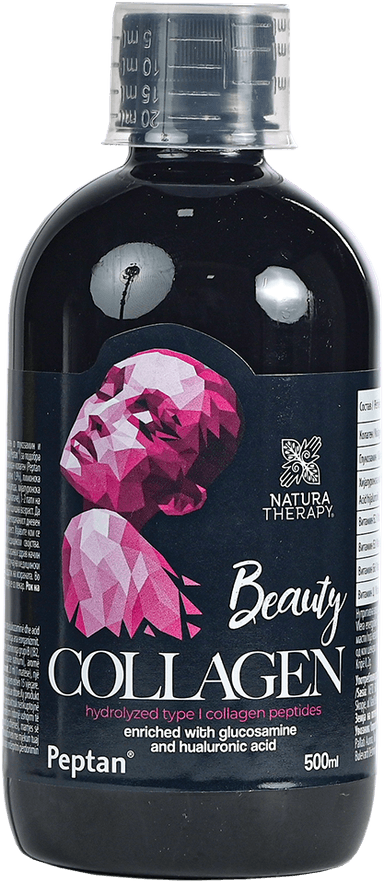
Beauty Collagen 500 ml

Beauty Collagen 500 ml

Liquid · 5,000 mg Peptan®, 520 mg glucosamine, 5.2 mg hyaluronic acid
Dose
20 ml, 1–2× a day
Pack size
500 ml
1,200 MKDView

Offers

There is often an offer on Collagen Peptides 400 g and Matcha Collagen: two packs for 2,490 MKD. For Collagen & Coconut Water: 2+1 for 1,950 MKD.

Delivery is 150 MKD, and free over 1,800 MKD. Also see the category Bones and joints.

11Questions

Most common questions about collagen

How do you take collagen?+

One dose (for powder, most often 10 g) is dissolved in 250 ml of water or milk and taken once a day. Liquid collagen is drunk straight, in a 20 ml measure. The most important thing is to take it every day.

When should you take collagen, in the morning or in the evening?+

There is no evidence that the time of day makes a difference. Most people take it in the morning because that makes it easiest to remember. Matcha collagen is better in the morning, because matcha contains caffeine.

How many grams of collagen a day?+

In studies, most often 2.5 to 10 g of hydrolyzed collagen a day. Stick to the label: for Collagen Peptides that is one 10 g dose (8.93 g of collagen).

Peptides or liquid collagen, which is better?+

Collagen peptides in powder give you a bigger dose of collagen for less money. Liquid collagen is more practical and often contains hyaluronic acid and glucosamine. Choose the form you will find easier to take every day.

How long before you see an effect?+

In skin studies, changes were measured after about 8 weeks, and for joints and bones after 6 to 12 months. Give collagen at least 8 to 12 weeks of regular use.

What is the best collagen for bones?+

Hydrolyzed type I collagen, about 5 to 10 g a day, taken for months, together with vitamin D, calcium and vitamin K. Collagen is a complement, and osteoporosis is treated by a doctor.

What is hydrolyzed collagen?+

Collagen broken down into short peptides so that it dissolves in cold liquid and is easier to digest. Hydrolyzed collagen and collagen peptides are the same thing.

How much does collagen cost in Macedonia?+

With us, Collagen Peptides 400 g costs 1,490 MKD, 200 g 990 MKD, Matcha Collagen 1,490 MKD, Liquid Collagen 290 MKD, and Beauty Collagen 1,200 MKD.

Does collagen go straight to the joints?+

Not directly. Collagen is digested into peptides and amino acids, and the body distributes them wherever it needs them. It is not “glue” that goes only to the sore knee.

Is there vegan collagen?+

Real collagen is always of animal origin. “Vegan collagen” usually means a combination of amino acids, vitamin C and plant extracts that support collagen formation.

Does collagen cure osteoarthritis?+

No. Food supplements do not treat or prevent diseases. If you have osteoarthritis or another joint condition, follow your doctor’s plan.

Can I take collagen with protein or creatine?+

Yes, they can be taken on the same day. Collagen does not replace whey, because it does not have a complete amino acid profile for muscles.

This text is for information only and is not a substitute for advice from a doctor or pharmacist. Food supplements are not medicines and are not a substitute for a varied and balanced diet and a healthy lifestyle. Do not exceed the recommended daily dose. Keep out of reach of children.

Sources 4
  1. Proksch E. et al., Skin Pharmacol Physiol, 2014 (PubMed 23949208)
  2. Clark K.L. et al., Curr Med Res Opin, 2008
  3. König D. et al., Nutrients, 2018
  4. Regulation (EU) No 432/2012 (authorized health claims for vitamin C)
RECOMMENDED FOR THIS TOPIC

Related products

We use cookies to analyze traffic and improve your experience. See our privacy policy.