Black Friday: discounts up to 70%See the products on sale →LIMITED QUANTITIES!
•16 MIN READ

Turmeric: how to use it, how much a day and side effects (guide)

How to use turmeric in food, tea, golden milk, liquid form or capsules, how much a day, why with black pepper, for joints, side effects and who should be careful.

Turmeric: how to use it, how much a day and side effects (guide)

Quick answer. Turmeric is best used with food that contains a little fat and a pinch of black pepper. As a spice, ½ to 1 teaspoon a day (about 1.5 to 3 g) is enough. Supplements with extract contain much more curcumin, so with those, stick to the dose on the pack. The most common side effects are mild stomach complaints, such as nausea, reflux or soft stools. Be careful if you have gallstones, take blood-thinning medicines or are pregnant. In that case, ask a doctor before taking a supplement. As a spice in food, turmeric is safe for almost everyone.

Turmeric is the yellow root that gives curry its color, and in recent years it has become one of the most searched-for natural supplements here. People ask “how to use turmeric,” “kurkuma upotreba,” “turmeric side effects,” “how much turmeric a day” and whether it should be taken with black pepper. In this guide we answer all of those questions with numbers, with recipes and with what studies have actually shown.

You will also read when turmeric makes sense and when it doesn’t, so you know what to expect before you buy a jar or a bottle.
Bones and joints

01Basics

Turmeric and curcumin: what is the difference

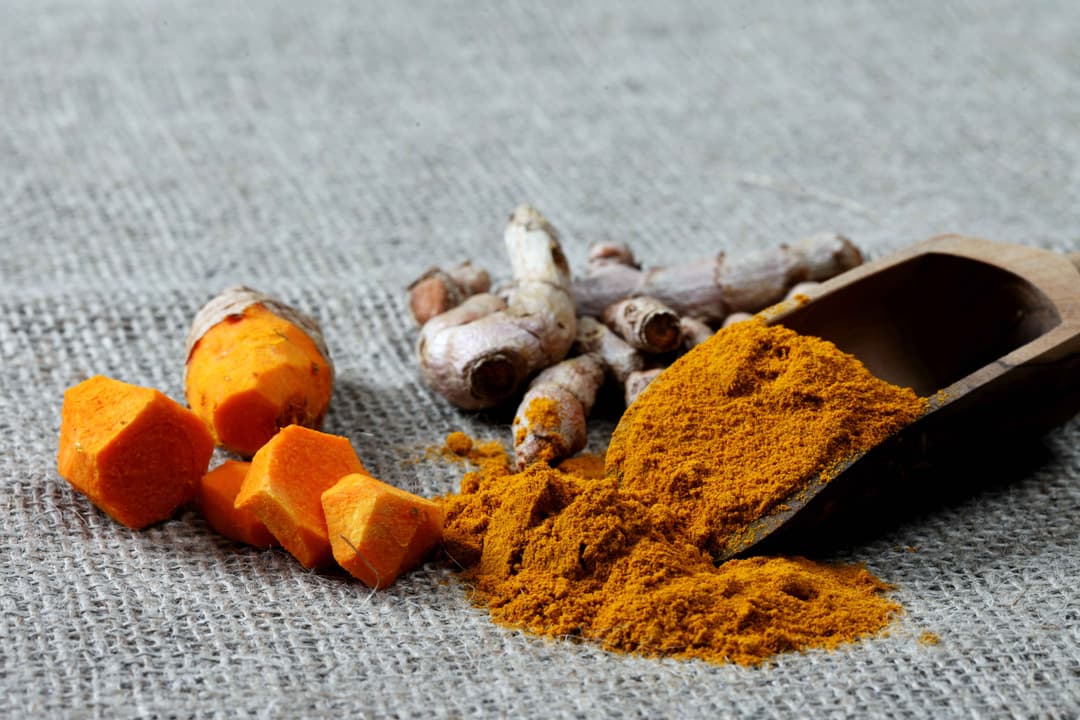
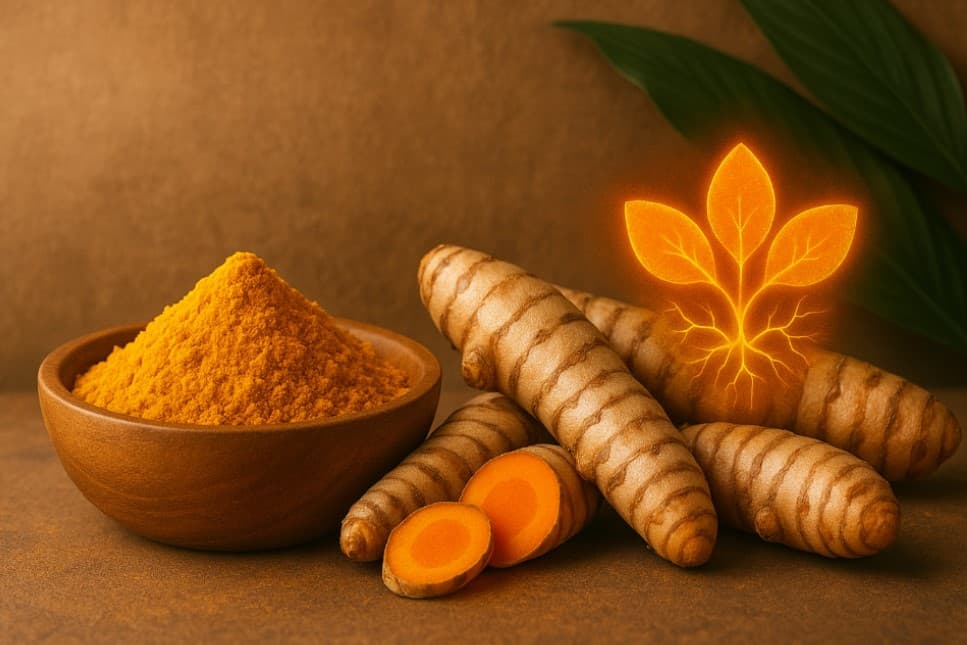
Bowl of ground turmeric and fresh turmeric roots on a wooden surface

Turmeric (Curcuma longa) is a root, a relative of ginger. It is sold fresh, dried and ground into powder. Curcumin is its main active substance, the yellow pigment that most studies focus on.

2 to 5%curcumin in ground turmericone teaspoon (about 3 g) provides roughly 60 to 150 mg
95%curcuminoids in the extractone dose may contain 500 mg or more

How much curcumin you get

mg of curcumin, approximately
1 teaspoon of ground turmeric60 to 150 mg
One dose of extract500 mg or more

The spice is for flavor and a varied diet, while the extract is for a larger and steady amount of curcumin every day.

  • It is poorly absorbed. Curcumin doesn’t dissolve in water, and the liver quickly breaks down whatever does get in. That’s why a spoonful of turmeric in a glass of water on an empty stomach is almost the worst way to take it.
02Studies

What turmeric is good for: what the studies show

Turmeric is one of the most researched herbs in the world, but many of the studies were done in the lab or on animals. Here is where there are results in humans:

Joints (knee osteoarthritis)

The extracts reduced pain and stiffness compared with placebo, in some studies similarly to common pain medicines.
Moderate: many studies, but short and not very large

Muscles after training

Less muscle soreness and faster recovery after strenuous exercise.
Moderate

Digestion

Traditionally used for a feeling of fullness, slow digestion and gas.
Long tradition, few modern studies

Liver (fatty)

A small drop in liver enzymes in people with fatty liver.
Weak to moderate; the results are small

Cancer, Alzheimer’s, depression

Mainly lab and small studies.
Weak; turmeric is not a treatment for these diseases
Turmeric is not a medicine for everything, as you often read. It makes the most sense for joints and stiffness, for recovery after training and as a pleasant part of your diet.
03How to use

How to use turmeric: spice, tea, powder or supplement

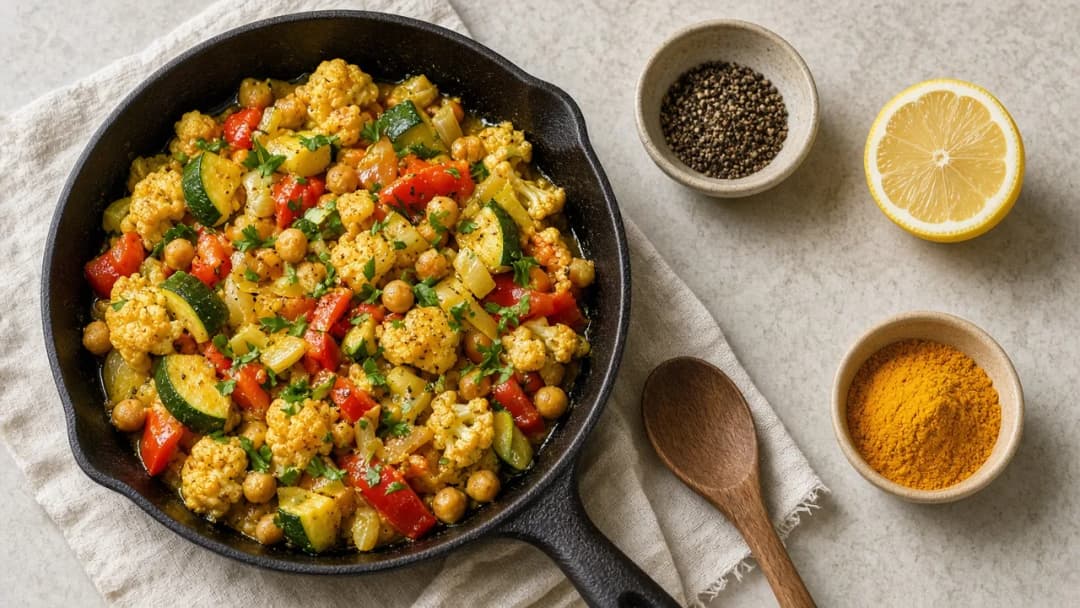
A pan of fried vegetables, chickpeas and turmeric in olive oil, next to a bowl of black pepper and a lemon

In food

This is the simplest way. Add it to soups, beans, lentils, rice, chicken, fried eggs, roasted vegetables or salad dressing.

  • with a little oil or butter
  • with a pinch of black pepper
  • Tip: Add the turmeric to the oil before the vegetables and fry it briefly, about ten seconds. This makes the flavor milder and the color nicer.

Turmeric tea: a recipe for one cup

Of all the ways, curcumin is absorbed the least from tea. So think of it more as a warm, pleasant drink.

1

Water and turmeric

In 250 ml of water, put ½ teaspoon of turmeric powder or 2 to 3 thin slices of fresh root.
2

Pepper and spices

Add a pinch of black pepper, a piece of ginger and a cinnamon stick if you like.
3

Simmer gently

5 to 10 minutes, then strain.
4

Honey and lemon

Once it has cooled a little, add a teaspoon of honey and some lemon.
A cup of golden turmeric milk, a cinnamon stick and ginger on a linen cloth by a window

Golden milk

This is the better version of the tea, because milk provides fat.

  • a cup of warm milk (cow’s or plant-based)
  • ½ teaspoon of turmeric
  • a pinch of black pepper, a little cinnamon and ginger
  • heat without boiling, sweeten with honey if you like

Many people drink it in the evening as a calming ritual.

Liquid turmeric and capsules

Liquid form

Easy to drink, with one measure from the cup. A good choice if you don’t like swallowing capsules.

Capsules

Handy on the go.

Supplements are for people who want the same, larger amount of curcumin every day, especially for the joints or after training. With both forms, check how much curcumin there is per dose and whether there’s piperine or another way to improve absorption.

04Dose

How much turmeric per day

Ground turmeric and sliced pieces of fresh root on a gray surface
½ to 1teaspoon as a spiceabout 1.5 to 3 g daily
3 gof powder a day at mosttraditional dose for digestion
500 to 1,000mg of extract in the studiesor as directed on the pack
FormHow much per dayNote
Ground turmeric in food½ to 1 teaspoon (1.5 to 3 g)Safe for almost everyone, with fat and pepper
Turmeric powder as a “grandma’s medicine”0.5 to 1 g, 2 to 3 times a dayThe traditional dose for digestion, no more than 3 g daily
Turmeric tea1 to 2 cupsMore for enjoyment; curcumin is poorly absorbed
Extract (95% curcuminoids)As directed on the pack; in the studies usually 500 to 1,000 mg dailyWith a meal, without combining several turmeric products
Fresh root1 to 2 cm piece dailyGrate it into food or a smoothie
  • More is not better. If you take a supplement, don’t add a second and a third turmeric product on top of it; stick to one formula and give it time.
05Black pepper

Turmeric with black pepper: why together

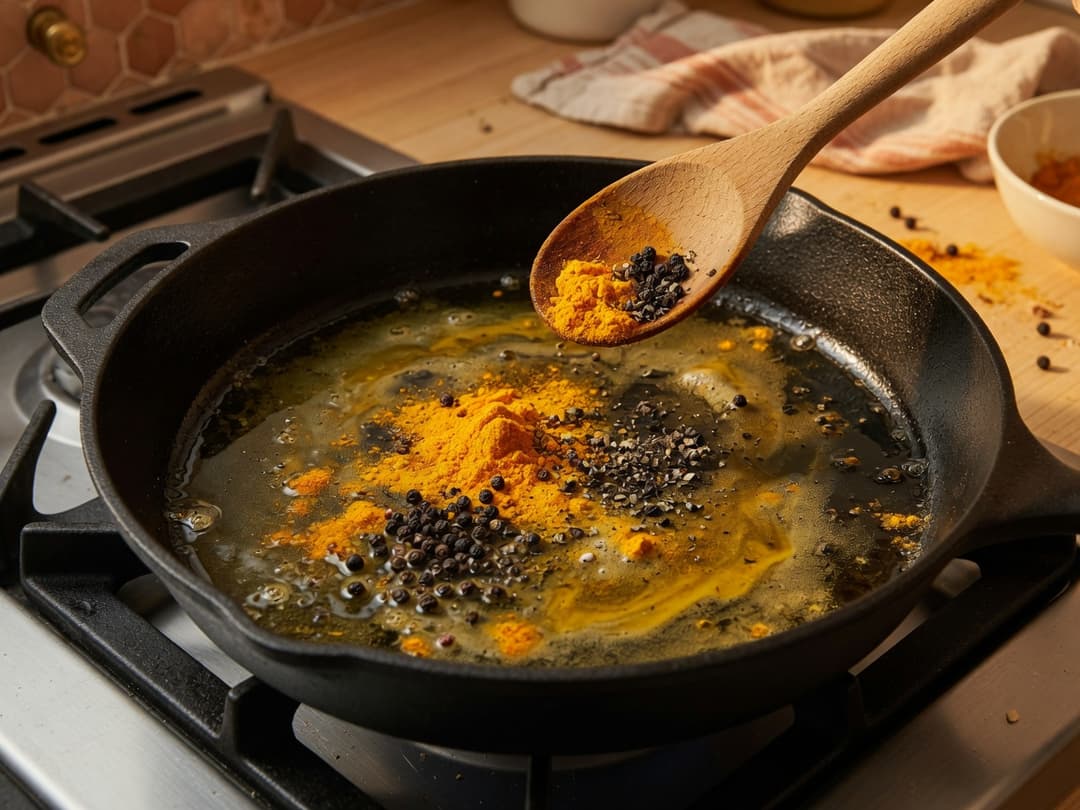
Turmeric and black pepper in a pan on the stove

Black pepper contains piperine, a substance that slows the breakdown of curcumin in the gut and in the liver.

The classic study in volunteers

curcumin in the blood
Curcumin alone1×
Curcumin + a little piperineabout 20×

In the kitchen

Wherever you add turmeric, add a pinch of pepper too.

In supplements

A standardized pepper extract is used, usually 5 to 20 mg per dose.
  • Important: Piperine doesn’t affect only curcumin. It can also change the absorption of some medicines. If you take medicines every day, ask a pharmacist or doctor before taking a supplement with piperine.

More on this pair: turmeric and black pepper: why combine them.

06When

When to take it: morning or evening, before or after meals

The time isn’t decisive. What matters is that you take it with a meal or right after a meal: fat from food helps curcumin get absorbed, and your stomach tolerates it better. On an empty stomach it more often causes burning or nausea.

1

One dose daily

With breakfast or lunch, whichever you stick to more regularly.

Two or three doses

After each main meal.

Golden milk

In the evening, if you enjoy it as a bedtime ritual.

When to expect a change

From day one
Every day, with a meal, one product.
4 to 8 weeks
The first changes, if there are any. That is also how long most studies lasted.
07Joints

Turmeric for joints

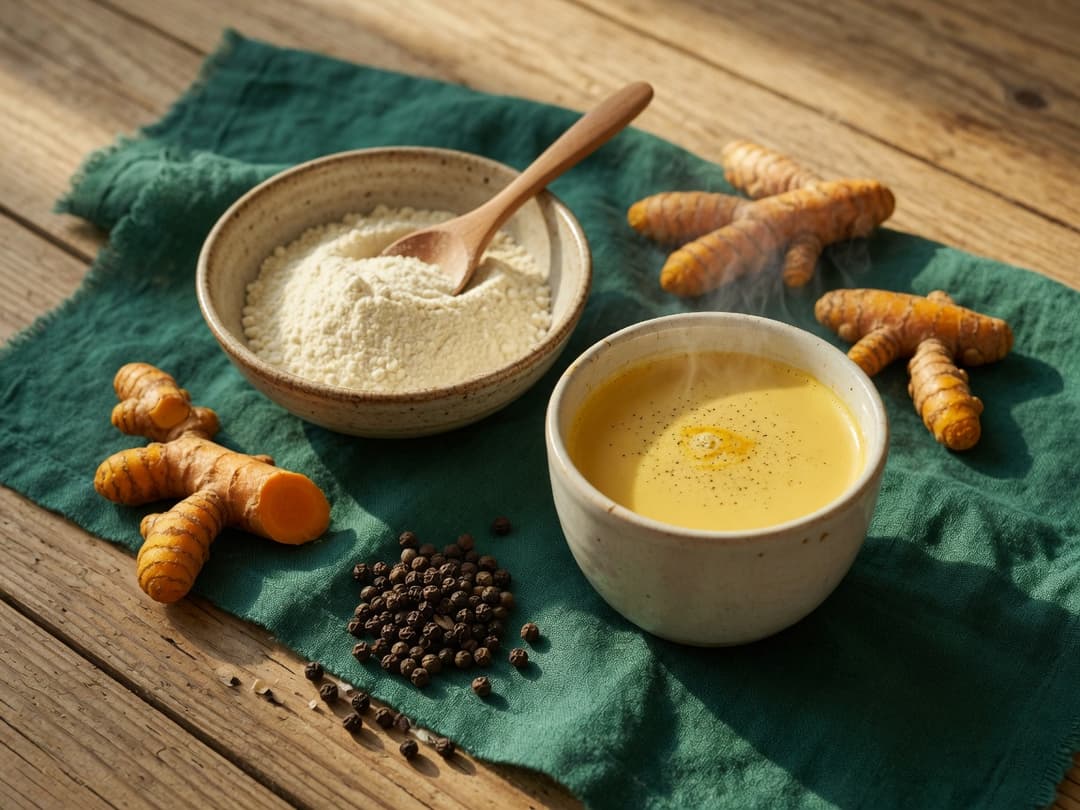
Turmeric, black pepper and collagen powder next to golden milk

This is the most common reason people buy turmeric. Reviews of studies in people with knee osteoarthritis showed that turmeric extracts reduce pain and stiffness better than placebo.

1 to 3months is how long the studies lastedusually
↓pain and stiffnessbetter than placebo; in some studies similar to pain-relief tablets, with fewer stomach complaints

Reasonable support for

  • morning stiffness
  • ordinary “wear and tear” of the joints
  • together with exercise, weight loss if needed and other supplements

See a doctor first if

  • the joint is swollen, red and warm
  • the pain is sudden
  • the pain wakes you up at night

Further reading

08Liver

Turmeric and the liver

Many people associate turmeric with the liver, because in traditional medicine it was used for digestion and for “cleansing.” Modern studies in people with fatty liver showed that curcumin slightly lowered liver enzymes in the blood. The results are interesting but small, and turmeric is not a treatment for fatty liver.

What helps the liver the most

  • less sugar
  • less alcohol
  • more exercise
  • gradual weight loss, if you carry extra weight

Turmeric in your meals is a pleasant part of that picture.

09Side effects

Side effects of turmeric

In most people turmeric causes no side effects at all. When they do occur, they are usually mild and linked to higher doses:

More common

  • nausea, heartburn or reflux
  • bloating and gas
  • loose stools or diarrhea, less often constipation
  • dry mouth

Rare

  • headache or dizziness
  • allergic rash, more often from skin contact
Most complaints go away if the dose is lowered or if it is taken with food. If they don’t, stop.
  • Tip: Turmeric stains. Rinse the measuring cup right away; stains on clothes and wooden boards come out more easily with a little baking soda and sunlight.
10Caution

Who should be careful with turmeric

As a spice in food, turmeric is for everyone. These tips apply to supplements, when a larger amount is taken every day:

SituationWhat to do
Gallstones or bile duct problemsTurmeric stimulates bile. No supplements until you ask a doctor
Blood-thinning medicines (warfarin, aspirin, clopidogrel, etc.)Curcumin slightly slows blood clotting. Ask a doctor and tell them if you get bruises
Pregnancy and breastfeedingThe spice in food is fine. No supplements unless your gynecologist agrees
Blood sugar medicinesThe effects can add up. Check your blood sugar more often in the first weeks
Scheduled surgery or tooth extractionStop the supplement two weeks before
Low iron or anemiaTake it at a different time from iron tablets
Ulcer or frequent refluxStart with a small dose, always after a meal
Children under 18Turmeric in food only, no supplements

If you take several medicines every day, take the pack to a pharmacist and ask. It’s the quickest way to have peace of mind.

11Our products

Our turmeric products: a comparison with prices

Food supplements taken alongside a meal. Prices are from the website.

  • Alongside a meal
  • 2+1 bundle
  • Free delivery over 1,800 MKD
Known dose
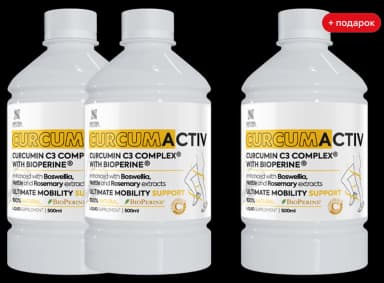
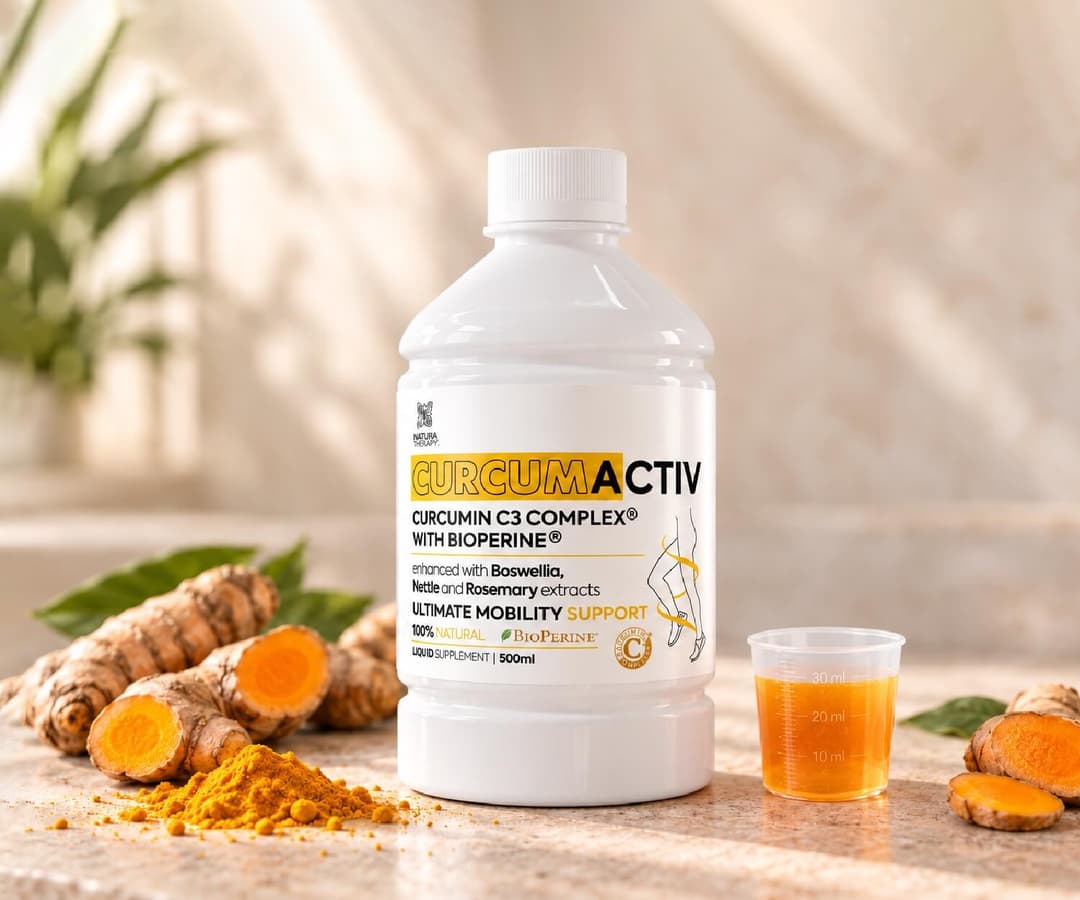
Curcumactiv

Curcumactiv

500 mg turmeric extract (95% curcuminoids, of which 200 mg Curcumin C3 Complex), 10 mg BioPerine, rosemary, nettle, boswellia; no sugar
1 to 3 times
20 ml
measures
25
per day
≈ 48 MKD
1,200 MKDView
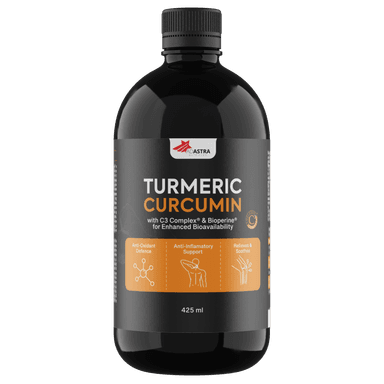
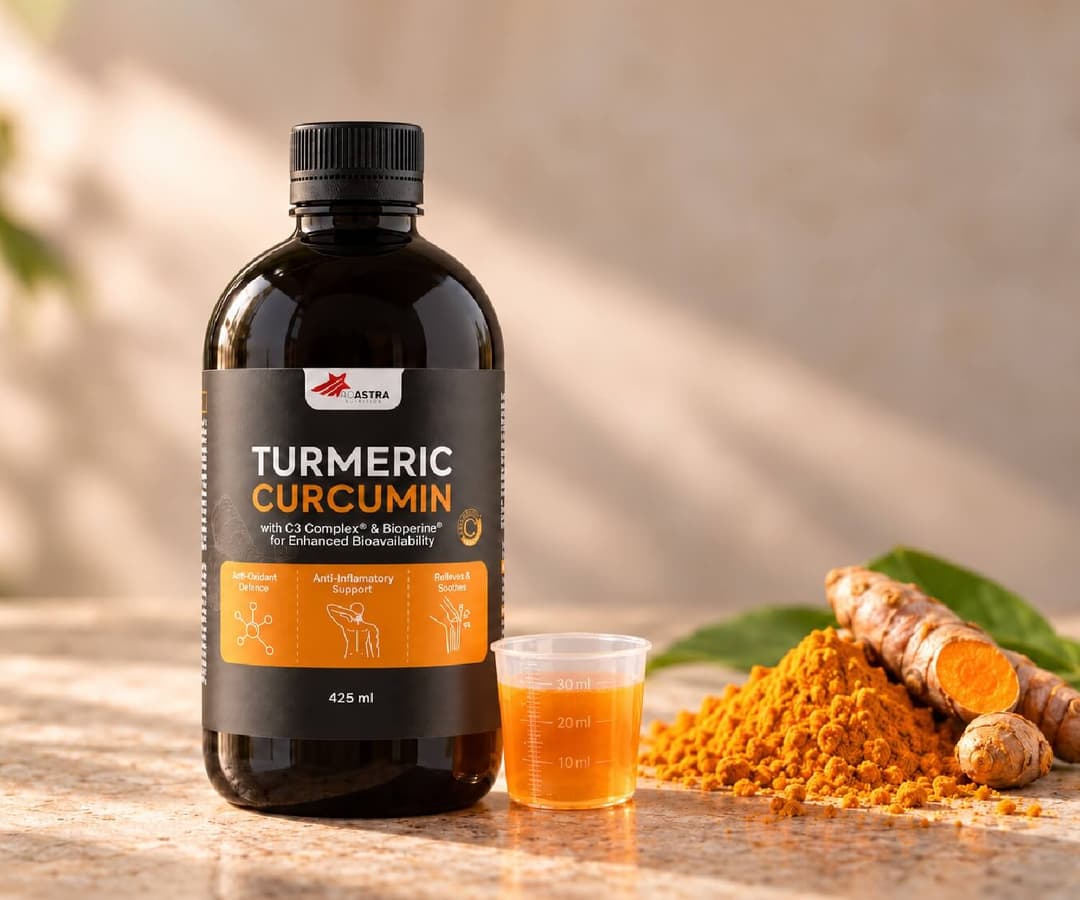
Turmeric Curcumin 425 ml

Turmeric Curcumin 425 ml

Liquid turmeric with Curcumin C3 Complex and BioPerine (according to the label). One measure from the cup in water
daily
1 measure
bottle
425 ml
on the measure
depends
1,250 MKDView
Ready-to-drink
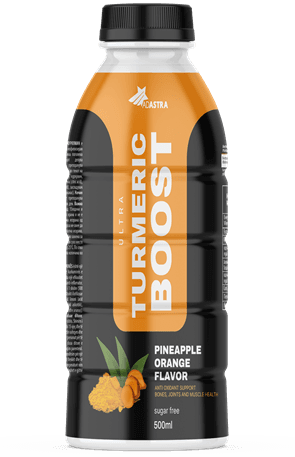
Turmeric Boost

Turmeric Boost

Ready-to-drink beverage with MAXICUMA curcumin and vitamin C, orange and pineapple, no added sugar
bottles daily
1 to 2
bottle
500 ml
per day
80 MKD
80 MKDView

Price per day

denars per day, for the dose in parentheses
regular price2+1
Curcumactiv, 1 measure (20 ml)≈ 48 MKD
Curcumactiv 2+1, 1 measure≈ 32 MKD
Turmeric Boost, 1 bottle80 MKD

Turmeric Curcumin 425 ml: the price per day depends on the measure.

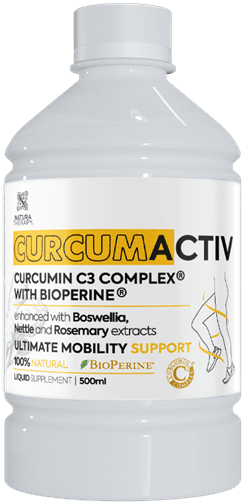
Curcumactiv 500 ml bottle next to fresh turmeric root, turmeric powder and a measuring cup
Turmeric Curcumin 425 ml bottle next to a measuring cup, turmeric powder and fresh root

Full overview

ProductWhat it containsDosePack sizePricePrice per day
Curcumactivper 20 ml: 500 mg turmeric extract with at least 95% curcuminoids (of which 200 mg Curcumin C3 Complex), 10 mg BioPerine (black pepper), rosemary, nettle, boswellia; no sugar20 ml after a meal, 1 to 3 times a day500 ml (25 measures)1,200 MKDabout 48 MKD (1 measure)
Curcumactiv 2+1same, three bottles20 ml daily3 × 500 ml (75 measures)2,400 MKDabout 32 MKD
Turmeric Curcumin 425 mlliquid turmeric with Curcumin C3 Complex and BioPerine (according to the label)one measure from the cup in water, once a day425 ml1,250 MKDdepends on the measure
Turmeric Boostready-to-drink beverage with MAXICUMA curcumin and vitamin C, orange and pineapple, no added sugar1 to 2 bottles daily500 ml80 MKD80 MKD (1 bottle)

How to choose

Delivery is 150 MKD, and free over 1,800 MKD.

12Questions

Common questions about turmeric

How do you use turmeric?+

Best with food that contains a little fat and a pinch of black pepper: in soups, rice, eggs, vegetables or in golden milk. Supplements with extract are taken with a meal or after a meal, according to the dose on the pack.

How much turmeric can you take a day?+

As a spice, ½ to 1 teaspoon a day (1.5 to 3 g). The traditional dose for digestion is 0.5 to 1 g of powder two to three times a day. With extract supplements, stick to the dose on the pack and don’t combine several turmeric products.

What are the side effects of turmeric?+

Most often mild stomach complaints: nausea, reflux, bloating or loose stools, more often with larger doses and on an empty stomach. Headache or a rash occur rarely. The complaints usually go away if the dose is reduced or if it is taken with food.

Should turmeric be taken in the morning or in the evening?+

The time doesn’t matter; what matters is taking it with a meal or right after a meal. One dose is easiest to remember with breakfast or lunch, and many people drink golden milk in the evening.

Why turmeric with black pepper?+

Piperine from black pepper slows down the breakdown of curcumin, so many times more reaches the blood, about 20 times more in one study. That’s why you should always add a pinch of pepper to food.

Does turmeric help with joints?+

Studies in people with knee osteoarthritis showed that turmeric extracts reduce pain and stiffness better than placebo. The effect is expected after 4 to 8 weeks of regular use, together with movement.

Is turmeric good for the liver?+

In studies in people with fatty liver, curcumin slightly lowered liver enzymes. The results are small and turmeric is not a treatment, but it can be a pleasant part of a diet with less sugar and more movement.

Can pregnant women take turmeric?+

Turmeric as a spice in food is fine during pregnancy too. Supplements with turmeric extract are not recommended during pregnancy and breastfeeding, except in agreement with a gynecologist.

Can turmeric be taken with blood-thinning medicines?+

Curcumin slightly slows blood clotting, so with warfarin, aspirin or clopidogrel, supplements are taken only in agreement with a doctor. The spice in ordinary food is not a problem.

How long does turmeric take to work?+

For joints and stiffness, changes, if there are any, are expected after 4 to 8 weeks of daily use. That’s why it is better to choose one product and take it regularly than to keep switching.

This text is for information only and is not a substitute for advice from a doctor or pharmacist. Food supplements are not medicines and are not a substitute for a varied and balanced diet and a healthy lifestyle. Do not exceed the recommended daily dose. Keep out of reach of children.

Sources 4
  1. European Medicines Agency (HMPC), “European Union herbal monograph on Curcuma longa L., rhizoma” (Rev. 1) and “Assessment report on Curcuma longa L., rhizoma”
  2. NIH National Center for Complementary and Integrative Health, „Turmeric: Usefulness and Safety“
  3. Medsafe (New Zealand), warning on turmeric and warfarin
  4. Welsh Medicines Advice Service, “Turmeric: potential interactions”; review of studies on turmeric extracts in knee osteoarthritis (PMID 33511486); network analysis of curcumin in knee osteoarthritis (PMID 38036015); review of curcumin and post-exercise muscle soreness (PMID 33174301); review of curcumin and liver enzymes in fatty liver (PMID 38213188); study on piperine and the bioavailability of curcumin (PMID 9619120)
RECOMMENDED FOR THIS TOPIC

Related products

We use cookies to analyze traffic and improve your experience. See our privacy policy.