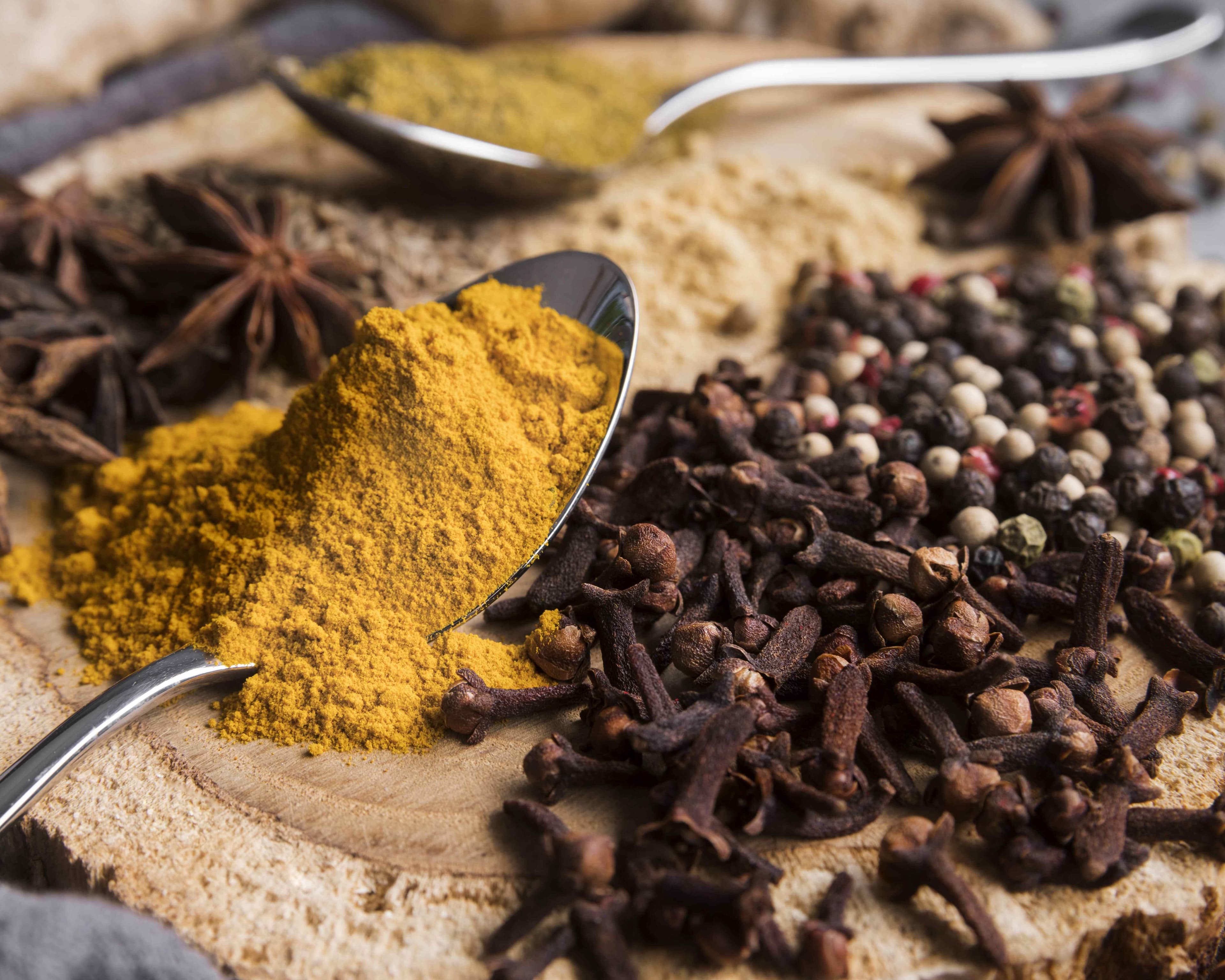
Turmeric and black pepper are combined for one dull but useful reason: curcumin on its own barely shows up in the blood. Piperine, an alkaloid from black pepper, can change that picture. That is pharmacokinetics, not proof that the pair cures asthma, Alzheimer’s or cancer.
This article is for informational purposes and does not replace medical advice. Food supplements are not medicines. Consult a doctor before use, especially if you have a chronic illness, are pregnant or breastfeeding, or take medicines. Results vary from person to person.
This article is only about the pair. For joints: turmeric for joint pain. For the molecule: curcumin as an anti-inflammatory ingredient. For the plate and weight: turmeric for weight loss.
Why curcumin “disappears”
Curcumin dissolves poorly in water, is poorly absorbed and is quickly glucuronidated in the liver and gut. That’s why a teaspoon of the spice in tea without any fat is more color than intake.
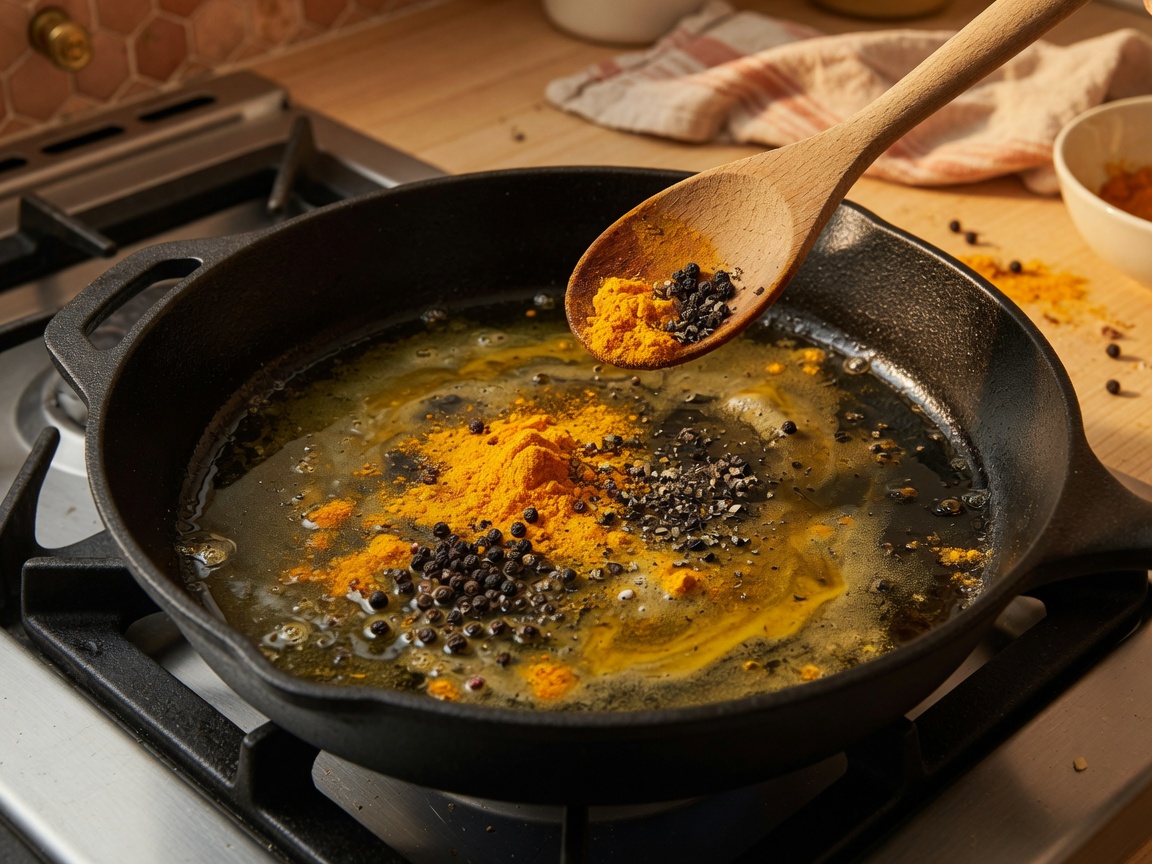
Two kitchen tricks that make sense:
- a little fat (oil, yogurt, milk) — fat solubility;
- a pinch of black pepper — piperine.
What piperine did in the classic study
Shoba et al. (Planta Medica, 1998; PubMed 9619120) gave 2 g of curcumin with and without 20 mg of piperine to healthy volunteers. With piperine, the appearance of curcumin in the blood rose sharply — often quoted as “up to 2000%.”
What this means: the combination has laboratory logic. What it doesn’t mean: that your curry is 20 times more medicinal, that you’ll lose weight, or that piperine cures the inflammatory diseases mentioned in old articles.
The percentage depends on the dose, the formula, food in the stomach and whether you measure curcumin or its metabolites. Don’t carry that number over to any label as a guarantee.
Black pepper on its own is not a medicine
Piperine has its own research record (digestion, liver enzymes). In the kitchen it is a spice. In high doses as an isolate it can affect how the body processes medicines — so supplements with piperine are not “harmless salt” if you take anticoagulants, anticonvulsants or other medicines with a narrow therapeutic window.
Don’t treat pepper as a medicine for insomnia, constipation, burns or toothache. Those are folk lists, not indications.
How to combine them in practice
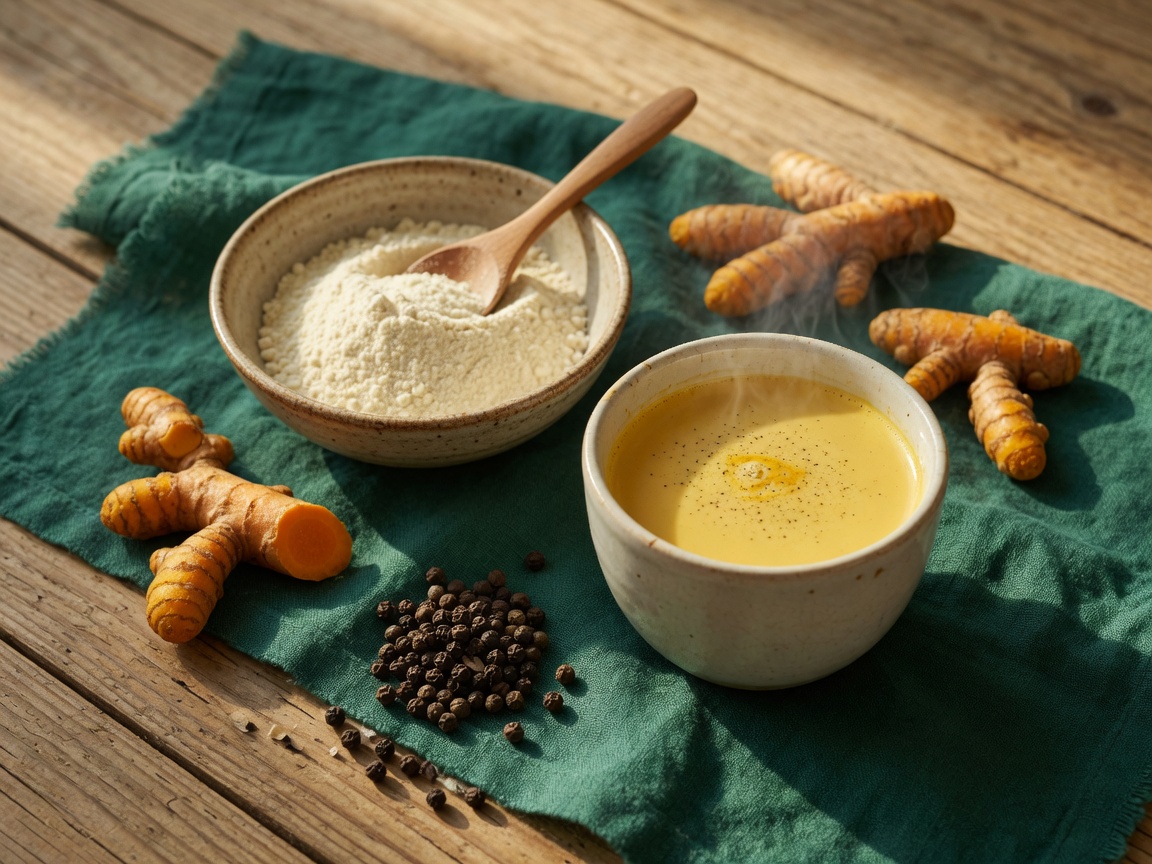
On the plate
- Turmeric + olive oil or yogurt + a pinch of freshly ground pepper.
- Not a whole spoonful of pepper — you’ll ruin both the dish and your stomach.
- Heat helps disperse the spice, not “activate a medicine.”
In a supplement
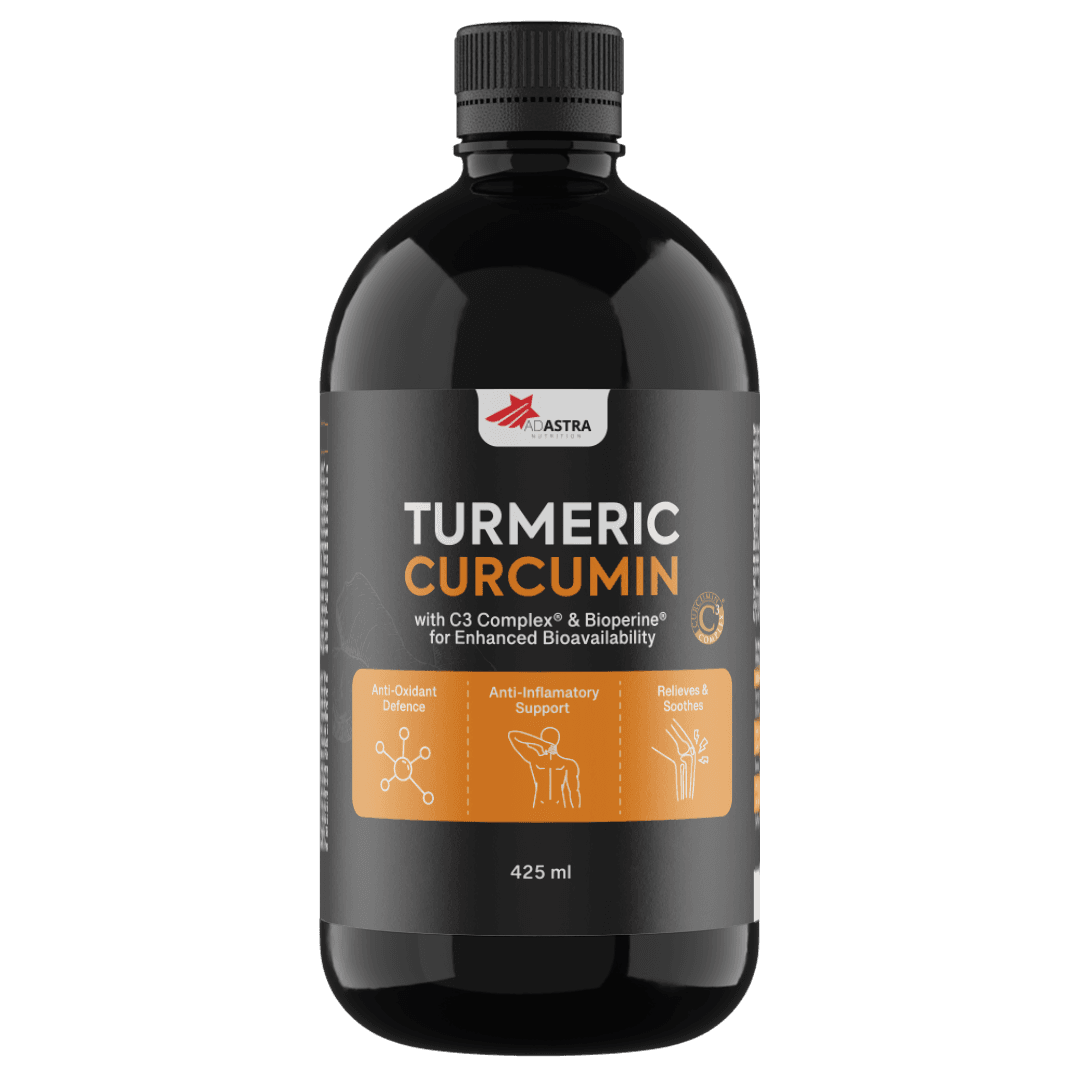
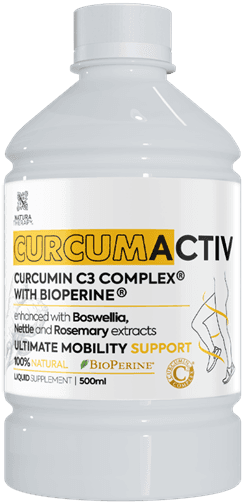
Ready-made formulas have already worked out the ratio. Curcumactiv combines curcumin (incl. C3 Complex) with Bioperine. Turmeric Curcumin 425 ml is a liquid alternative that you mix with water. Don’t add extra piperine capsules on top of the syrup.
Follow the label. With gallstones, reflux or pregnancy — see a doctor.
Kitchen pairings that make sense here
Beans with turmeric, pepper and a spoonful of oil. Potato soup with carrot. Yogurt with a pinch of turmeric before a workout — a snack, not a protocol. Rice with a little turmeric alongside fish. You don’t need a “golden latte” made with imported almond milk if you have plain yogurt at home.
Freshly ground pepper keeps more aroma than a jar that has been open for two years. Turmeric fades in light — keep it closed and dry.
If you cook for children, a culinary dose is enough. Don’t give them an adult extract “for immunity” or “for focus.”
When a supplement has the edge over the spice
When you want a repeatable intake in milligrams. When your stomach doesn’t want a bitter soup every day. When you already eat a varied diet and are looking for a layer of joint comfort, not a new diet. Then Curcumactiv or Turmeric Curcumin 425 ml are more precise than the spoon.
Don’t combine syrup + capsule + piperine isolate. Your liver and gut are not a competition.
People with reflux often feel pepper like fire. In that case, cut back on the spice instead of forcing it “for absorption.” A ready-made formula with a little piperine is better than a spicy plate that sends you back to an antacid.
Don’t stir turmeric into every cup of coffee “to add up the dose.” The bitterness puts you off the habit. One well-combined meal is worth more than seven bitter teas you leave half-finished.
If you cook for guests who don’t like spicy food, leave the pepper on the table. Turmeric without pepper is still a spice. Take the supplement separately, according to the label.
What the pair shouldn’t promise
- reducing the risk of cancerous cells;
- treatment of asthma, chronic gastritis, Alzheimer’s;
- promised weight loss from a spice;
- a replacement for the NSAIDs your orthopedist gave you.
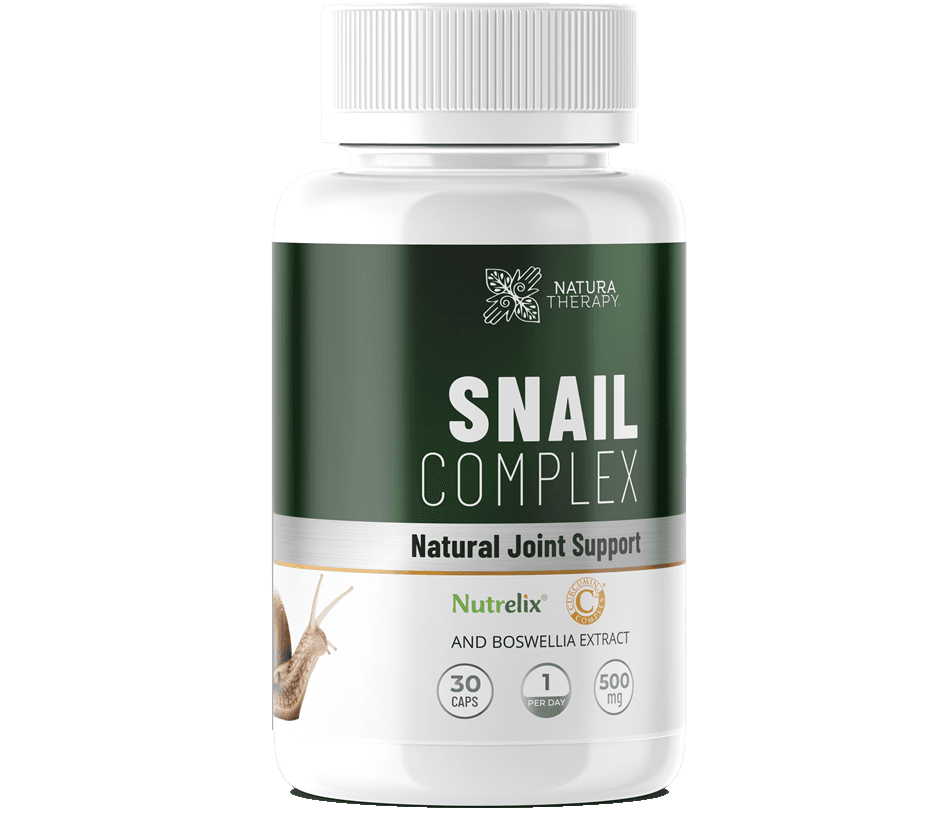
If your joints hurt, the pair is one tool in Bones and joints, alongside movement, Snail Complex or collagen — each with its own role, not all at once “just in case.”
Piperine in food has a different safety profile from an isolated 20 mg capsule. Don’t crush hot peppers into tea “to reach the study dose.” The study used measured piperine with measured curcumin, not paprikash.
Frequently asked questions
- Do I have to eat pepper with every spoonful of turmeric?
- For a culinary dose it isn’t required, but a pinch makes sense. For an extract, choose a formula that already contains piperine instead of improvising amounts.
- Does 2000% apply to my tea?
- No. That figure comes from a specific study with 2 g of curcumin and 20 mg of piperine, not from a cup of golden milk.
- Can piperine interfere with my medicines?
- It can, through liver enzymes. Tell your doctor about any supplement with piperine.
- Does white pepper work the same way?
- Piperine is there too, but the amount varies. Black pepper is the standard in studies and in formulas.
- Does the combination cure osteoarthritis?
- No. It can be nutritional support for comfort. Diagnosis and therapy — a doctor.
- Syrup or capsule?
- Convenience and the label. Curcumactiv and Turmeric Curcumin 425 ml are both liquid and both contain piperine. Choose one and don’t double up.
- How much black pepper is too much?
- In food: as much as tastes good, usually a pinch. Isolated piperine above the label amount has no benefit and can be irritating.
This article is for informational purposes and does not replace medical advice. Food supplements are not medicines. Consult a doctor before use, especially if you have a chronic illness, are pregnant or breastfeeding, or take medicines. Results vary from person to person.