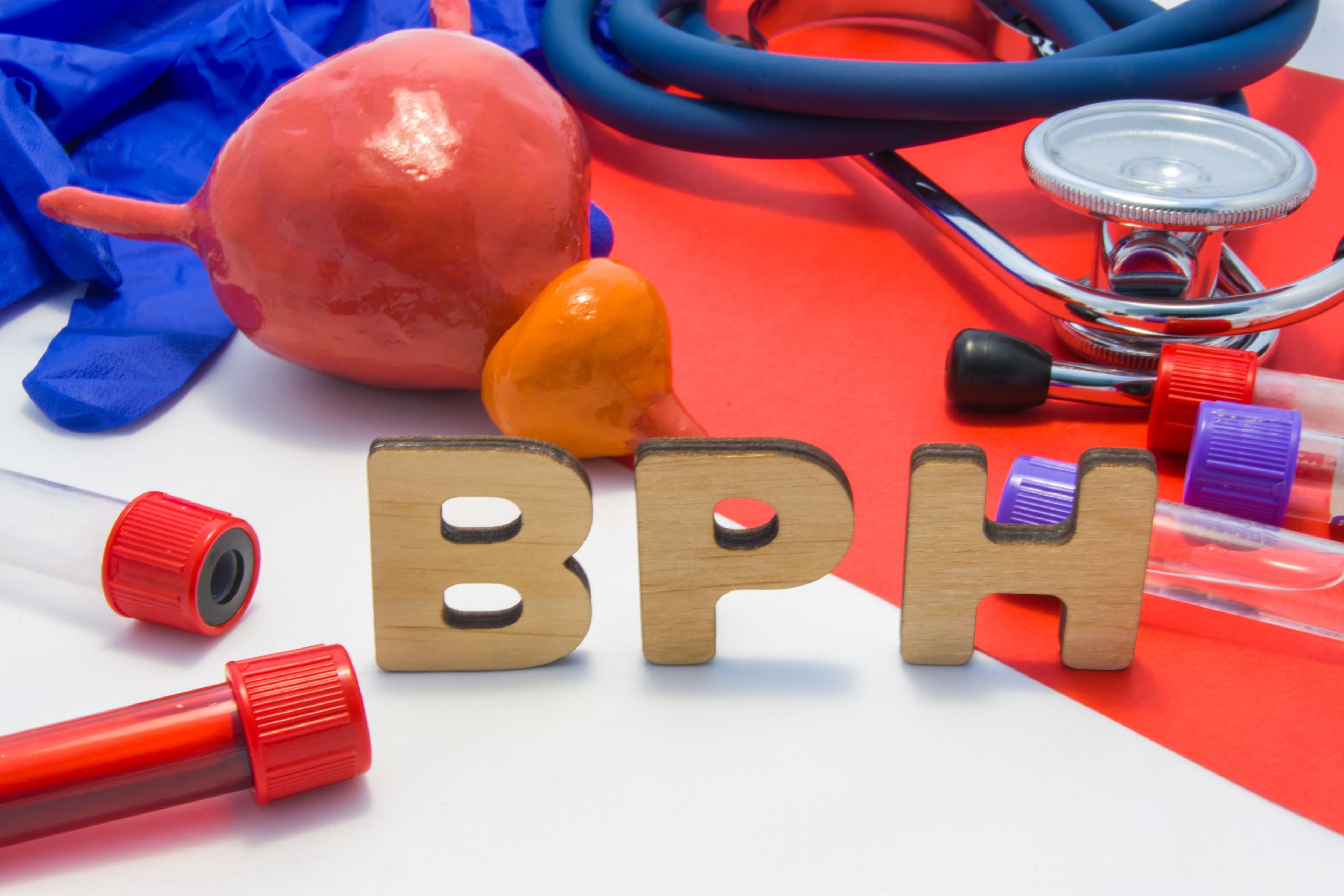
In everyday speech, an enlarged prostate most often means benign hyperplasia (BPH): the inner glands grow and narrow the urethra below the bladder. The bladder has to squeeze harder to push the urine out. Over months this feels like a weak stream, waiting and waking up at night — not like an acute drama.
BPH is not cancer. It can exist alongside cancer, so the checkup should not be skipped. For the signs that call for a checkup, see when to see a urologist. For a comparison of the diagnoses, see the most common diseases. If surgery is already being discussed, there is a separate article on recovery.
This article is for informational purposes and does not replace medical advice. Food supplements are not medicines and do not shrink the gland the way a prescription does. If you have urinary retention — seek emergency help. Consult a doctor before taking a supplement. Results are individual.
How big is a “normal” prostate
In a young man the volume is about 15–25 ml, the size of a large chestnut. With age, the number grows in a large share of men. An apple or an orange on ultrasound is not a verdict: the symptoms depend on how much the growth bends the channel and how sensitive the bladder is.
Symptoms men report

Frequent urination and nocturia
Pressure on the bladder neck creates a false sense that it is full. You go often, but little comes out. At night, this breaks up your sleep.
Hesitancy, a weak or interrupted stream
A classic mechanical sign. Dribbling at the end and double voiding (going again a minute later) are part of the same story.
Incomplete emptying
Leftover urine is food for bacteria and stones. Over time, the bladder wall thickens. That’s why “I’ll get used to it” is not a harmless strategy.
Burning and blood
Burning more often points to inflammation or infection than to BPH alone. Blood in the urine is always checked: BPH can bleed, but a stone or a tumor gives the same sign.
Causes and what gets worse if you wait
The two main drivers are age and androgens in the tissue itself (DHT). Family predisposition plays a role. Obesity, metabolic syndrome and some medicines (especially those with an anticholinergic effect, decongestants) make the symptoms worse.
Neglected obstruction leads to recurring infections, bladder stones, hematuria and acute retention — when no urine comes out at all and a catheter is needed. In the worst case, the kidneys suffer. That’s why the urologist looks not only at “how much the nights bother you” but also at residual urine and kidney function.
Diagnosis and medical decisions
A conversation (IPSS), an exam, urine, sometimes uroflowmetry, ultrasound and PSA. The first line for symptomatic BPH is medicines prescribed by a doctor: alpha-blockers to relax the bladder neck, 5-alpha-reductase inhibitors to reduce the volume of larger glands, and combinations. The choice depends on size, blood pressure and sexual function.
Surgery or a minimally invasive procedure is considered when medicines stop working or cause side effects, or when there are already stones, recurrent bleeding, frequent infections or a catheter. TURP, laser, steam and other techniques are the surgeon’s tools, not a menu to choose from on your own.
Habits that make the day easier
- Set aside time to empty your bladder; don’t force it.
- Cut back on coffee, alcohol and liters of fluid in the evening if nocturia wakes you up.
- Review your cold and allergy medicines with a pharmacist — some tighten the bladder neck.
- Physical activity and a normal weight; constipation makes the urge worse.
- Don’t hold in your urine on long trips “so you don’t have to stop.”
Herbal support — with realistic expectations
Saw palmetto (Serenoa repens) extract is the most studied herb for urinary comfort in men. The evidence is mixed: some older series report a better stream, while the larger modern trials are more reserved. That’s why it is honest to say support, not a medicine for BPH. More: benefits, intake and side effects.
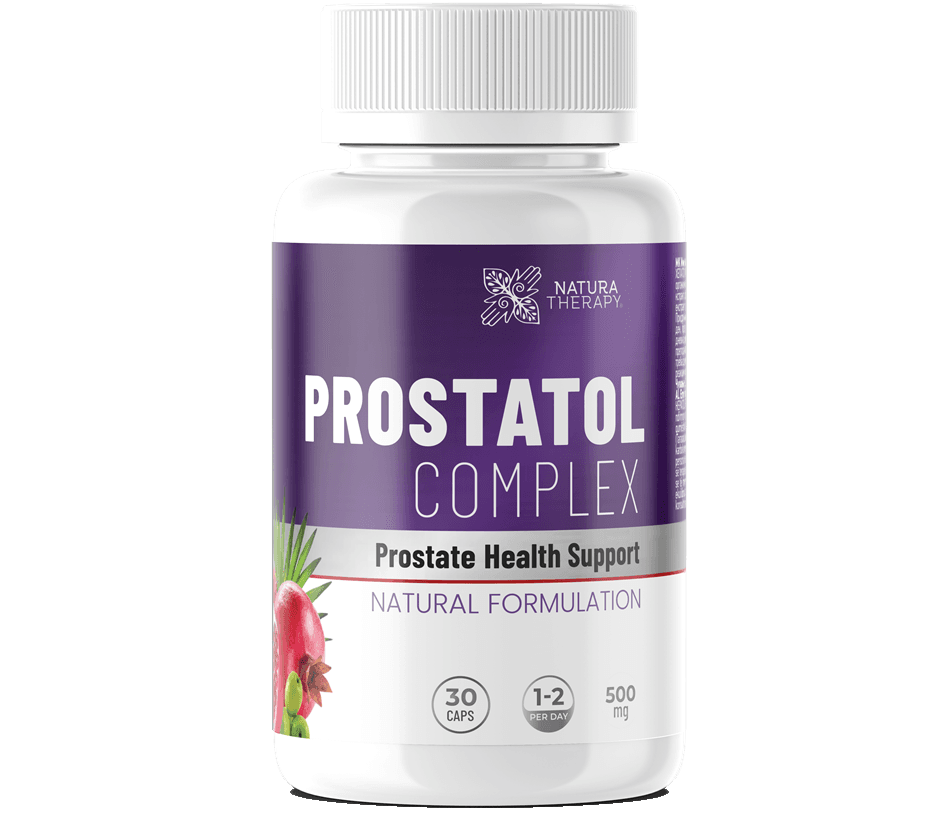
Prostatol Complex combines such an extract with other herbs and zinc. Don’t postpone the checkup to “try it for two months.” If the doctor confirms there are no red flags, the supplement can be a second layer alongside your habits. Category: Men’s health.
Medicines the urologist prescribes — in broad strokes
Alpha-blockers relax the bladder neck and the smooth muscle of the prostate. The stream often improves within days. Possible effects are dizziness when standing up and, with some molecules, retrograde ejaculation. Don’t drive if you feel dizzy. Don’t combine them with a medicine for erections without asking — your blood pressure can drop.
5-alpha-reductase inhibitors reduce the volume of larger glands, but they take months. They can affect libido and PSA (they usually halve the number — the doctor knows this when interpreting it). They are not “natural,” and saw palmetto is not a one-for-one replacement for them.
Combinations are used when one medicine is not enough. Phytotherapy, including saw palmetto, sits alongside this ladder, not at its top. If you are already taking a prescribed medicine, say so before adding a complex. The goal is fewer nighttime awakenings and a preserved bladder, not a collection of jars.
Ask your doctor what success means for you: two awakenings instead of four? Less dribbling? Avoiding a catheter? That language is more useful than “I want to cure my prostate” — BPH is a chronic condition that is managed, not a match you win over a weekend.
Winter makes the symptoms worse for some men: less movement, more salty stews, more homemade alcohol, longer sitting. Spring is not a medicine, but it’s a good moment for a checkup if you’ve been putting it off. Before a trip into nature or a long wedding, find out where the toilets are and don’t drink “to stock up” the evening before. If you’re already on a medicine, carry it with you; a weekend break from it brings the urge back exactly when you’re far from home. Your partner often notices the nighttime awakenings first — let her give a number, without getting defensive. That number is data, not criticism.
If you already have a catheter after acute retention, don’t take it out yourself because “the stream has come back.” That is the urologist’s decision, often with a trial removal in the office and a plan that follows — medicine, a procedure or a catheter again. Embarrassment about the bag is understandable; an infection from poor hygiene is worse. Wash your hands, keep the system closed the way you were taught, drink enough. A supplement is not a priority during this period. Ask when it is safe to try again without a catheter and which signs should send you back to the emergency room that same night. Write that plan down on paper before you leave the office, while you can still hear the doctor’s words and while the nurses are still in the room and can repeat what counts as urgent at home that same evening if the stream stops completely and the pain rises sharply.
Frequently asked questions
- Does every enlarged prostate need surgery?
- No. Many men are managed with monitoring and medicines. Surgery is for complications or when medicines fail.
- Can BPH go away on its own?
- The tissue rarely shrinks back without therapy that reduces its volume. Symptoms can vary with coffee, cold and constipation.
- Does a supplement shrink the gland like finasteride?
- Not in the same way and not with the same strength of evidence. Do not replace a prescribed medicine with a capsule.
- When is it urgent?
- Inability to urinate, severe pain, fever, blood with clots, or weakness with nausea — seek emergency help.
- Is sex allowed?
- Usually yes, if there is no acute infection. Painful ejaculation should be reported, not hidden.
- Will saw palmetto lower my PSA?
- Small changes are possible. Tell your urologist what you are taking so the number isn’t interpreted blindly.
- At what age does BPH start?
- Histological changes can be seen as early as the 40s; symptoms become common in the 50s and 60s.
This article is for informational purposes and does not replace medical advice. Food supplements are not medicines and do not diagnose, treat or prevent diseases. Consult a doctor before use. Results are individual.