
When a man says “I’ve got prostate trouble,” he usually means one of three diagnoses: inflammation (prostatitis), benign enlargement (BPH) or cancer. They are different diseases, with a different course and different treatment directed by a doctor. All they share is the gland under the bladder and the fact that the early signs are often the same — frequent urination, a weak stream, waking up at night.
That is why a list from the internet doesn’t replace a diagnosis. This article sorts out the most common conditions so you know what to ask at your exam. More details are in the articles on prostatitis, enlarged prostate and prostate cancer.
This article is for informational purposes and does not replace medical advice. Food supplements are not medicines and do not diagnose, treat or prevent diseases. If you have symptoms — see a urologist. Consult a doctor before taking a supplement. Results are individual.
A quick reminder about the gland
The prostate produces part of the seminal fluid and surrounds the prostatic urethra. In its cells, testosterone is converted into DHT. The peripheral zone is a common location for cancer; the transition zone around the canal is a common location for BPH. That is why BPH changes the stream earlier, while cancer often stays silent. More anatomy: what the prostate is.

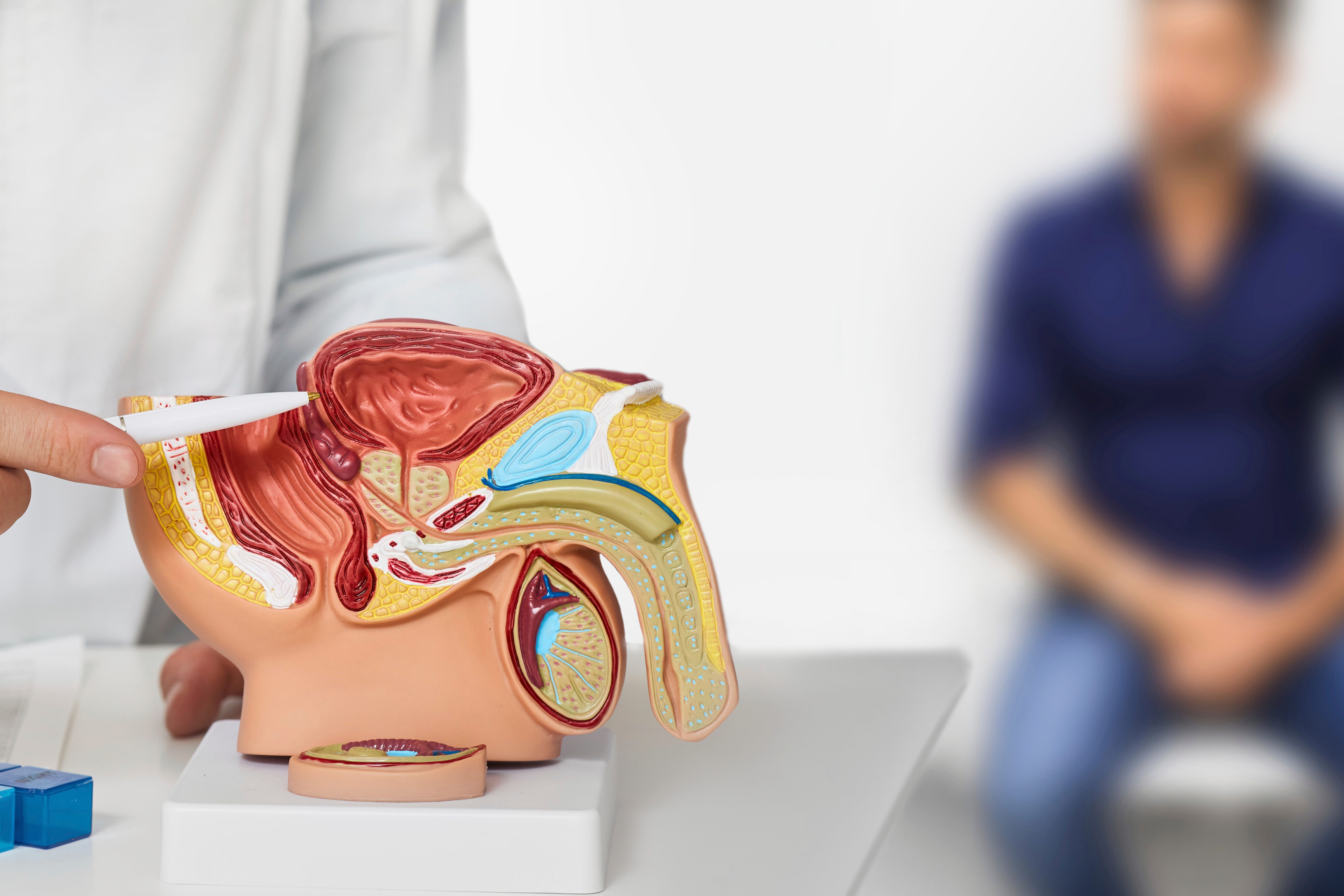
Prostatitis
Prostatitis is inflammation or painful dysfunction related to the gland. It has four clinical forms: acute bacterial, chronic bacterial, chronic pelvic pain syndrome (the most common) and an asymptomatic inflammatory finding. The acute type starts suddenly — fever, chills, burning, difficult urination — and is treated with an antibiotic chosen by the doctor, sometimes in hospital.
The chronic type and CPPS last for months. Pain in the perineum is in the foreground; the culture is often negative. The plan then is broader than one capsule: medicines as indicated, pelvic physiotherapy, habits, stress. Untreated acute prostatitis can lead to an abscess or sepsis. That isn’t solved online.
Benign hyperplasia (BPH)
From around age 40, the inner tissue often grows. A gland the size of a chestnut can reach the size of an apple. The growth narrows the canal: a weak stream, hesitancy, dribbling, nocturia, a feeling of incomplete emptying. BPH is not cancer and does not automatically turn into cancer, but the two can exist together. That is why the exam also includes PSA when the doctor considers it necessary.
If it is ignored for years, the bladder wall thickens, and recurrent infections, stones, blood or acute retention appear — a condition in which you can’t urinate at all and need a catheter. Treatment starts with medicines prescribed by the urologist; surgery is considered when medicines are not enough or cause complications.
Prostate cancer
Prostate cancer is one of the most common cancers in men. It often grows slowly and gives no signal of its own in the early stage. That is why family history, age and agreed-upon screening matter more than waiting “for it to hurt.” The diagnosis is not made with PSA alone: it is confirmed with a tissue biopsy, often after an MRI.
Unlike BPH, cancer more often starts far from the center, close to the capsule. Urinary complaints come late. Advanced disease can spread to the lymph nodes and bones. Treatment — active surveillance, surgery, radiation, hormone therapy — is put together by a team, not by a supplement. No prostate formula is a treatment for cancer.
Rarer findings that still get mentioned
- Abscess — a painful collection of pus after an infection; it is treated in hospital, sometimes with drainage.
- Stones and calcifications — stagnant secretions and minerals, often after prostatitis or BPH; their significance is assessed by the urologist.
- Cysts — fluid-filled sacs, congenital or after an infection; most are monitored, not “cleaned out” with tea.
- Prostate infarction — a rare finding, usually in the context of another urological disease; not a topic for self-treatment.
Risk and what really reduces harm
Age, family history and African ancestry are the clearest factors for prostate cancer. A diet rich in processed red meat, obesity, smoking and alcohol are linked to a worse urological profile in general. Regular exercise, a sensible weight and quitting tobacco are the cheapest measures that make sense for the whole body, not just the gland.
Men over 50 — earlier with a family history of cancer — should talk about an annual checkup. That is a conversation, not an obligation to biopsy everyone.
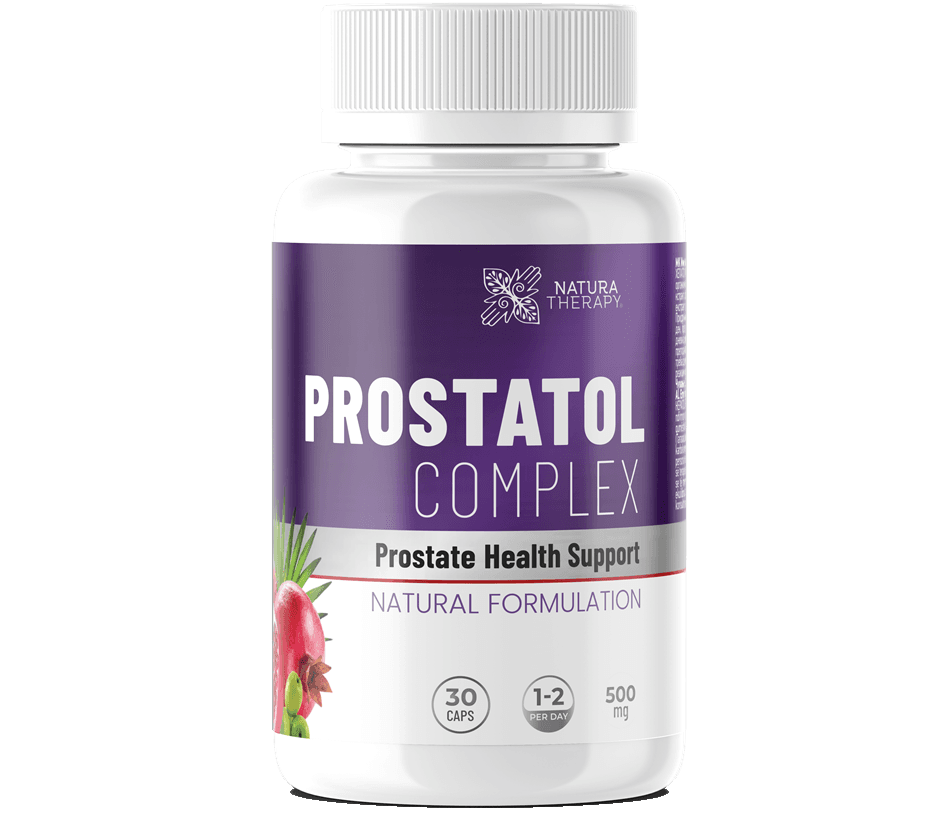
Supplements with saw palmetto and zinc, such as Prostatol Complex, are considered only as support for urinary comfort in men for whom the doctor does not call for urgent intervention. They are not cancer prevention. Catalog: Men’s health.
How the doctor tells the three diagnoses apart
On paper they look different. In the doctor’s office they overlap. The urologist looks at age, speed of onset, fever, family history and what the finger exam shows. Acute prostatitis is a hot, painful gland and a sick man. BPH is a gradually weakening stream in a man over fifty, often without pain. Cancer can be a hard area and quiet complaints, or just a PSA number that doesn’t fit.
That is why a single ultrasound reading of “prostate 45 ml” doesn’t end the story. Volume explains mechanical pressure, not the nature of the cells. PSA without context is misleading too. The combination — conversation + exam + lab tests + imaging if needed — is what the specialist does.
You can help with an honest list: whether you see blood, whether you wake up three times a night, whether your father had prostate cancer, whether you take an alpha-blocker or saw palmetto. Don’t hide supplements. If you already use Prostatol Complex, say so: the doctor will know it is not a medicine and won’t count it as therapy.
If after the first exam you’re told “we’ll monitor it,” ask when the next checkup is and which signs should bring you back sooner. Monitoring is not ignoring. Ignoring is not coming at all because you read a list of herbs.
In Macedonian doctors’ offices, the same man often comes in late: he’s embarrassed, he waits for summer, he waits for it to go away on its own. That makes the differential diagnosis harder — BPH already with residual urine, prostatitis already chronic, cancer already at a higher stage. An early appointment doesn’t mean “you have something terrible.” It means the three diseases are still easy to tell apart. Bring a list of your medicines, previous PSA results if you have them, and your family history. Five minutes of preparation saves a month of wandering between labs. If you live far from a town with a urologist, book the first appointment and bring your test results with you — better one complete exam than three partial ones in different towns without the same folder of findings.
Frequently asked questions
- Does BPH turn into cancer?
- Not automatically. They are different processes in different zones. But a man with BPH can still develop cancer, so the checkups remain.
- Which disease is the most common?
- After 50, BPH is the most common cause of urinary complaints. In younger men with pain, prostatitis / CPPS is more often the issue. Cancer is common, but often silent.
- Can PSA tell cancer from BPH?
- Not on its own. PSA also rises with growth, inflammation and after an exam. The doctor looks at the trend, size, the exam and further tests.
- Can one herb cover all three?
- No. An infection needs antimicrobial therapy from a doctor. Cancer needs an oncology plan. Herbs are not one remedy for all of them.
- When is surgery unavoidable?
- When there is retention, stones, recurrent bleeding, frequent infections, or when medicines stop working. The choice of technique is individual. See also life after surgery.
- Should I be afraid of every cyst on an ultrasound?
- Most are benign findings that are monitored. Their significance is explained by the doctor who saw the image, not by a list on the internet.
- What should I bring to my first exam?
- A list of your medicines, how many times you got up at night, whether there is blood or fever, and your family history of prostate cancer.
This article is for informational purposes and does not replace medical advice. Food supplements are not medicines and do not diagnose, treat or prevent diseases. Consult a doctor before use. Results are individual.