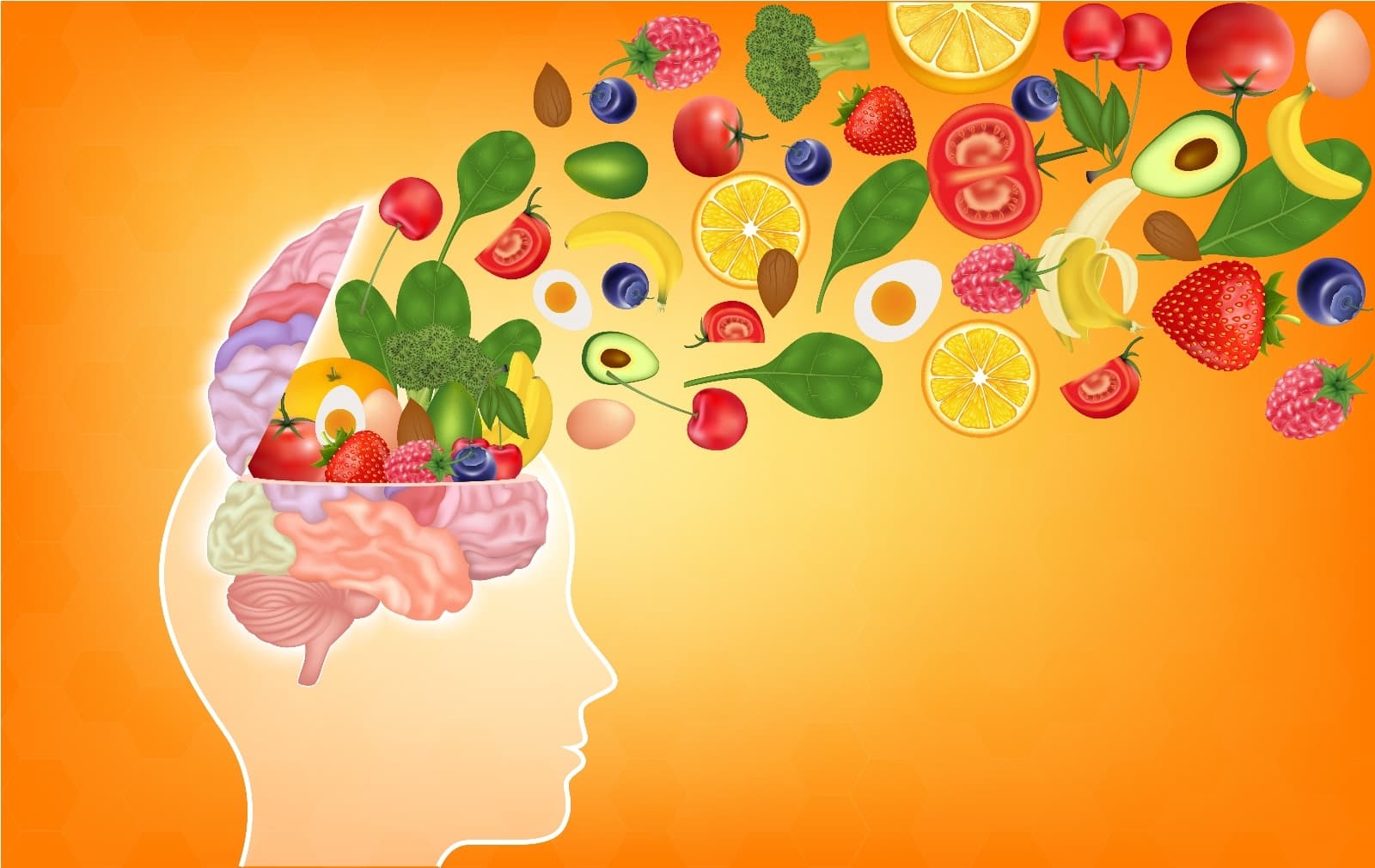
The question of what to eat to improve memory is rarely solved with a single “superfood.” Working memory, attention and a sense of clarity depend on the membranes of neurons, on energy in the cells and on how steadily blood sugar holds throughout the day.
This article is about nutrients and the rhythm of meals — not yet another list of dishes. Specific foods and portions are collected in the guide 13 superfoods for the brain and nervous system. Supplements are a layer on top, not the foundation. See also the category Brain and nervous system.
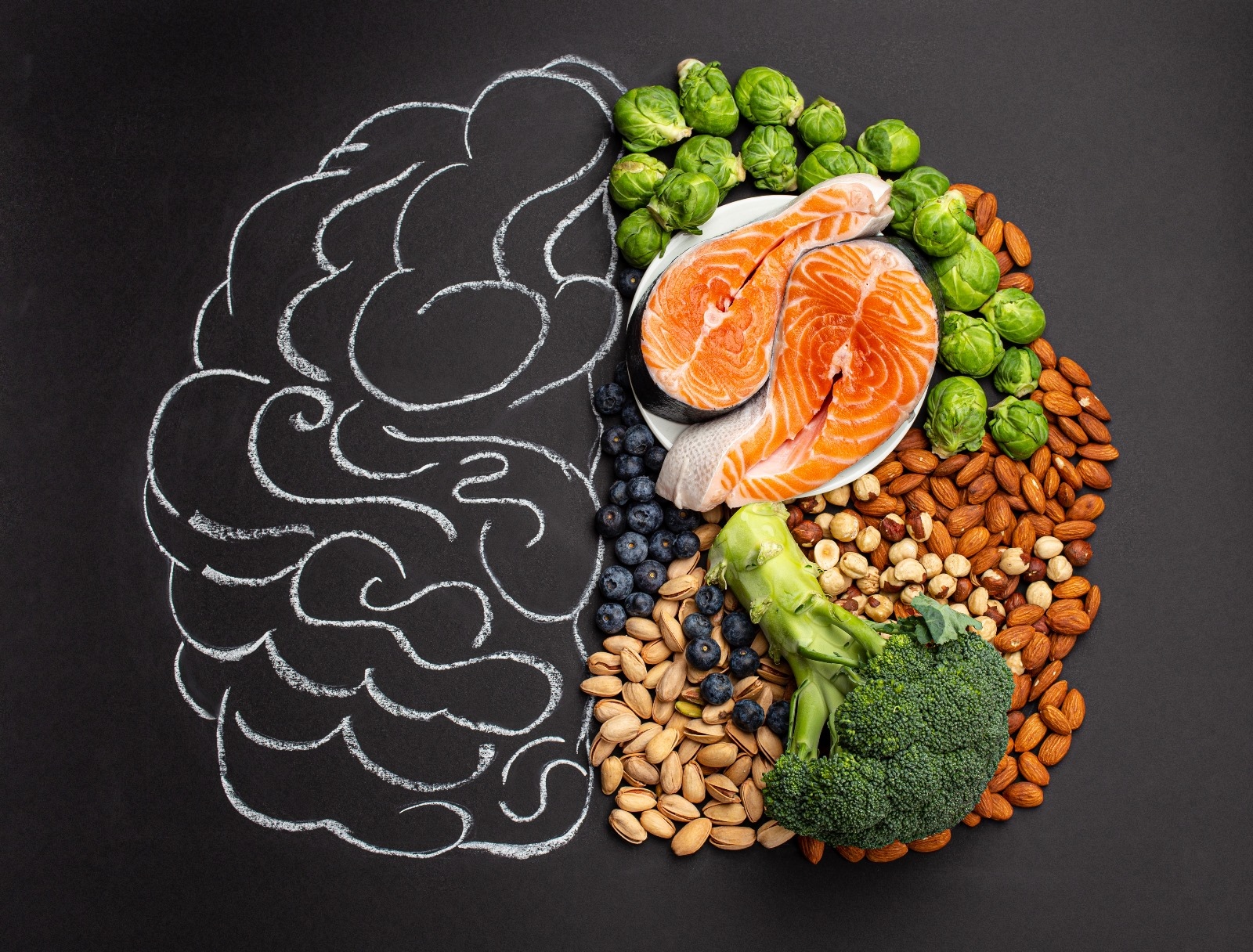
How food reaches your memory
The brain uses about one fifth of the body’s energy, with almost no reserve. When a meal lacks protein and fat but is rich in fast sugar, attention often drops after 60–90 minutes. That isn’t “poor memory” — it’s a glycemic shock.
- Membranes: DHA/EPA from fish and algae, plus plant omegas from walnuts and flax, become part of the structure of nerve cells.
- Signals: choline, B6, B9 and B12 are involved in neurotransmitters and in the protection of myelin.
- Protection: polyphenols and vitamin E help with oxidative load, especially with age and chronic stress.
- Conduction: zinc and magnesium take part in hundreds of enzymatic reactions linked to attention and neuromuscular comfort.
None of these mechanisms replaces a diagnosis. Sudden confusion, losing words, personality changes or falls — that’s a job for a doctor, not a menu.
Four nutrient groups worth covering
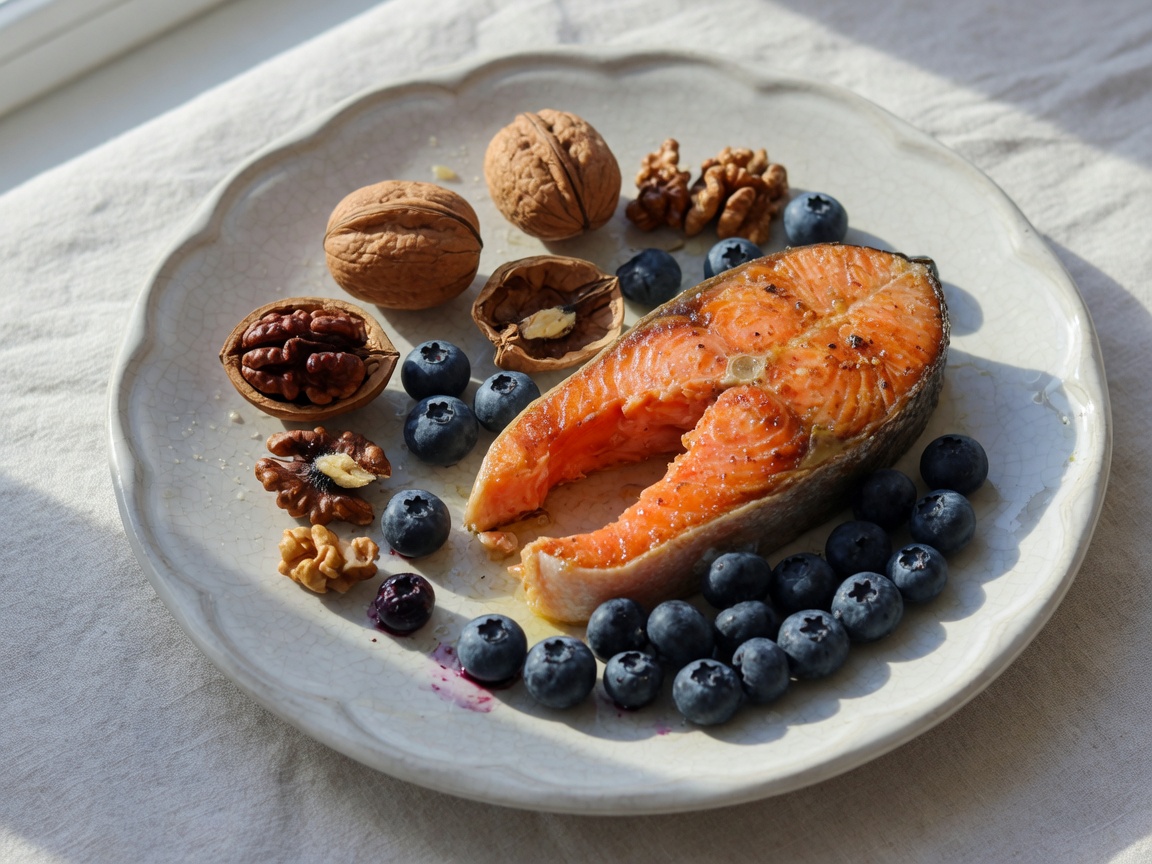
1. Omega and quality fats
Cell membranes are partly made of fat. If fish is rare and fried food is an everyday thing, your fat profile shifts at the expense of membrane flexibility. In practice: oily fish 1–2 times a week if you tolerate it, or plant sources plus algal omega on advice. Avocado, olive oil and a handful of walnuts are easier everyday moves than exotic powders.
2. B vitamins and choline
B6, folate and B12 are often mentioned in connection with fatigue, tingling and “fog.” A deficiency is determined with a doctor, not with a blind megadose. Choline is found in eggs and legumes — which is why a breakfast of nothing but white bread and jam rarely brings clarity.
3. Zinc, magnesium, iron
Zinc is linked to synaptic plasticity and immune response. Magnesium to neuromuscular regulation and sleep. Iron to oxygen transport — low iron in women of reproductive age often masquerades as “I can’t study.” Don’t supplement iron without confirmation.
4. Water and salt in moderation
Mild dehydration reduces attention in many people before thirst even appears. Coffee is not water. The alternative isn’t forcing down liters — it’s a glass in the morning, a glass with every meal, and electrolytes in the heat or during long exertion. More on ions: electrolytes for the brain and clarity.
A daily framework, not a diet fad
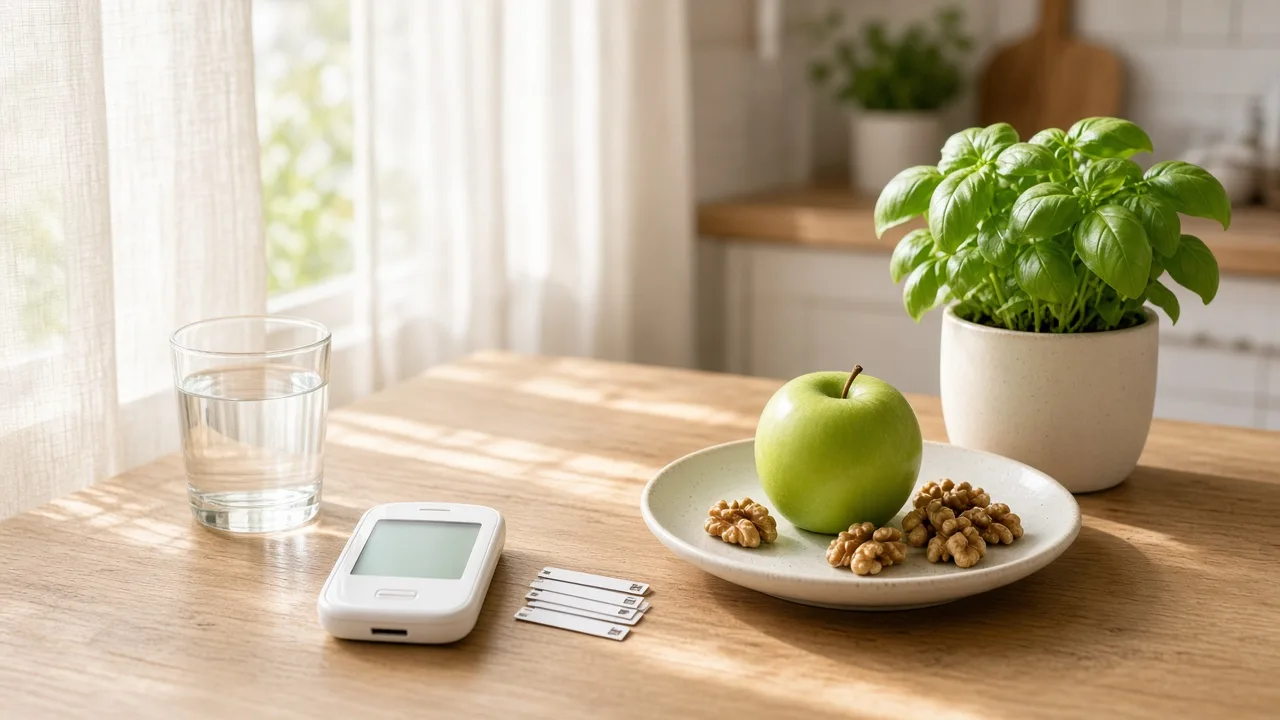
- Breakfast with protein + fat + color. Eggs and greens, or yogurt with nuts and berries. Avoid just a croissant and coffee on an empty stomach if your focus drops by 11 o’clock.
- Lunch with plenty of vegetables and slow carbohydrates. Lentils, chickpeas, brown rice, fish or legumes. This is the moment for polyphenols — see the list in 13 superfoods.
- A snack that isn’t a sugar hit. Pumpkin seeds, fruit with yogurt, a piece of 70%+ dark chocolate — not an energy bar with 30 g of sugar.
- A lighter evening. A heavy floury, sugary spike before bed disrupts the deep phase of sleep, and the next day it “steals” more memory than any skipped walnut.
Rosemary and turmeric in the kitchen are a pleasant layer, not a medicine. For herbs aimed at blood flow, see herbs for blood circulation in the brain.
Where a supplement fits in — and where it doesn’t
A supplement makes sense with a limited menu, a confirmed deficiency, a vegetarian diet without a B12 plan, or during a period of high mental load when your diet is already in order. It makes no sense as compensation for 5 hours of sleep and 12 open tabs.
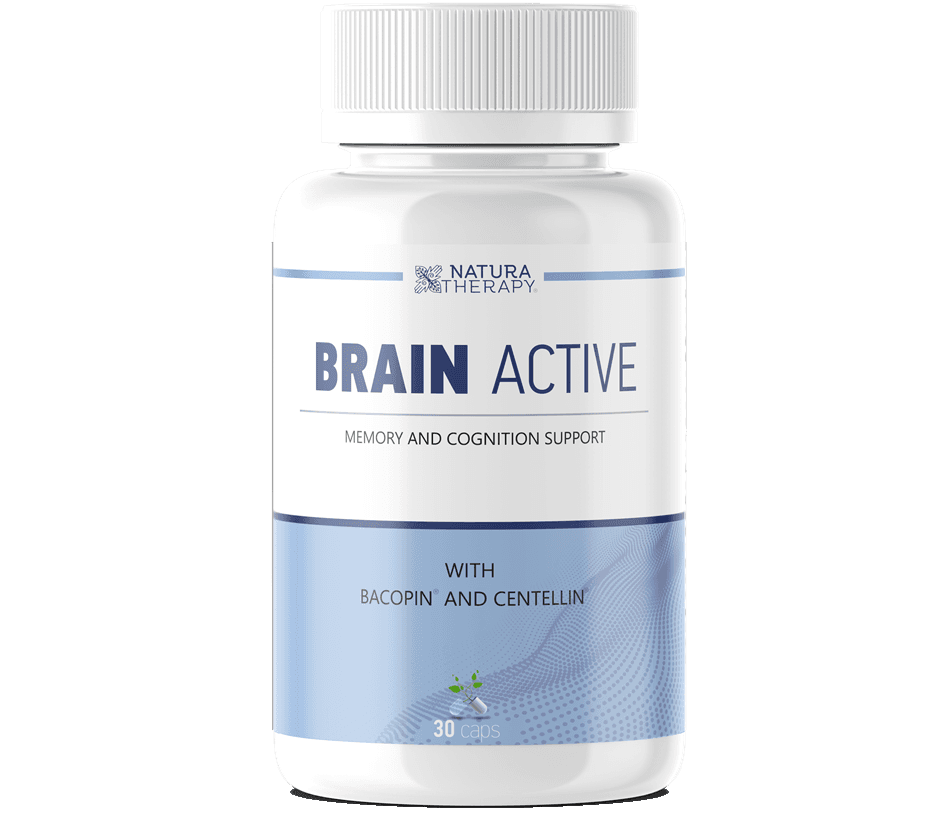
If you’re looking for a ready-made formula for memory and concentration in adults, take a look at Brain Active. For a drink ritual in the first half of the day — Max Brain. For stress that scatters your attention, many people turn to ashwagandha extract. The “what is and isn’t a nootropic” layer is in nootropics: natural support for the brain.
A practical rule: one change every 1–2 weeks. If you combine three new products on the same day, you won’t know what works for you.
What food can’t do
- It doesn’t replace sleep. Memory consolidation happens at night.
- It doesn’t replace movement. Even a 20-minute brisk walk improves subjective clarity in many people.
- It doesn’t cancel out medicines that affect attention, or an undiagnosed thyroid function deficiency.
- It is not a therapy for dementia, depression or ADHD.
Frequently asked questions
- What’s the most important food for memory if I can change only one thing?
- A steady breakfast with protein and fat, plus water. Then add fish or nuts and color to your plate. The list of foods is in the superfoods article.
- Do I need an omega-3 capsule if I eat fish?
- Not always. If you have 1–2 servings of oily fish a week and a varied menu, the priority lies elsewhere. With a fish allergy or a vegan diet — talk to a doctor about an algal source.
- How long do I need to take something “for the brain” to feel a difference?
- Glycemic stability is felt within days. Habits and micronutrients — within weeks. If after one month things are still the same, look at sleep, stress, iron or a medical cause, not a fifth powder.
- Can I combine Brain Active with omega-rich foods?
- Yes, that’s a typical layer: food as the foundation, a formula as an add-on for adults, according to the label. Don’t double up on the same plants from several products without checking the ingredients.
- Does coffee improve memory?
- Caffeine raises alertness briefly. A late cup ruins your sleep and makes your memory worse the next day. Water, protein and a break often do more than a third coffee.
- When is diet not enough?
- With sudden worsening, repeated episodes of confusion, depression, head trauma or medicines that affect attention — see a specialist. Supplements don’t diagnose.
This article is for informational purposes and does not replace medical advice. Food supplements are not medicines. Consult a doctor before use, especially if you have a chronic illness, are pregnant or breastfeeding, or are taking medicines. Results are individual.