The prostate causes trouble for many men over 50, and sometimes earlier. Herbs enter the conversation as a second layer: after an exam, alongside habits, never instead of a urologist. This article replaces the old title about “treatment” — the right word is support.
Rule out infection, retention and cancer first. Then it makes sense to read about saw palmetto and combinations. For the clinical picture: enlarged prostate and saw palmetto intake and side effects.
This article is for informational purposes and does not replace medical advice. Food supplements are not medicines and do not treat BPH, prostatitis or cancer. Consult a doctor before taking an herb, especially if you take medicines for hormones, blood pressure or blood thinning. Results are individual.
When an herb has a place at all
A sensible order: symptoms → urologist → diagnosis → medicines if needed → habits → possibly a supplement. If there is fever, blood, acute retention or a suspicion of cancer, an herb is the wrong tool. If the doctor says “mild to moderate BPH, we’ll monitor it,” then a conversation about an extract is an honest one.
Saw palmetto (Serenoa repens)
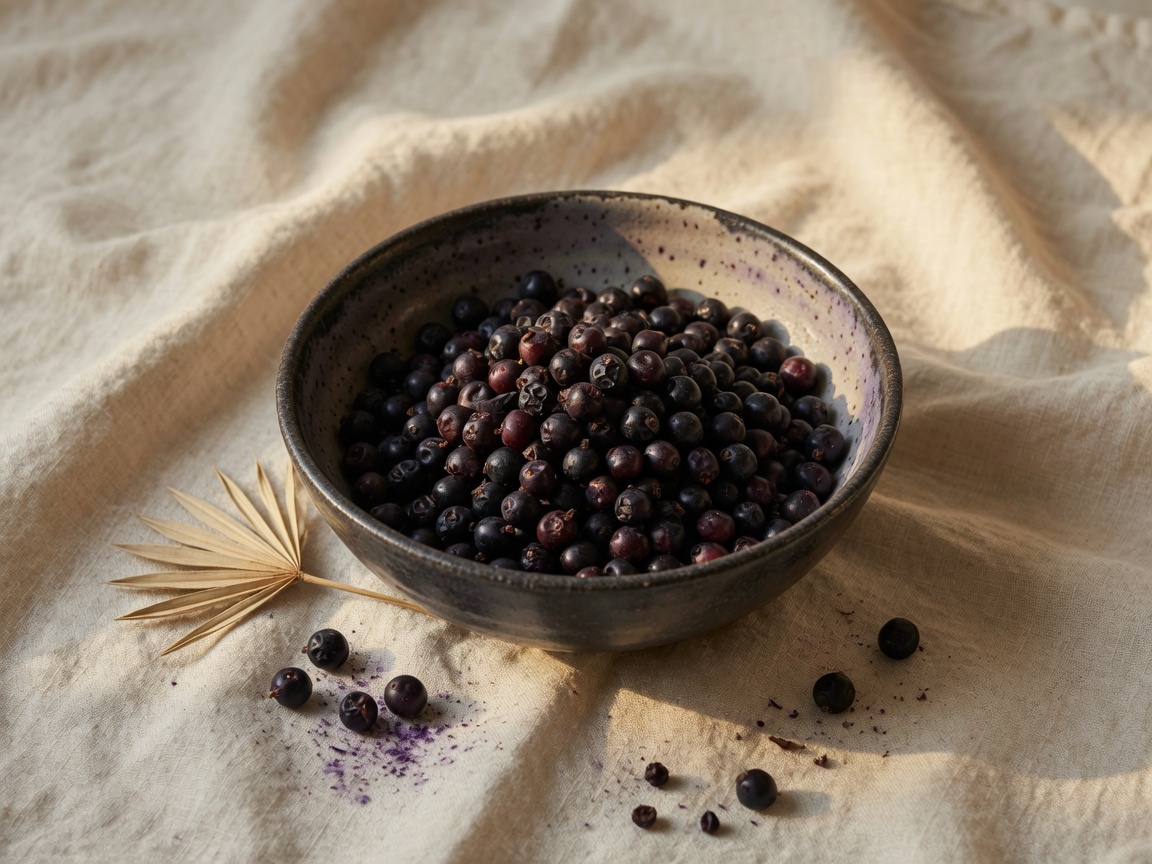
The fruit of the low-growing palm from the southeastern USA is the most studied herb for urinary comfort in men. Traditionally it is linked to nighttime urination and a weak stream. The mechanism under discussion is an influence on local androgen metabolism and on inflammatory mediators in the tissue — not “stopping growth” the way a prescription would.
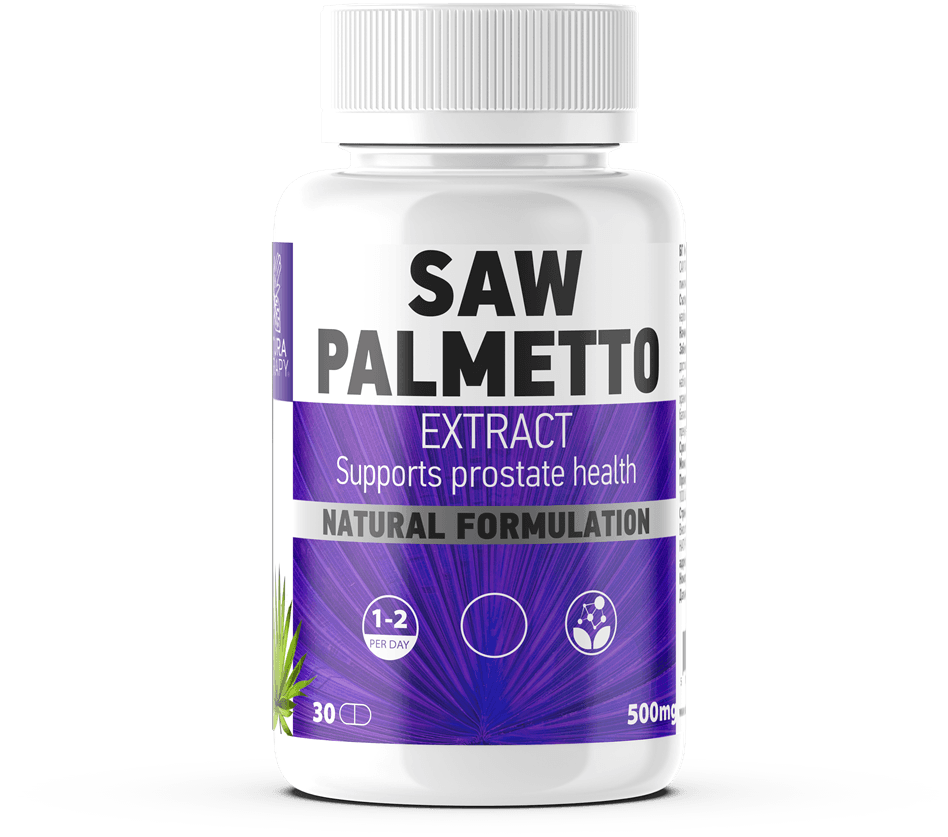
The evidence is mixed. There are older trials showing improved flow; larger modern trials often show no clear advantage over placebo. That is why we don’t promise it works as a medicine. The typical dose in studies is about 320 mg of lipidosterolic extract per day, with food, for weeks before any assessment. More in the separate article on intake and side effects.
Other plants you will find on labels
Nettle (root)
The root is traditionally combined with saw palmetto. The discussion centers on phytosterols and comfort when urinating. Leaf tea is a different story (more minerals and diuresis) and is not the same product as the root in a capsule.
Pumpkin seeds
A food rich in zinc, fatty acids and phytosterols. Half a cup of seeds provides around a few milligrams of zinc — useful as food, not as “8 mg that shrink the gland.” Seed oil appears in formulas; the evidence is more modest than the marketing.
African cherry (Pygeum africanum)
The bark is used in European phytotherapy for urinary comfort. Protecting the wild species is a real problem — at least look for a responsible source. It does not improve potency the way a medicine does.
Lycopene from tomatoes
A carotenoid from red tomatoes, more available after heat processing. There is epidemiological interest regarding prostate tissue. That is not cancer prevention in the regulatory sense, and it does not lower PSA the way a therapy does.
Pomegranate
Polyphenols with an antioxidant profile. As juice or extract, it is food. It does not prevent metastases.
Turmeric
Curcumin is studied for inflammation in the lab. It is not a medicine for a tumor and does not prevent the spread of prostate cancer. High doses without a doctor, especially with blood thinners, are not harmless.
“Babin zab,” “machkin chekor” and similar folk names
Traditional stories about a “men’s herb” or immunity are no substitute for a diagnosis. If they go into a tea, treat them as aroma and habit, not as urological therapy.
Zinc — a mineral, not an herb, but often in the same capsule
Prostate tissue is rich in zinc. The mineral contributes to normal fertility and to the maintenance of normal testosterone levels in the blood, as well as to immune function. A deficiency is addressed with food and, if needed, zinc or the smaller pack Zinc 120. Megadoses don’t “dry out” the gland and can upset the copper balance. More: the importance of zinc for men’s health.
Combinations vs. a single herb
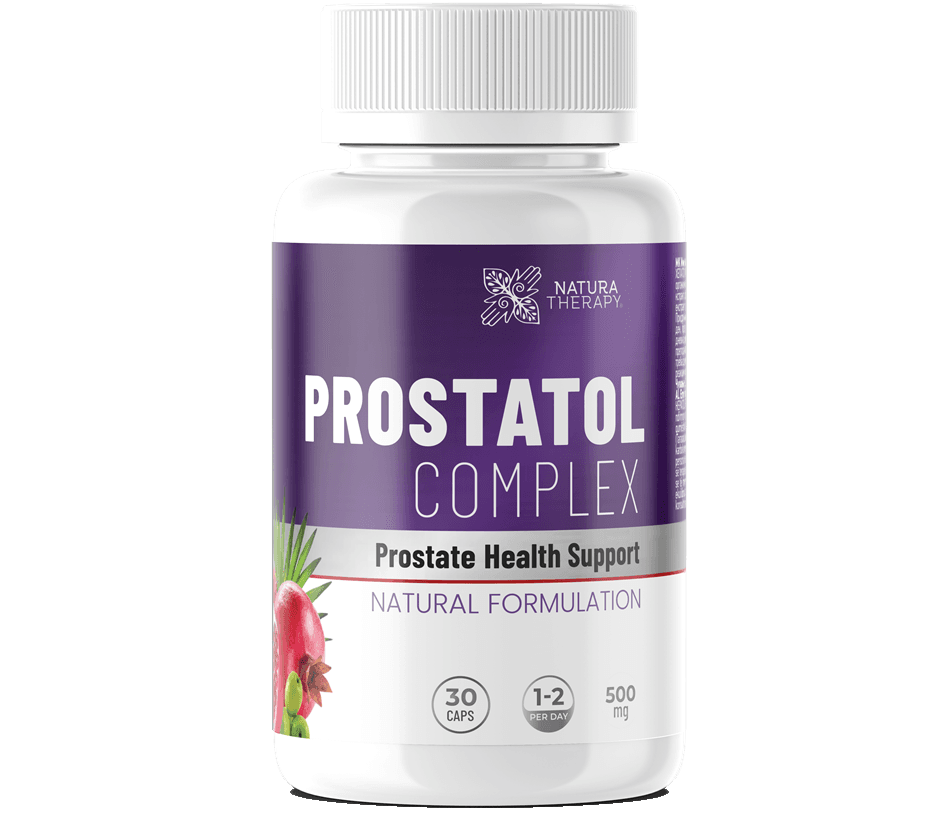
A ready-made formula is practical if you want one product instead of five jars. Prostatol Complex brings together saw palmetto, plant extracts and zinc. Don’t blindly combine it with another box of Saw Palmetto — you’ll double the same ingredient. Choose one. Catalog: Men’s health.
Allow a realistic window: a few weeks to two months. If the stream gets weaker, or there is blood or fever — stop and see a doctor, not a higher dose.
How to read the label
Look for the Latin name (Serenoa repens, Urtica dioica radix, Cucurbita pepo, Pygeum africanum), the amount of extract and the extraction ratio if stated. A “prostate formula” with no numbers is a weak sign. Milligrams of whole-leaf powder are not the same as a standardized lipidosterolic extract.
Check whether you are already taking the same herb somewhere else. A multivitamin + a complex + pure saw palmetto is a classic doubling-up. Zinc adds up too: 15 mg here, 25 mg there, plus food. Write down the total before you buy a third jar.
Keep the box. At your checkup, the urologist needs to see exactly what you are taking, not “something green for the prostate.” If you need surgery or a biopsy, take the label to the anesthesiologist. Some extracts are paused before a procedure because of bleeding or hormonal pathways.
Price is not proof. Nor is “clinically proven synergistic action” on the packaging. Ask: is there a trial on exactly this blend, or are individual herbs cited at doses from other studies? The honest answer is often the latter. That is why the language here is support. The Men’s health shelf is for choosing after a checkup, not for self-diagnosis.
Harvest season and backyard teas don’t cancel out this logic. Nettle tea is rich in minerals and diuretic; it can send you to the bathroom more often, which with BPH isn’t always a favor. Pumpkin seeds on the table are food. A mix of ten herbs “for men” from the market with no label is the weakest choice: you know neither the dose nor the contamination. If you want a traditional taste, stick to the kitchen and one standardized product, not ten bags with handwritten names.
Men who already take medicine for blood pressure, diabetes or blood thinning should take that list to the pharmacy before the first capsule. Phytosterols and polyphenols are not invisible to the liver. The same caution applies before a colonoscopy, dental surgery or a biopsy. The pause isn’t superstition — it’s coordination. Once you get the green light, go back to one formula and measure your nights again. That is the whole method. If there is no change after two months, don’t switch brands on the same day — go back to the urologist with the label in hand and the number of nighttime awakenings written down on paper. Without those two pieces of information the conversation starts from zero again, and once again you lose time that could have gone to a real diagnosis instead of a new jar.
Frequently asked questions
- Which herb is best for the prostate?
- There is no universal winner. Saw palmetto has the most literature, with mixed results. The choice depends on the diagnosis and on the medicines you are already taking.
- Do herbs cure prostate cancer?
- No. Not turmeric, not pomegranate, not palm. Cancer is managed by a uro-oncology team.
- Can I take herbs instead of an alpha-blocker?
- Not on your own. If the medicine makes you dizzy, tell your urologist. Do not quietly replace it.
- Are pumpkin seeds enough?
- They are good as food. They are rarely the only measure in clear-cut BPH.
- How long should I take a formula?
- As the label says, with a reassessment at 6–8 weeks. Long-term only if there is a benefit and your doctor is in the loop, especially because of PSA.
- Are there interactions?
- Yes. Hormonal medicines, anticoagulants, blood pressure medicines. Give the full list at the pharmacy.
- Does “synergy” mean stronger treatment?
- It means more ingredients in one capsule. It does not mean a proven medicine, and it does not automatically increase safety.
This article is for informational purposes and does not replace medical advice. Food supplements are not medicines and do not treat prostate problems. Consult a doctor before use. Results vary from person to person.