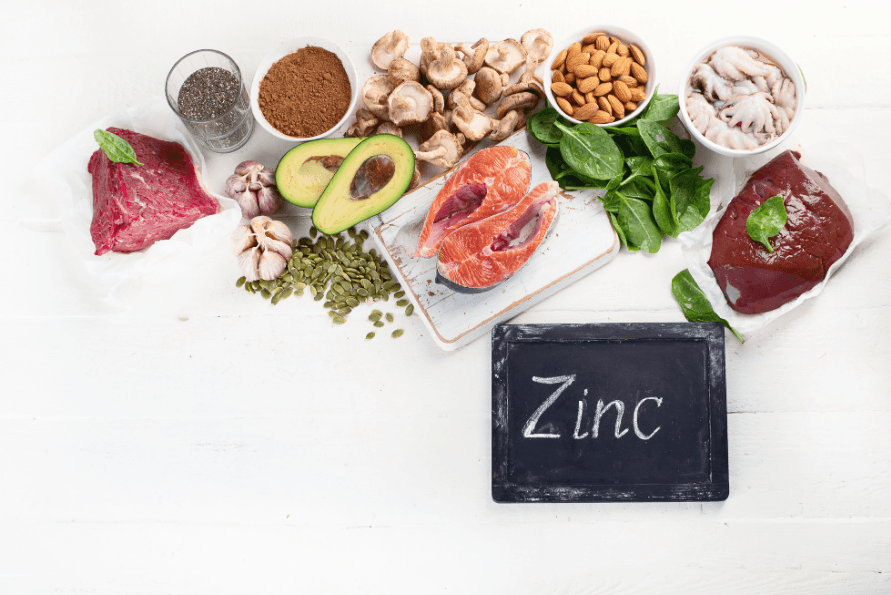
Zinc-rich foods are the surest way to cover the mineral your immunity, skin and recovery need. A supplement makes sense when your menu is narrow or your needs are higher — not as a replacement for your plate.
The functions are covered in zinc: benefits for the body. Here is a practical list: 15 superfoods, rough amounts and absorption tricks. The figures are a guide (variety, preparation and portion change the value).
Animal sources: the highest utilization
Zinc from meat, fish and eggs is absorbed better because it comes without phytic acid and with sulfur amino acids that help absorption.
- Oysters and shellfish — champions of density; a few medium oysters can cover the daily need. Eat them fresh and from a trusted source.
- Beef — the most accessible “everyday” source here; a lean 100 g cut provides a solid dose plus complete protein.
- Chicken (especially drumsticks) — lower than beef, but fits easily into soups and training meals.
- Pork / ham — a moderately rich source; choose less processed cuts.
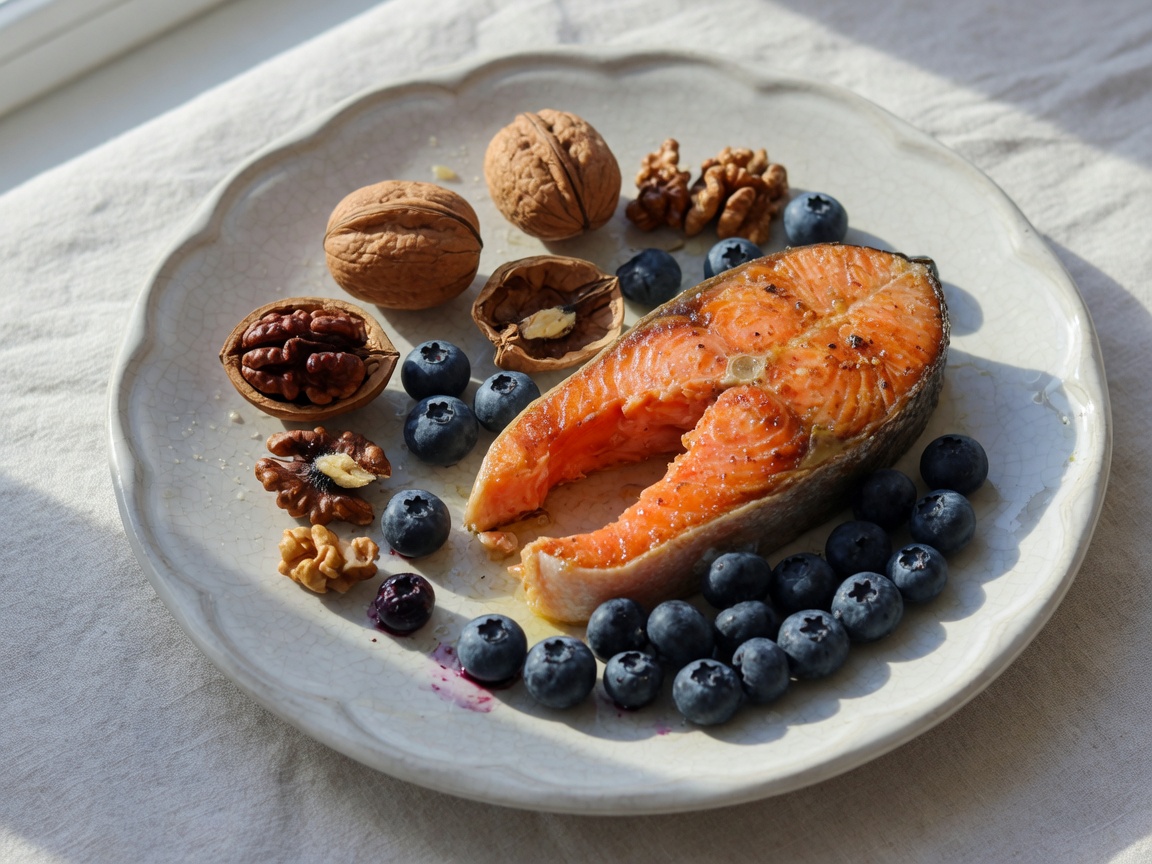
- Salmon and oily fish — the zinc is not as high as in oysters, but it comes with omega-3.
- Eggs — about 5% of the daily need in one large egg; a practical breakfast.
- Yogurt and fermented dairy — a serving of Greek yogurt provides zinc, protein and calcium; a good evening meal.
Plant sources: useful, on one condition
Legumes, seeds and grains contain zinc, but also phytates that bind it. Soaking, fermentation and sprouting improve availability.
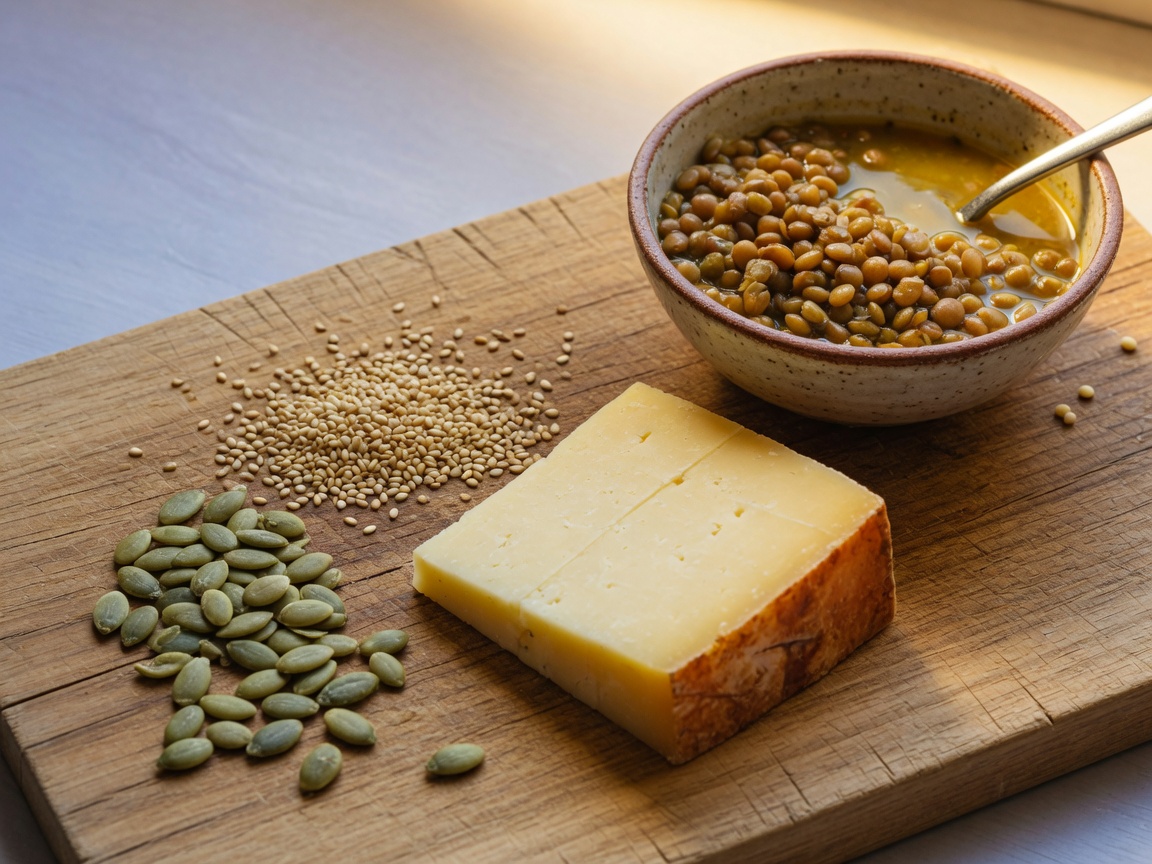
- Pumpkin seeds — a dense plant source; a handful instead of chips.
- Sesame and tahini — easy in a salad or on bread.
- Flaxseed — ground, in yogurt or porridge.
- Chickpeas, lentils, beans — economical; soak them for 8–12 hours and cook them well.
- Walnuts — moderate zinc plus healthy fats; they don’t replace a serving of meat if your intake is low.
- Whole grains (oats, quinoa) — lower density, but eaten often; combining them with protein helps.
Surprises worth knowing
- Dark chocolate (70%+) — about 3 mg per 100 g; a serving is a square, not a bar.
- Mushrooms and spinach — a modest contribution, but easy to add to a meal. Not a substitute for oysters or meat if you have a confirmed deficiency.
What reduces or improves absorption
- Phytates in the hulls of grains and legumes — soaking and yeast help.
- High calcium or iron in the same meal — they can compete; take your supplements separately.
- Alcohol and chronic diarrhea — they increase losses.
- Fermented meals and animal protein — usually improve utilization.
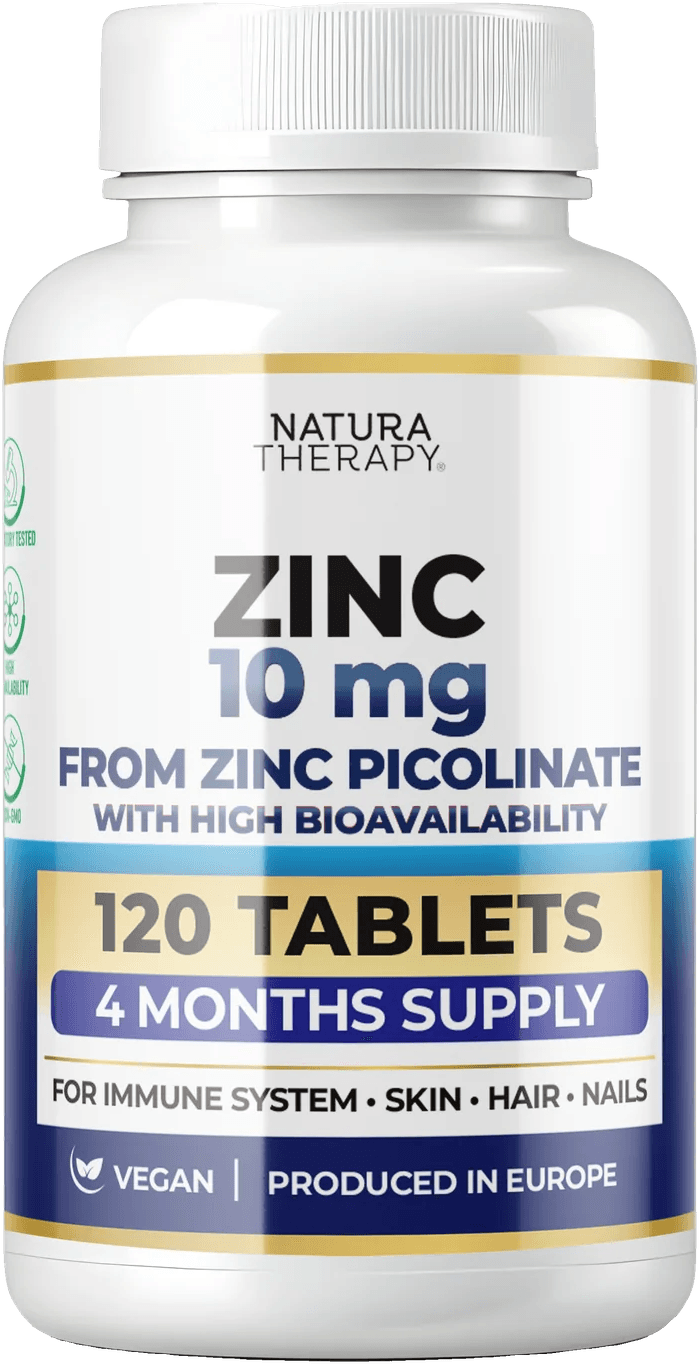
If your menu is mostly plant-based, you train in a deficit or you have signs of deficiency, consider zinc from minerals and vitamins — one dose according to the label, not two products at once.
How to build a zinc-rich day
Breakfast: yogurt + pumpkin seeds + an egg. Lunch: beef, or lentils with soaked chickpeas. Dinner: fish or oats with tahini. That is more realistic than “oysters every day.”
Frequently asked questions
- Which food has the most zinc?
- Oysters are the densest. For everyday eating here, the most practical are beef, yogurt and pumpkin seeds.
- Can vegans cover zinc with food alone?
- They can, if they plan legumes, seeds and soaking. The need is often slightly higher because of phytates — that is why many vegans track their intake more carefully.
- Is almond milk a good source?
- It depends on the formula and fortification. It won’t replace a serving of meat, yogurt or seeds.
- When is food not enough?
- With a very restrictive menu, gut diseases, pregnancy (only with a doctor) or signs of deficiency. Then the supplement is a bridge, not a lifelong habit without reassessment.
- Does dark chocolate count as a “zinc superfood”?
- As a bonus — yes. As a main source — no, because of the calories and the portion size.
This article is for informational purposes and does not replace medical advice. Food supplements are not medicines. Consult a doctor before use, especially if you have a chronic illness, are pregnant or breastfeeding, or are taking medicines. Results are individual.