
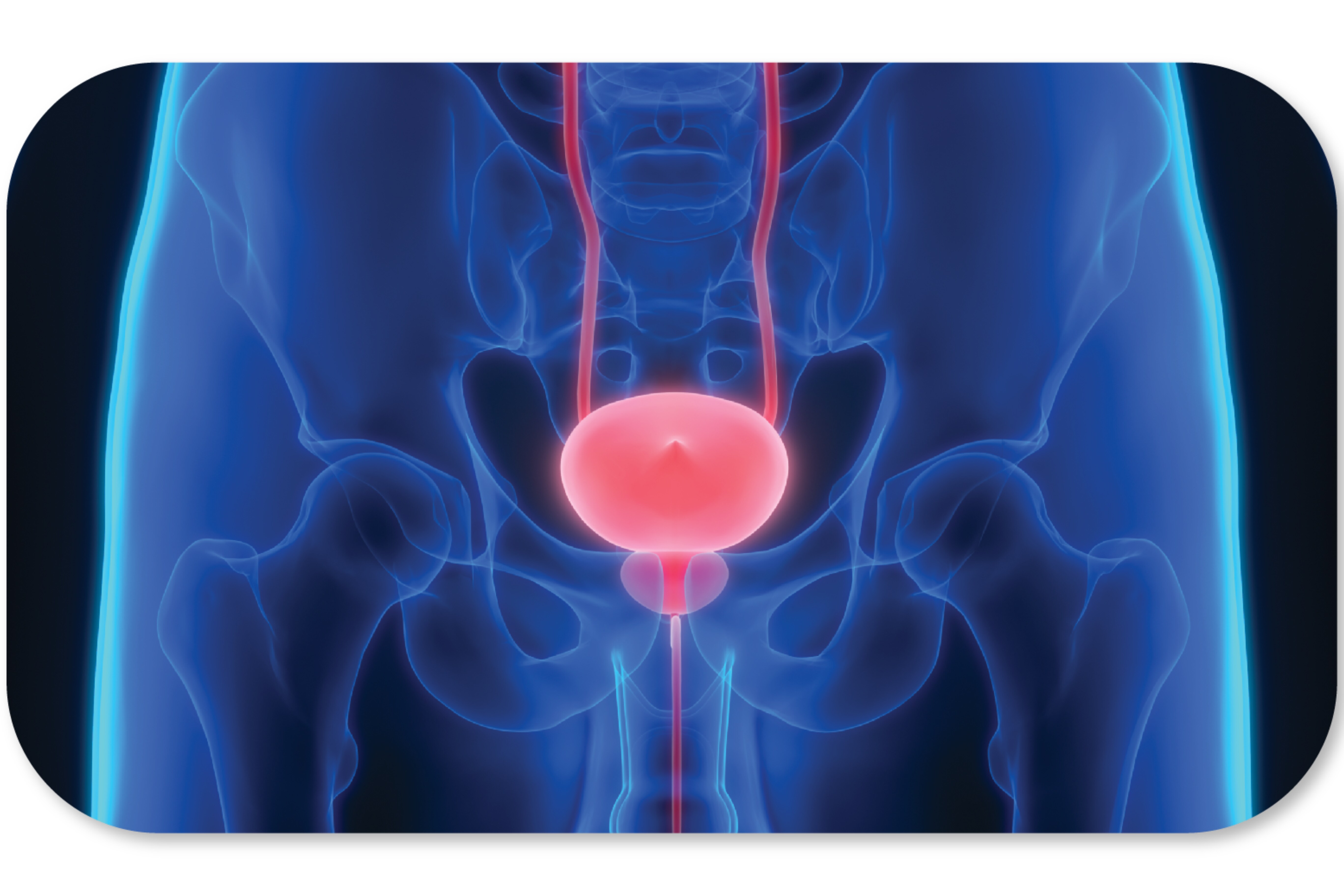
The prostate is a small gland of the male reproductive system. It lies just below the bladder, in front of the rectum, and surrounds the first part of the urethra — the channel through which urine leaves the body. It is not a “spare organ”: it contributes to seminal fluid, helps direct the flow during ejaculation and is part of the mechanism that keeps the bladder neck closed between urinations.
Many men first think about it only when they start waking up at night, when the stream weakens or when they hear a term like BPH. It helps to understand first what is normal. Then it’s easier to read the signs that something is wrong and the most common conditions.
This article is for informational purposes and does not replace medical advice. Food supplements are not medicines and do not diagnose, treat or prevent diseases. If you have complaints — see a urologist. Consult a doctor before taking a supplement, especially if you have chronic conditions or take medicines. Results are individual.
Where it is and how big it is
In a young adult man, the prostate is roughly the size of a chestnut: about 3 cm long, 4 cm wide, 2 cm thick and weighing about 18–20 g. Its volume is most often described as 15–25 ml. It’s not a perfect ball — it has a base facing the bladder, an apex pointing toward the pelvic floor, a front surface, a back surface and two side surfaces.
The prostatic urethra runs through it. The ejaculatory ducts also empty here. That’s why one and the same gland can affect both urination and seminal fluid. The back wall is palpated during a digital rectal exam: the urologist assesses its size, its contours and whether there are hard areas.
Internally, the tissue is divided into zones. The peripheral zone is the largest, and cancer occurs there more often. The transition zone surrounds the urethra, and benign hyperplasia grows there more often. The central zone surrounds the ejaculatory ducts. This map explains why BPH narrows the stream early, while cancer often stays silent until it spreads.
What the prostate does
Seminal fluid and sperm
Its primary function is to produce part of the seminal fluid — a whitish secretion that mixes with the sperm cells from the testicles and with the secretion from the seminal vesicles. The prostatic secretion carries enzymes, zinc and other components that maintain the motility and stability of sperm during the short journey after ejaculation.
The muscle fibers in the gland help push the secretion into the urethra at the right moment. If this rhythm is disrupted — after inflammation, surgery or medicines — men sometimes notice a change in the volume, color or sensation of ejaculation. That’s a sign to talk to a doctor, not to start a “detox” routine on your own.
Urinary valve
The prostate surrounds the outlet of the bladder. At rest, it helps keep the neck closed, which reduces leakage. During urination, the urethra must stay wide enough. When the inner tissue grows, the channel narrows like a kinked hose: the stream weakens, the bladder strains, and you wake up more often at night.
Hormones in the tissue itself
The prostate is not the main gland that “makes testosterone” — that’s the testicles. But in its cells the enzyme 5-alpha-reductase converts testosterone into dihydrotestosterone (DHT). DHT is important for the development of the gland and later plays a part in the story of tissue growth. That’s why some medicines prescribed by a urologist act precisely on this enzyme. A supplement does not replace such therapy.
How it changes with age
After about age 40, the inner part often begins to grow slowly. That is not cancer and doesn’t mean every man will have severe complaints. Some men live with a larger gland and almost no complaints; in others, a chestnut-sized gland is already disrupting their sleep. Size and symptoms are not always proportional.

With age, blood flow, the nervous control of the bladder, body weight and the medicines taken for blood pressure or allergies also change. That’s why “prostate” complaints are sometimes a mix: gland + bladder + a habit of drinking coffee late in the evening. The urologist untangles that mix with a conversation, an examination and, if needed, PSA and an ultrasound.
Three groups of conditions men mix up
In everyday speech, “I’ve got prostate trouble” usually means one of three things:
- Benign hyperplasia (BPH) — growth of the glandular tissue around the urethra, most common after 50.
- Prostatitis — inflammation or a pelvic pain syndrome; it also occurs in younger, sexually active men.
- Prostate cancer — often slow, often silent early on; detection depends on screening and a biopsy, not on “feeling the gland” at home.
Less common findings are stones, cysts, an abscess or calcifications. These are diagnosed by a doctor, not by an internet test. Blood in the urine, a fever with chills, inability to urinate or pain that wakes you at night are not a case of “I’ll wait for it to pass.”
How the prostate is examined
The standard package is a conversation about symptoms (how many times at night, stream strength, pain, sexual changes), a digital rectal exam and a PSA blood test when the urologist thinks it makes sense. PSA is not a cancer diagnosis: it also rises with BPH, inflammation, recent ejaculation or even cycling. Interpreting it is a medical matter.
Men with a family history of prostate cancer often start checkups earlier — the conversation is individual, usually in their 40s, otherwise around 50. Buying a supplement on your own instead of having a first examination delays the one thing that truly changes the outcome: a timely diagnosis.
Habits that support the gland
There is no food that “cleans the prostate.” There are habits that reduce the burden on the bladder and support general men’s health:
- Movement several days a week — walking, strength work, pelvic floor exercises if a physical therapist recommends them.
- Fewer fluids, less coffee and alcohol in the late hours if nocturia wakes you up.
- Maintaining your body weight; excess fat tissue is linked to worse urinary complaints in some men.
- Quitting tobacco and moderation with alcohol — for blood vessels, hormones and healing.
- Sexual health and potency are tied to the same blood flow and stress; more in natural solutions for potency and libido.
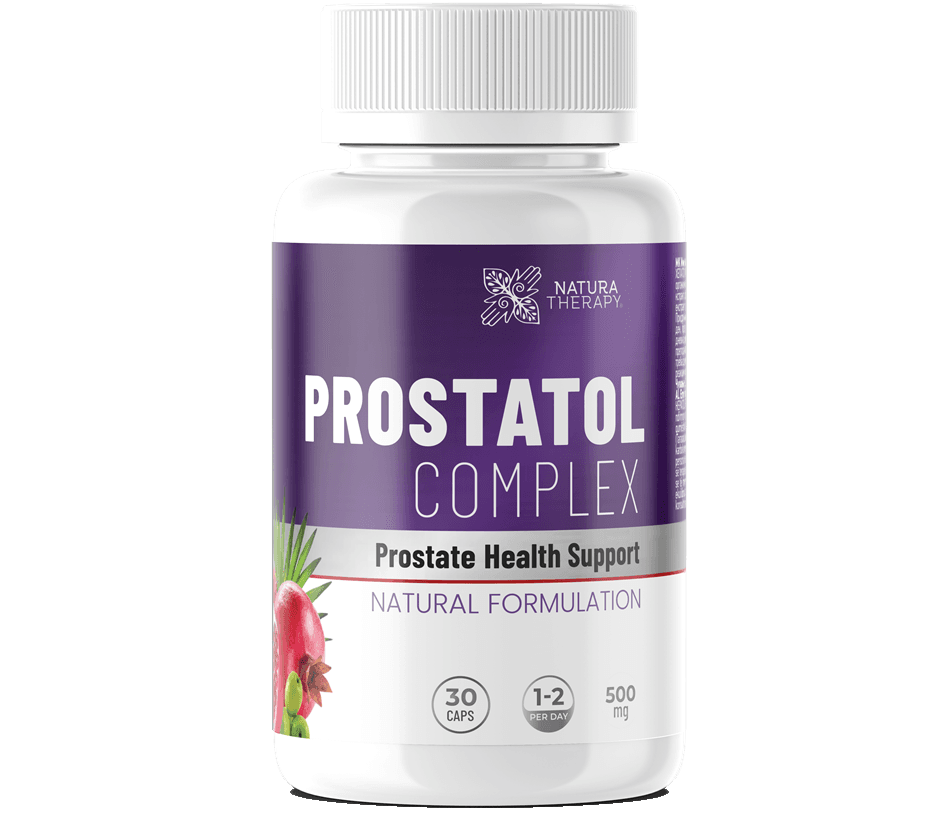
If, after an examination, you’re looking for plant-based support for urinary comfort, a formula such as Prostatol Complex is a food supplement — saw palmetto, herbs and zinc — not a medicine. The whole shelf is in the Men’s health category.
Frequently asked questions
- Do only older men have a prostate?
- No. The gland is there from puberty. Complaints become more common after 40–50 years of age, but inflammation and pain also occur in younger men.
- Does a larger prostate always mean more problems?
- No. Symptoms depend on how much the tissue narrows the urethra and how the bladder responds, not just on the centimeters on an ultrasound.
- Does the prostate produce testosterone?
- The main production happens in the testicles. In the prostate, testosterone is converted locally into DHT. That matters for the tissue, but it doesn’t make the gland the “factory of masculinity.”
- Can a supplement replace a checkup with a urologist?
- No. A supplement doesn’t measure PSA, doesn’t distinguish BPH from cancer and doesn’t treat an infection. First an examination, then a conversation about diet and any possible support.
- Is it normal to urinate once a night?
- Waking once also happens in healthy men, especially if they drink late. Two or more awakenings, a weak stream or the feeling that the bladder doesn’t empty — a reason for an examination.
- How is the prostate linked to potency?
- They share blood supply, nerves and the pelvic floor. Pain, medicines or surgery can affect ejaculation and erection. That is resolved with a specialist, not with a higher dose of herbs.
- When is it urgent?
- Inability to urinate, blood in the urine, a high fever with chills, severe pelvic pain or weakness in the legs — emergency medical help, not a supplement.
This article is for informational purposes and does not replace medical advice. Food supplements are not medicines and do not diagnose, treat or prevent diseases. Consult a doctor before use, especially if you have chronic diseases or take medicines. Results are individual.