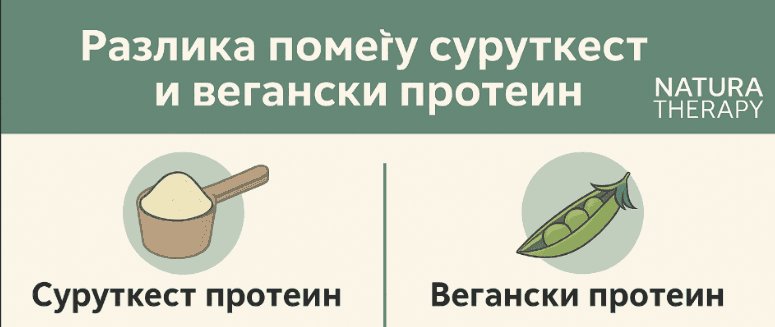
Vegan vs. whey protein isn’t a “good vs. bad” contest. It’s a choice based on your stomach, ethics, budget and whether you need a quick shake after the gym or a meal replacement with fiber. Both can build muscle when total protein and training are on track.
Creatine is a different tool — see creatine vs. protein. Protein’s functions as a macronutrient: proteins, functions and metabolism.
What whey is and what plant protein is
Whey is a milk protein, quickly digested and rich in leucine. Isolates have less lactose than concentrates, but not always zero. Plant blends most often start from pea, rice, hemp or oats. Pea is a complete protein — all the essential amino acids are present; methionine is lower and is easily topped up with grains or nuts.
Amino acids and muscle synthesis
Whey usually carries more leucine per 100 g of powder. That is what gives it the reputation of being “better for hypertrophy.” Controlled comparisons with pea at equal total protein often show similar muscle growth in beginners and recreational athletes. The dose makes the difference, not the “animal” label.
If you train hard and eat little, whey is convenient. If you already eat meat and eggs, a plant shake won’t “steal” your progress.
Stomach, lactose and fullness
Lactase activity drops in a large share of adults. Even 3–12 g of lactose — the amount in some whey formulas — causes bloating and cramps. Pea is free of lactose and casein. The fiber in vegan shakes (oats, apple) prolongs fullness — useful as a meal replacement, less critical as “just amino acids after training.”
Quick comparison
- Whey — faster, more leucine, often a creamier taste; a risk for the lactose-sensitive.
- Vegan (pea + fiber) — gentler digestion for many people, more fullness, slightly lower methionine.
- Calories — depend on the formula, not on the “vegan” label. Check the serving size.
Who should choose what
- Bloating after milk / yogurt → try a plant shake for 2 weeks.
- Maximum convenience after strength training and you tolerate milk → 100% Whey Protein.
- Meal replacement, hunger control → Diet Shake.
- Vegan ethics or an environmental priority → a plant profile, complemented by a varied diet.
Both lines are in Adastra Nutrition and fitness and active living. Don’t drink three shakes to “win” the comparison — total daily protein is what wins.
How to fit it in without chaos
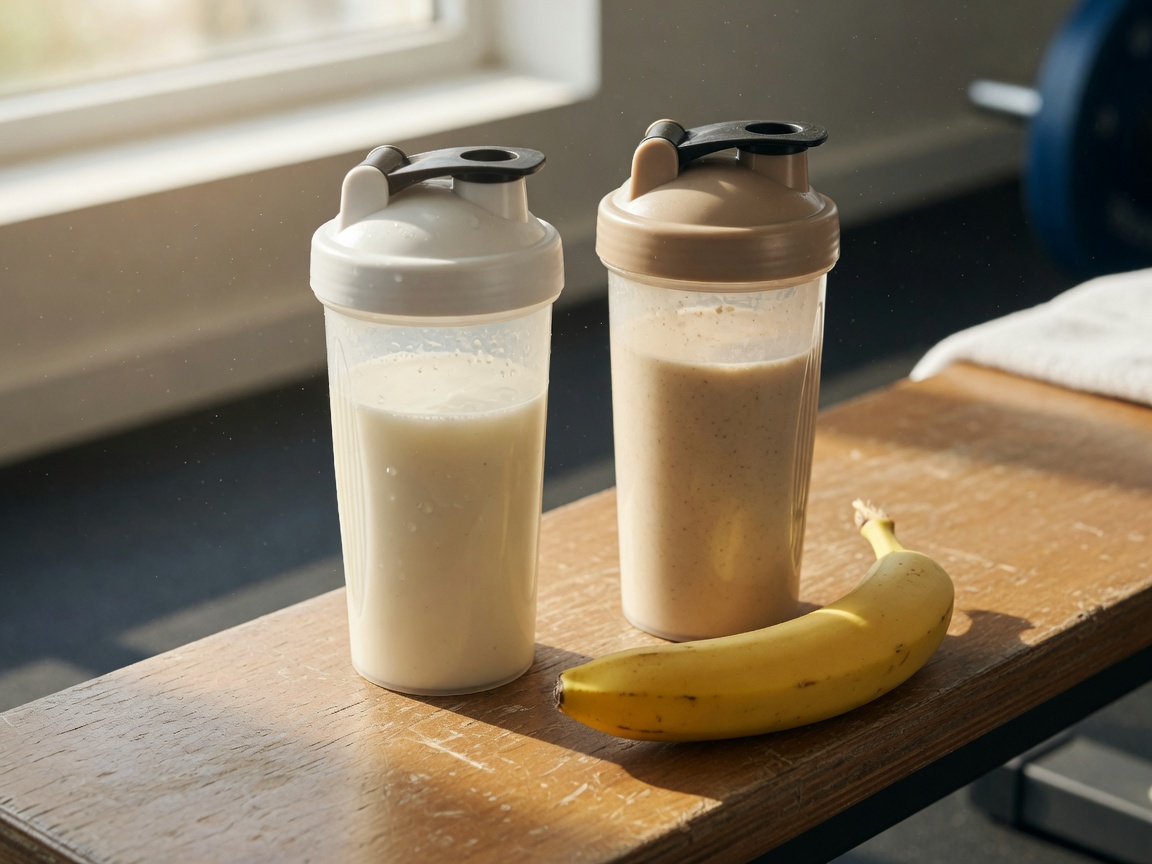
Breakfast: a plant shake + almond or oat milk if you want zero lactose. After the gym: whey in water or a plant shake + a banana. Evening: only if you’re going to skip the meal. Don’t mix a vegan shake into cow’s milk and then wonder why your stomach reacts.
Frequently asked questions
- Is pea protein complete?
- Yes. Methionine is lower than in whey; a handful of nuts or oats on the same day completes the profile.
- Will I lose muscle if I switch to a vegan shake?
- No, if your grams of protein and your training stay the same. Track strength and set volume, not the marketing.
- Can I combine whey in the morning and plant protein in the evening?
- Yes. There’s no conflict. Watch your total intake and your stomach.
- Is a vegan shake suitable for people with diabetes?
- Many formulas have a lower glycemic load because of the fiber, but the sugar on the label varies. Ask a doctor; don’t replace therapy with a shake.
- Pea allergy?
- Rare, but possible with a legume allergy. In that case whey or another source, on advice.
This article is for informational purposes and does not replace medical advice. Food supplements are not medicines. Consult a doctor before use, especially if you have a chronic illness, are pregnant or breastfeeding, or are taking medicines. Results are individual.