Proteins are a macronutrient with more functions than “building biceps.” They are building material for tissues, enzymes and hormones, a satiety signal and one of the most energy-costly macros to digest — that’s why they affect metabolism even when you’re not at the gym.
This article is about the functions and metabolism of protein. The comparison of creatine versus protein is in creatine vs protein. The choice of plant versus whey is in vegan vs whey protein.
What protein does besides muscle
- Building and repair — muscle, skin, connective tissue, antibodies.
- Enzymes and transporters — almost every metabolic pathway has a protein catalyst.
- Hormones and neurotransmitters — insulin, glucagon; many signals start from amino acids.
- Satiety — protein raises CCK, PYY and GLP-1 and slows the emptying of the stomach.
- Thermic effect — the body uses more energy to digest protein than fat or sugar.
Muscle mass is the biggest “consumer” at rest. If you cut only protein in a calorie deficit, you also lose the tissue that keeps your metabolism going — that’s why weight plans start with protein, not with a miracle tea. A broader plan: natural and sustainable weight loss.
How much protein and when
For healthy adults with a desk job, about 0.8 g/kg is often enough. With strength training or a deficit, many people move toward 1.6–2.2 g/kg of body weight — individually, and with a doctor if you have kidney disease. More important than the “exact gram” is distribution: 20–40 g per meal, 3–4 times a day, instead of one huge meal in the evening.

After training, the window isn’t 20 minutes of magic, but it’s practical to have protein in the following hours. On rest days, the need doesn’t drop to zero — synthesis and immunity keep working then too.
Metabolism: sugar, insulin and fiber
Protein on its own has a low glycemic load. Combined with soluble fiber (oats, apples, legumes), the meal leaves the stomach more slowly, blood sugar is more stable and the urge to snack before the next meal is weaker. That’s why plant protein with oat fiber often feels “more filling” than pure isolate in water — not because it’s magic, but because of the fiber.
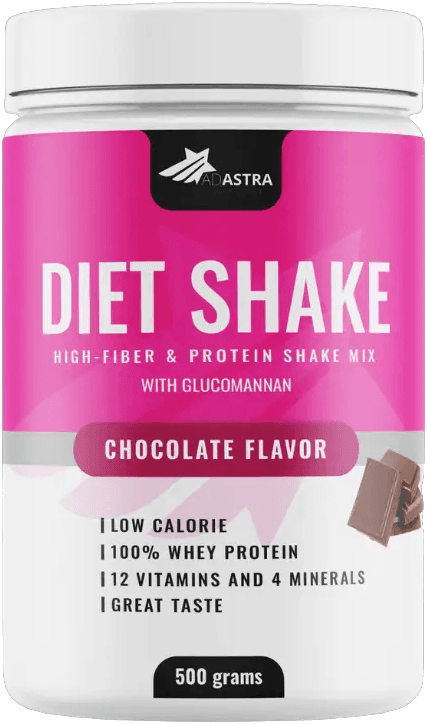
When a meal needs to be quick, Diet Shake is a practical replacement with protein and fiber. It doesn’t replace every meal of the day. A sports shake with whey: 100% Whey Protein from Adastra Nutrition.
Digestion and tolerance
Whey is fast and rich in leucine. Pea and other plant blends are lactose-free and often gentler on the stomach. If you get gas after a shake, check lactose, sweeteners and whether you drink too little water — don’t rush to blame “protein” as a category.
How to fit it into your day
- Breakfast — eggs, yogurt or a shake if your mornings are hectic.
- After training — a shake with water or a milk you tolerate well.
- Evening — lean fish, legumes or a shake with cinnamon, not a heavy dessert.
- In baking — replacing part of the flour, only if you keep track of the total dose.
Frequently asked questions
- Does more protein automatically speed up your metabolism?
- It increases the thermic effect and helps preserve muscle in a deficit. It won’t “fire up” your metabolism if you sleep 5 hours and don’t move.
- Can protein make me gain weight?
- Excess calories are stored, from any macro. Protein is more filling, so it often leads to a lower total intake — but shakes with sugar and peanut butter add up fast.
- Do I need a shake if I eat meat and eggs?
- Not necessarily. A shake is a convenience when you skip a meal, not a superior source.
- How many shakes a day?
- One, two at most, as part of your meal plan. Let the rest of your protein come from food — vitamins, minerals and chewing all play a role.
- Is protein a medicine for weight loss?
- No. It is a macronutrient. For a plan without constant hunger, see weight loss without hunger.
This article is for informational purposes and does not replace medical advice. Food supplements are not medicines. Consult a doctor before use, especially if you have a chronic illness, are pregnant or breastfeeding, or are taking medicines. Results are individual.