
“Lose weight with turmeric” sounds like a headline promising quick results. The reality is more modest: turmeric is a spice, curcumin is a polyphenol you get very little of if you just sprinkle the powder into soup, and the kilos shift with calorie balance, protein, sleep and movement — not with one yellow teaspoon.
This article is for informational purposes and does not replace medical advice. Food supplements are not medicines. Consult a doctor before use, especially if you have a chronic illness, are pregnant or breastfeeding, or take medicines. Results vary from person to person.
Here we keep turmeric in the context of weight and the everyday plate. For knee and joint pain, see turmeric for joint pain. For the “why with black pepper” part — turmeric and black pepper.
What turmeric is, and what curcumin is
Turmeric (Curcuma longa) is a root from the ginger family. In the kitchen it adds color and a bitter, earthy flavor. The active part that studies mention is a group of curcuminoids, most often curcumin.
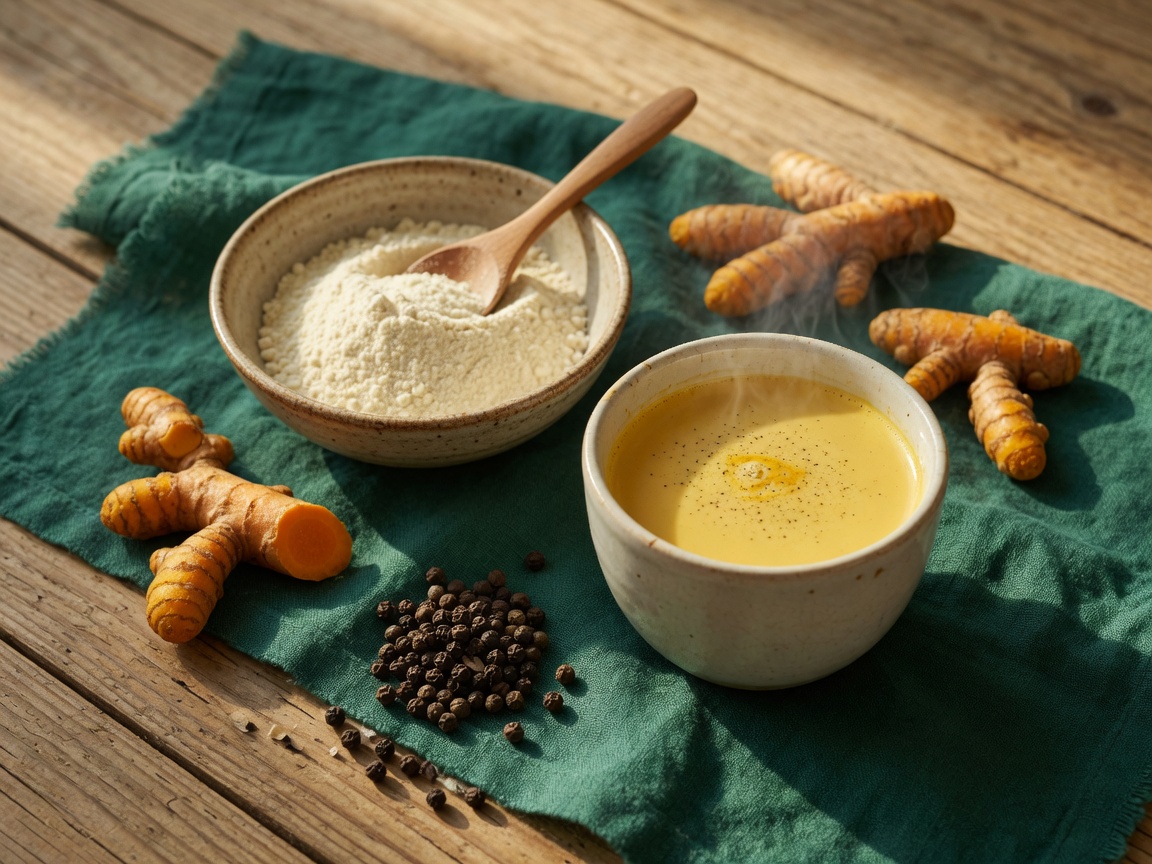
The spice in a jar isn’t the same as a standardized extract. A teaspoon of powder contains little curcumin, and curcumin dissolves poorly in water and is metabolized quickly. That’s why “sprinkle it on every meal and the kilos will drop” is marketing, not a plan.
- Spice — flavor, color, a small intake of curcuminoids.
- Extract / syrup / capsule — a higher, measured amount; read the label.
- Piperine from black pepper — classically combined for absorption, not for “fat burning.”
What’s realistic for weight
Some people bring in turmeric when they want lighter, less fried food and a less “heavy” stomach after lunch. That can indirectly help you stick to your plan. It’s not the same as a medicine for obesity.
What turmeric doesn’t do:
- it doesn’t replace a calorie deficit;
- it doesn’t “speed up your metabolism” the way ads promise;
- it does not treat diabetes, inflammatory bowel diseases or hormonal disorders of the thyroid gland;
- it is not a cancer therapy and does not protect against malignant diseases.
If weight is your goal, line up the pillars first: protein at every main meal, vegetables for volume, a walk or strength training 2–3 times a week, sleep. The spice is a layer on top.
Where people look for the link with weight
The conversation usually revolves around three things — all with limits:
- Gut comfort, including after meals. People who eat less fried food and more spiced vegetables often eat less “automatic” dessert. That’s a habit, not pharmacology.
- Feeling full. Yogurt, eggs, legumes and water do more for your appetite than curcumin. If a study mentions less hunger, that doesn’t mean you’ll eat less tomorrow.
- Inflammation and stiffness. If your knee hurts, you move less, so your weight heads the wrong way. This is where turmeric comes in as a spice or supplement for comfort, not as a therapy. See also the category Bones and joints.
How to put it on a Macedonian plate
You don’t need a “protocol.” You need consistency that doesn’t spoil the taste of your food.
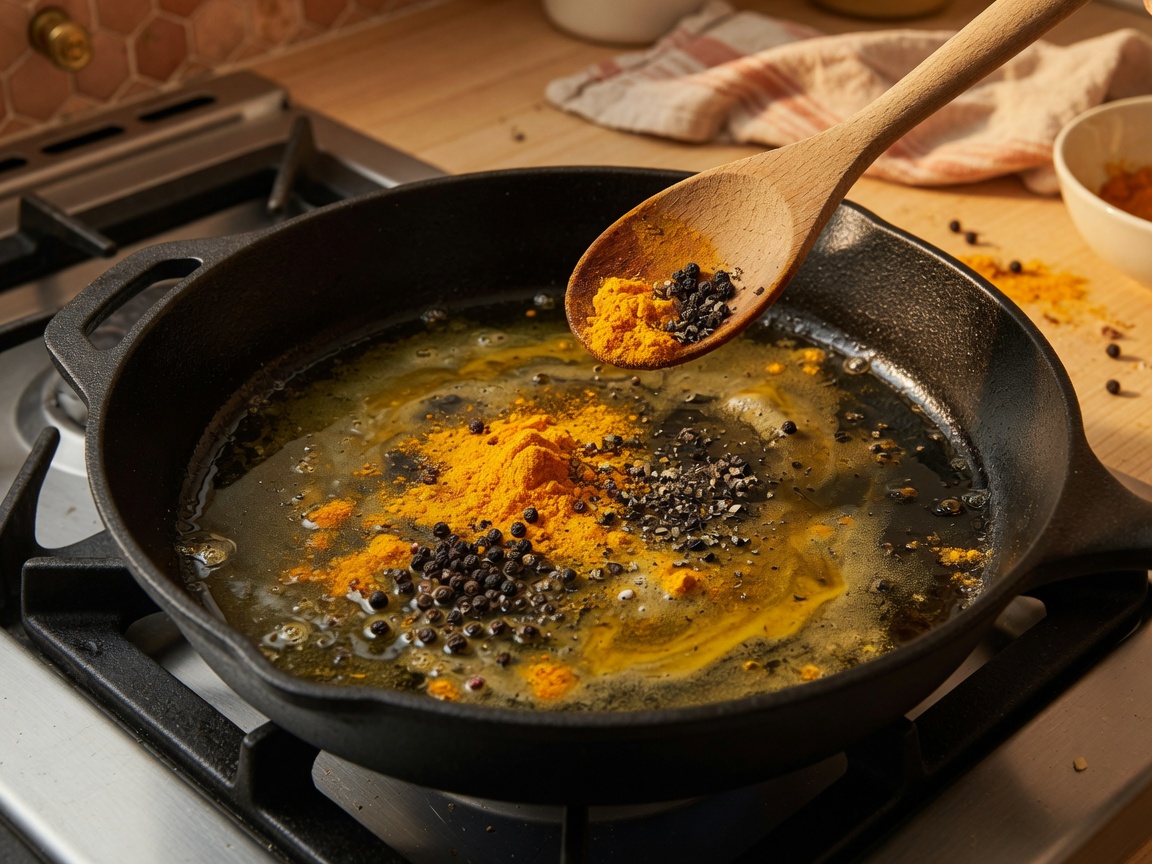
- A teaspoon in beans, lentils, potato soup or chicken soup.
- With a little fat (olive oil, yogurt) — curcuminoids are fat-soluble.
- A pinch of black pepper, not a spoonful that makes the dish bitter.
- Golden milk in the evening is a ritual, not a detox.
Avoid measuring “effectiveness” after two days. If you’re interested in a supplement, give it weeks and stick to your menu at the same time.
Two modest recipes you can stick with
Yogurt with turmeric between meals. 4–5 spoons of yogurt, half a teaspoon of turmeric, a little ginger and cinnamon. This is a snack with protein, not a “fat burner.” Eat it instead of a cookie at the office.
A warm drink with lemon or milk. A cup of warm water or milk, half a teaspoon of turmeric, a drop of honey if you like, a pinch of black pepper. Don’t boil it for 15 minutes “to extract the medicine” — it’s a drink, not a lab extraction.
Carrot, onion and turmeric soups are good because they’re low in energy and warm. Not because 35 g of turmeric in one pan is a “therapeutic dose.”
Spice vs. supplement
If you eat turmeric only as a coloring, your curcumin intake is small. Standardized formulas exist precisely for that reason. A classic study (Shoba et al., 1998) showed that piperine can significantly increase the presence of curcumin in the blood in humans — that’s an argument for a combination, not for a miracle diet.
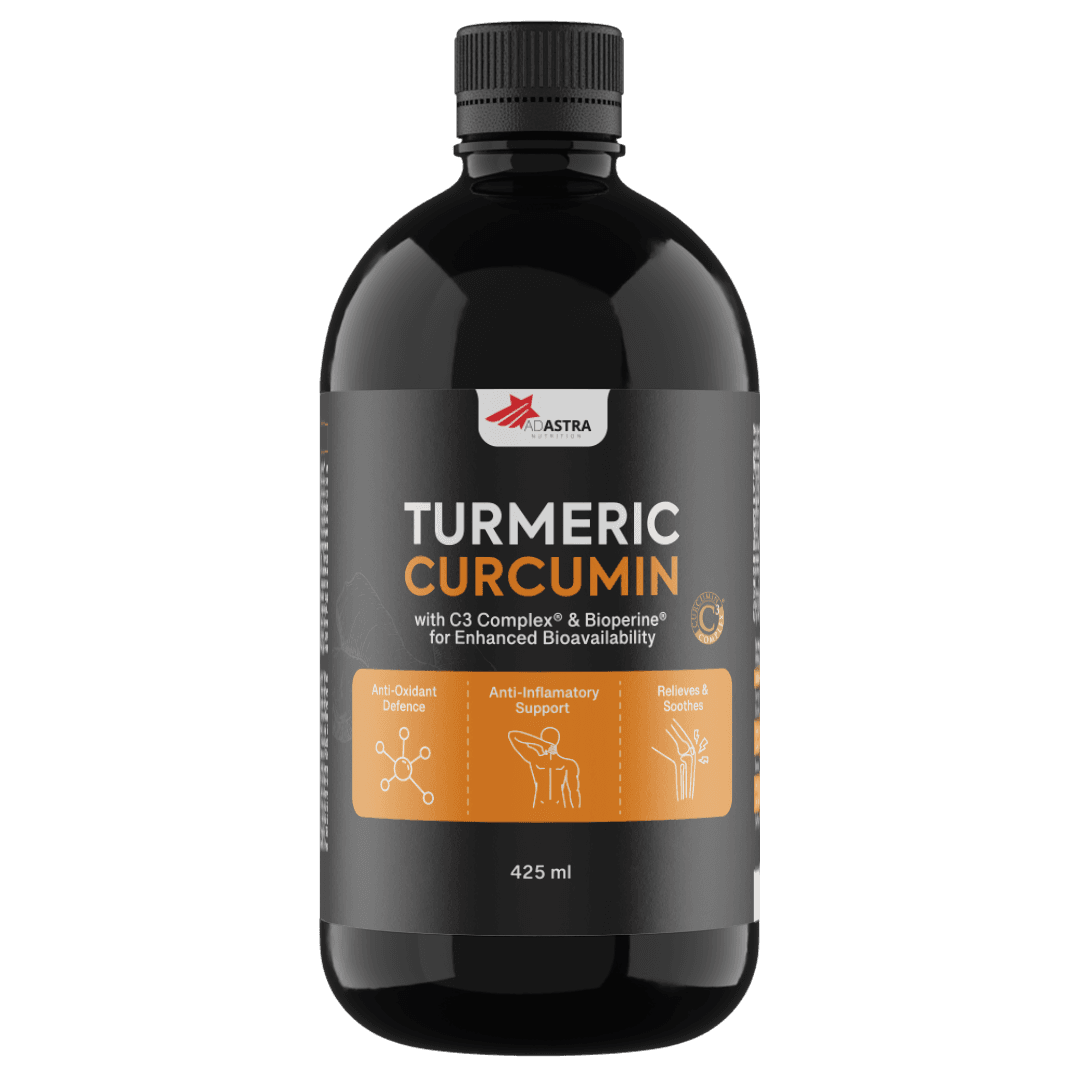
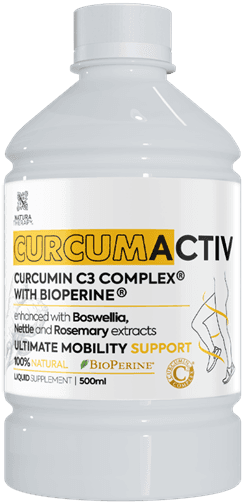
In the catalog, the liquid formula Curcumactiv combines curcumin with piperine (Bioperine) and plant extracts; Turmeric Curcumin 425 ml is liquid turmeric that you mix with water. Whichever of the two you choose, it is not a medicine for weight loss. See them as support if you already eat and move sensibly.
Don’t double up on syrup and capsules “to make it stronger.” Follow the label. With gallstones, anticoagulants, gastroesophageal reflux or pregnancy — see a doctor first, not a jar.
How to assess after 4–8 weeks
- Have your meals become lighter (more vegetables, less fried food)?
- Is your evening appetite calmer, or did you just add the spice on top of the same habits?
- Do you have stomach discomfort, heartburn or yellow stool? That’s a sign to lower the dose.
- Weight is measured as a trend, not in the morning after one cup of tea.
If your goal is purely weight loss with no interest in turmeric, protein, fiber and steps are a better bet than yet another spice. Turmeric makes sense when you already like it in your kitchen or you’re looking for plant-based support for comfort — not when you’re looking for a shortcut.
Frequently asked questions
- Does turmeric make you lose weight on its own?
- No. It can be part of a plate that’s easier to stick to. The kilos are driven by energy balance, protein, movement and sleep.
- How much turmeric should I add to my food each day?
- A culinary dose is usually half to one teaspoon of powder in a dish, with some fat and a little pepper. More doesn’t mean better, and it can spoil the flavor or upset your stomach.
- Do I need a supplement if I cook with turmeric?
- Not necessarily. A supplement makes sense if you want standardized curcumin. The spice and an extract aren’t interchangeable one-for-one.
- Is Curcumactiv a medicine for obesity?
- No. It’s a food supplement. Use it as directed on the label, together with diet and movement, not instead of them.
- Can I combine turmeric with medicines for blood sugar or blood pressure?
- Interactions are possible. Don’t change your therapy on your own. Ask a doctor or pharmacist before taking an extract, especially if you take medicines long-term.
- How long before I can expect a difference on the scale?
- Turmeric doesn’t come with a timeline. If your weight plan is working, the trend shows over weeks. If you only added a spice, there’s no reason for the scale to move.
- Does turmeric treat gut inflammation?
- No. It doesn’t replace therapy for colitis, Crohn’s disease or other diagnoses. Such conditions are managed by a specialist.
This article is for informational purposes and does not replace medical advice. Food supplements are not medicines. Consult a doctor before use, especially if you have a chronic illness, are pregnant or breastfeeding, or take medicines. Results vary from person to person.