Diet isn’t the only factor in type 2 diabetes, but it’s one of the few you can change this week. Large cohorts and interventions consistently show the same thing: more whole plant foods and fewer processed carbohydrates are linked to a lower risk. That is not a guarantee, and it is not a medicine if a diagnosis already exists.
This article is for informational purposes and does not replace medical advice. Food supplements are not medicines. Consult a doctor before use, especially if you have a chronic illness, are pregnant or breastfeeding, or are taking medicines. Results are individual.
If you already have diabetes, this text is about prevention and the family table. For a menu once the diagnosis is here, use diabetes diet — what to eat.
What the studies say, without the marketing
The journal of the European Association for the Study of Diabetes (Diabetologia) published analyses in which metabolite profiles and eating habits in tens of thousands of people are linked to later type 2 diabetes. People with a healthier plant-oriented pattern — vegetables, fruit, whole grains, legumes, nuts — had a lower risk than those whose “plant-based” diet was white flour, juices and fried snacks.
Older lines of evidence carry a similar message: the Mediterranean pattern, the Finnish and American DPP interventions (weight loss + movement + carbohydrate quality), as well as cohorts that see red meat, sugary drinks and ultra-processed food as a higher risk.
Honest translation: you don’t have to go vegan. You do have to eat more plants that look like plants, and fewer products that look like they came out of a packet.
A healthy versus an “unhealthy” plant-based plate
Vegan donuts are not prevention. Bean salad is. The studies that split plant-based diets into healthy and unhealthy make exactly that distinction.
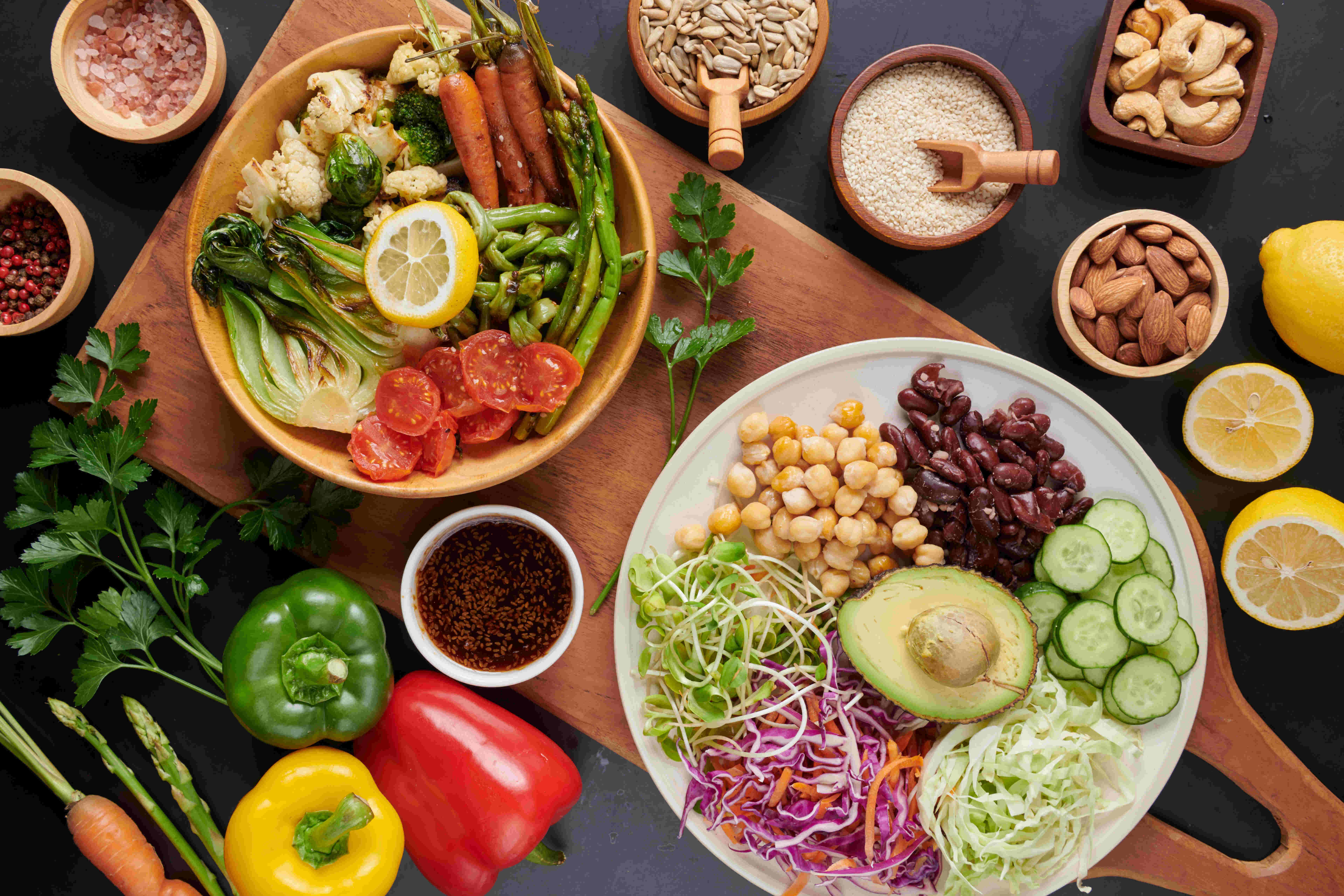
- More: leafy greens, broccoli, peppers, tomatoes, onions, legumes, oats, barley, buckwheat, nuts, seeds, olive oil, spices.
- In moderation: whole fruits (berries, apples, pears), dairy as tolerated, fish.
- Less: white bread as the main meal, pasta without a side, juices, sodas, sweet pastries, processed meat every day.
The Macedonian table without giving it up
You don’t need quinoa at all costs. Tavche gravche with lots of onion and pepper, without a mountain of bread, is close to what the studies favor: legumes + vegetables. Sarma with more cabbage and less rice. A salad with every lunch. Fruit as whole fruit, not as compote with sugar.
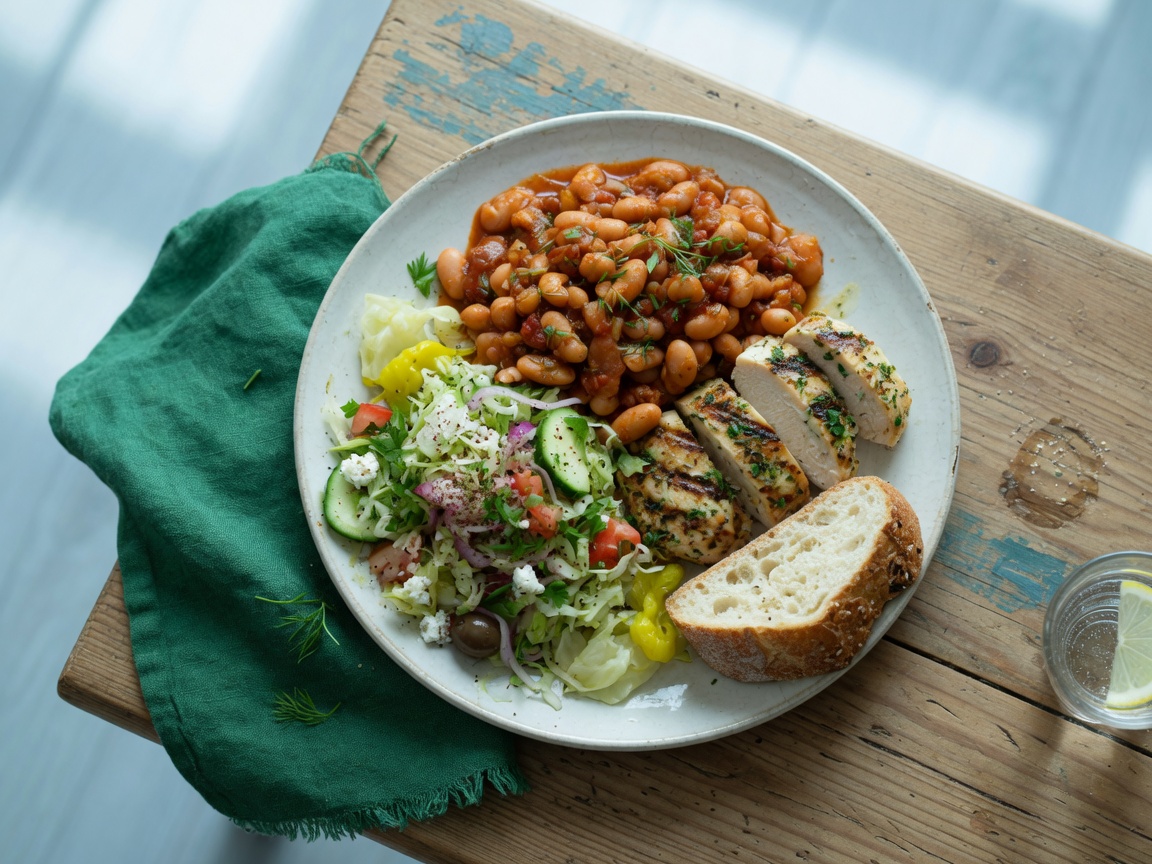
- Bread — whole grain, a measured slice, alongside protein, not on its own on the go.
- White cheese and kashkaval — for flavor, not half the plate.
- Grilling — better than breaded, but the meat portion doesn’t have to be half a kilo.
- Rakija and beer — calories and disrupted sleep; regular alcohol doesn’t help with type 2 risk.
Fiber, protein and glycemic load
Soluble fiber (oats, beans, apples with the peel) slows absorption. Protein increases fullness. Together they reduce the urge to snack two hours later — a mechanism that also matters for weight, and weight around the waist is a strong risk factor.
The glycemic index is a guide, not a religion. Watermelon has a higher index, but the portion is watery. White rice on a big plate is another conversation. Combine, measure portions, watch how you feel.
If you need help with fiber because your plate is still poor, Fiber Formula is a food supplement — introduce it slowly and with water, not instead of beans.
What the studies don’t say
- That a single superfood cancels out family history.
- That vegetable juice is the same as vegetables (the fiber is missing, the sugar stays).
- That you should starve. An extreme deficit without supervision is not a preventive program.
- That a cinnamon supplement replaces the plate. Cinnamon is a spice; see how to use it.
A seven-day framework, not a strict menu
- Breakfast: oats or eggs + vegetables, not just a pastry and juice.
- Lunch: legumes or fish + a salad that fills half the plate.
- Dinner: lighter, with protein, 3 hours before bed if your morning glucose spikes.
- Snack: yogurt, nuts, a carrot — not “sugar-free” cookies made with flour.
- Drinks: water, unsweetened tea, coffee without syrup.
In the studies, movement goes together with the plate: 150 minutes of moderate activity a week is the classic goal. A walk after lunch is the cheapest experiment.
If you are already borderline (prediabetes)
This is the most useful moment for change. Losing 5–7% of body weight improves fasting glucose in many people — intervention programs showed that, not an ad. Track the numbers with your doctor, not with an app alone.
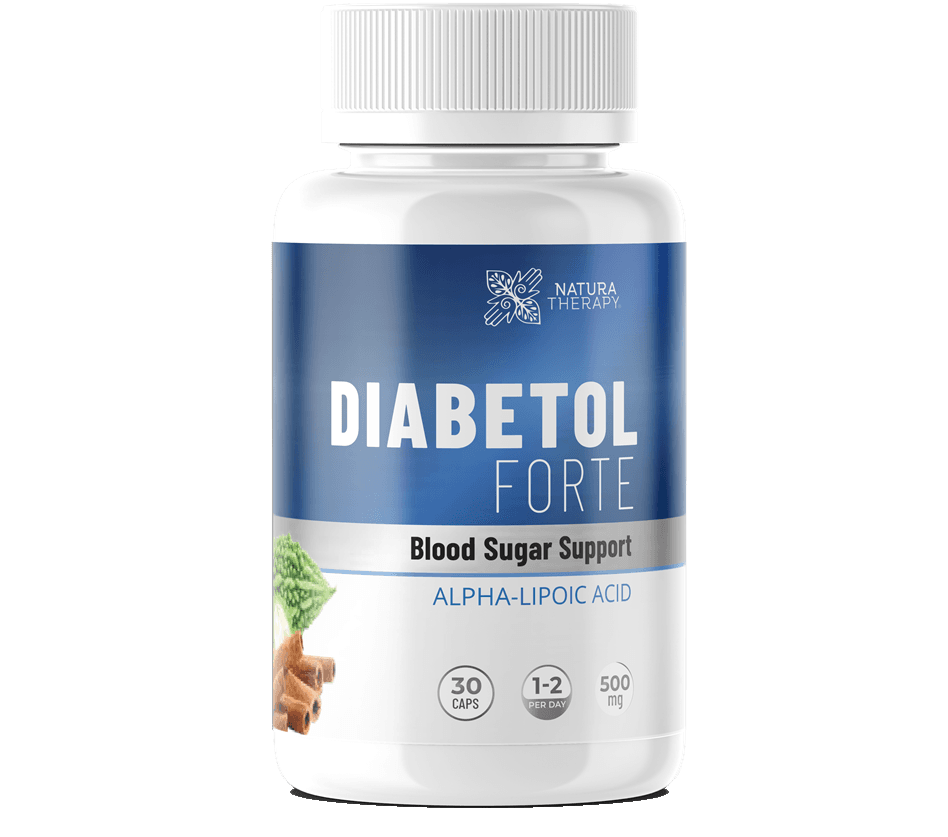
Supplements are not a preventive vaccine. If your doctor agrees to support, look at the Diabetes category and formulas such as Diabetol Forte as a layer, not a replacement. More context: control without myths.
What fiber and polyphenols do — without the poetry
Soluble fiber forms a gel in the gut. Glucose is absorbed more slowly, and insulin doesn’t have to spike like an alarm. Polyphenols from colorful vegetables, olive oil and dark fruits are being studied for inflammation and oxidative stress — mechanisms that go hand in hand with insulin resistance. That doesn’t mean a spoonful of oil is a medicine. It means a colorful plate has biology behind it, not just looks.
Processed products often remove the fiber and leave the starch and sugar. That’s why a “plant-based” cracker can be worse than a plate of beans with onion.
Social meals, weddings and winter feasts
Studies are done in cohorts. Life happens at slava celebrations and New Year’s. Strategy: don’t go out hungry. Eat an apple and a yogurt before you leave. At the table, start with salad and meat/beans. One dessert you truly love, not three “small” pieces. Then a walk, even if it’s just around the building.
Winter in Macedonia brings more bread, less salad and less light. Compensate consciously: frozen vegetables are fine, sauerkraut is fine, oats in the morning are fine. Don’t wait until April to start.
Weight around the waist versus the number on the scale
The interventions that reduced risk most often took off 5–7% of body weight. For a person weighing 90 kg, that’s about 5–6 kg, not half a body. Your waist often tells you more than the scale: fat around the organs worsens resistance. Measure your waist once a month under the same conditions, not every day.
Extreme unsupervised weight loss in people already taking medicines for blood sugar is another conversation — here we’re talking about prevention. If you already have a diagnosis, your doctor tailors the plan.
How to read a single study in a headline
- An observational cohort shows an association, not proof that X “prevents” Y in everyone.
- A randomized intervention is stronger, but it is often short and in selected people.
- “Plant-based diet” in the paper may mean legumes and vegetables, not vegan sweets.
- If the headline promises you’ll never get diabetes, that’s not the scientific paper — that’s the portal.
Diabetologia and similar journals are serious sources. A retelling on a Macedonian portal can lose the condition “in people with this profile, after adjusting for BMI.”
Four weeks without a revolution
- Week 1: water and unsweetened tea instead of juice and soda. Count how many glasses of sweet drinks you used to have — it’s often surprising.
- Week 2: legumes twice. Tavche gravche, lentil soup, chickpeas in a salad.
- Week 3: a 15-minute walk after your biggest meal, on five days.
- Week 4: review your breakfast. Pastry roll → oats or eggs. Then talk to your doctor about screening if you’re at risk.
This is closer to what prevention programs showed than buying ten superfoods at once. A supplement from the Diabetes category makes sense only if your doctor agrees and your plate is no longer chaos.
Children at the table and their future risk
Prevention also starts in the family pot. Children who see salad and water, not just juice and pastries, develop a taste that costs less later on. It’s not a guarantee against genetics. It’s an environment. Don’t lecture them about “sugar disease” at every birthday — keep the everyday plate steady.
If type 2 already runs in the family, screening the adults matters more than banning cake twice a year.
If after the four weeks your fasting glucose is still borderline, don’t add a third tea. Go back to your doctor with your diary. The plate works slowly and honestly. Advertising works fast and falsely.
Frequently asked questions
- Do I need a fully plant-based diet to reduce my risk?
- No. The studies praise a plant-oriented pattern. Fish, yogurt and moderate amounts of meat can stay. The key is the quality of carbohydrates and total calories.
- How much fruit is OK?
- For many adults, 1–2 whole fruits a day, with an emphasis on berries and apples/pears, alongside a meal. Juice doesn’t count as fruit.
- Does coffee increase the risk?
- In cohorts, black coffee in moderate amounts often looks neutral or favorable. The problem is sugar, syrup and the sleeplessness from late coffee.
- What about bread — should I cut it out completely?
- Not necessarily. Change the quality and the portion. Bread alongside beans is different from three rolls on the go.
- Does the Diabetologia study mean that vegans don’t get diabetes?
- No. The risk was lower with the healthier plant pattern, not zero. An unhealthy plant pattern doesn’t protect.
- Does cinnamon help with prevention?
- As a spice — yes, if it replaces sugar. As the only measure — no. Not a medicine.
- When should I get tested if I change my diet?
- As your doctor advises: often glucose and HbA1c every 6–12 months, sooner if you have strong risk factors. Diet doesn’t replace the lab.
- Can a supplement replace changing what’s on your plate?
- No. Diabetol Forte is support if you’re already working on your habits, not a license for pastries every morning.
This article is for informational purposes and does not replace medical advice. Food supplements are not medicines. Consult a doctor before use, especially if you have a chronic illness, are pregnant or breastfeeding, or are taking medicines. Results are individual.