
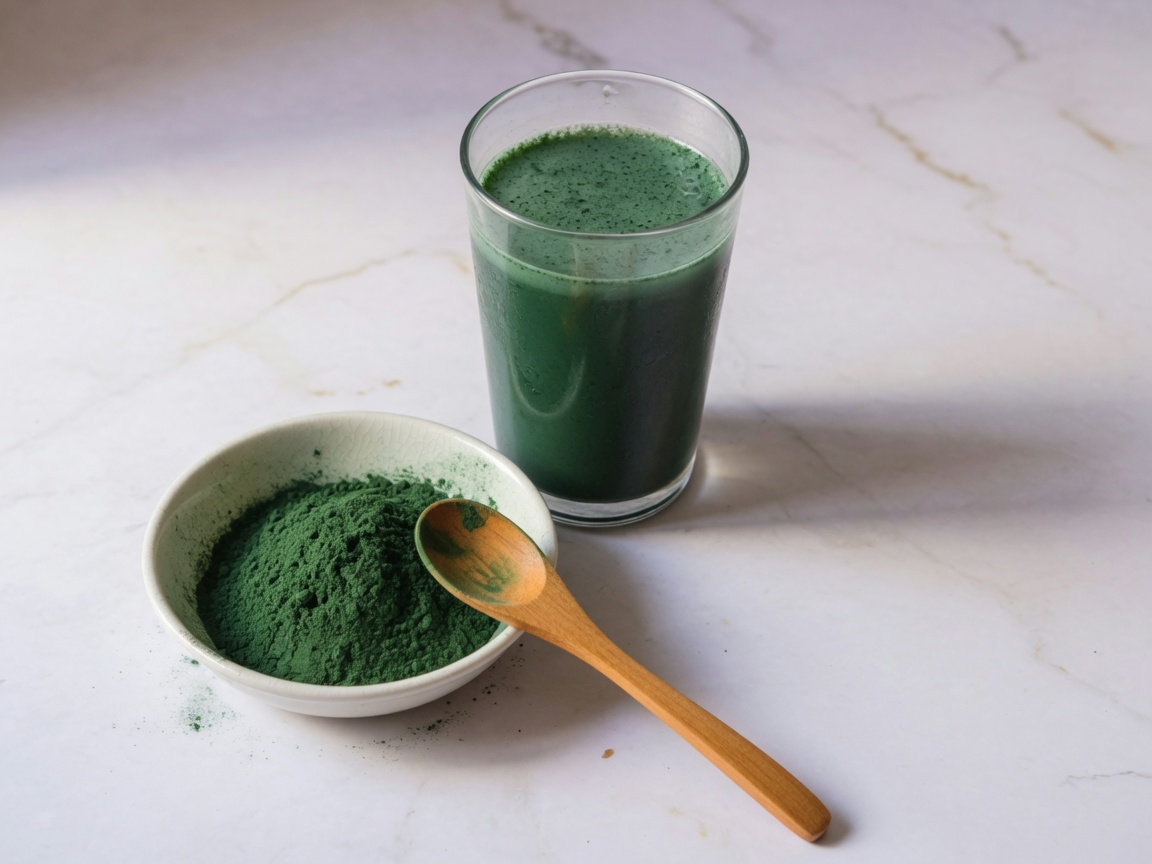
Spirulina is a blue-green alga with a dense nutritional profile: a high percentage of protein, phycocyanin, iron, B vitamins (but not B12 in a reliably active form in every product). That is why it is called a superfood. Superfood does not mean medicine.
How and when to take it is covered in a separate guide: when and how to take spirulina. For antioxidant context: antioxidants in the diet.
What it really provides
- Protein — often 50–70% of the dry mass, with essential amino acids; the serving is small, so it does not replace a meal of meat or a shake.
- Pigments — chlorophyll and phycocyanin, of interest for their antioxidant properties.
- Minerals — iron, magnesium, potassium in modest absolute amounts.
- Convenience — a powder or tablet when your menu is short on greens.
Benefits with honest limits
Energy and tiredness. If you eat few micronutrients, the dense alga may feel like “support.” That is not a diagnosis of anemia — anemia is confirmed with a blood count.
Immune comfort. There is research on the modulation of immune markers. It is not a vaccine and is not guaranteed to prevent a cold.
Lipids and blood pressure. Some small studies show modest shifts. That does not make it a therapy for cholesterol or hypertension — blood pressure is managed by a doctor.
Detox. Chlorophyll does not “pull out heavy metals” the way a clinic does. The quality of the alga is critical: a contaminated batch does the opposite — it brings in toxins.
Who it is not the first choice for
- Autoimmune conditions — a theoretical stimulus; only with a specialist.
- Phenylketonuria — contains phenylalanine.
- Pregnancy — quality and iodine/contaminants; ask a doctor.
- Allergy to algae or seafood — caution.
Don’t look to spirulina as a medicine for cancer — such claims are false and dangerous.
Think of it as a nutrient-dense green seasoning, not as a medicine. If you already eat legumes and greens and your blood count is normal, the difference may be small. If your breakfast is just coffee, a teaspoon of good-quality spirulina in a smoothie is a better start than another croissant — and it is still not therapy.
Frequently asked questions
- Is spirulina a complete protein?
- The profile is good for an alga. The amount in one teaspoon does not cover your daily needs.
- Is it better than a multivitamin?
- A different tool. A multivitamin has defined doses; spirulina is a food used as a supplement, with a variable composition.
- Does it cure anemia?
- No. It may contribute iron. The cause of anemia has to be found by a doctor.
- Green or blue “extract”?
- Blue powders are often phycocyanin concentrates. Check the source and the testing for contaminants.
- Can I take it every day?
- For healthy adults, a good-quality batch taken as the label says — usually yes. Stop if you get a rash, peeling or discomfort.
This article is for informational purposes and does not replace medical advice. Food supplements are not medicines and do not cure cancer, anemia or infections. Consult a doctor before use. Results vary from person to person.